Anthropology, Arctic, Awareness, Culture, Everyday life, Family, Genealogy, Health, Heritage, Homeschooling, Kids, Mental health, Motherhood, Neurodiversity, Neurological, Outfit, People, Photography, Pregnancy, Quotes, Saami, Sámi, Sápmi, Spirituality, Tromsø, Uralic, Womanhood

Mothers Did Not Play With Their Children For 99% of Human History

Why the absence of autonomous, multi-age playgroups makes parenting suck. (This is a reshare of Elena Bridgers’ article).

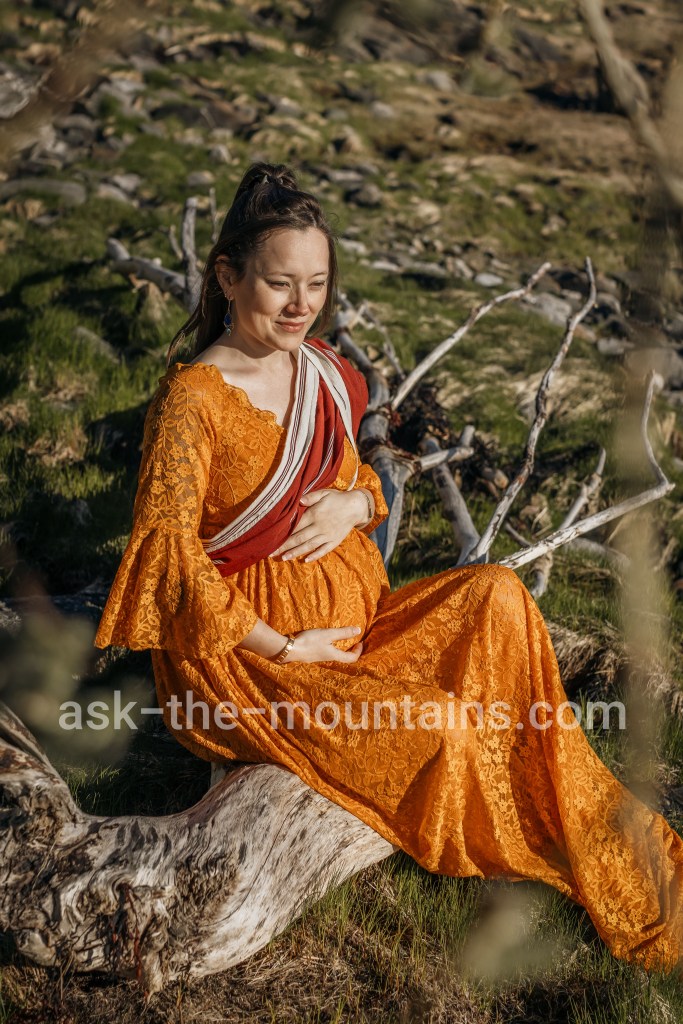
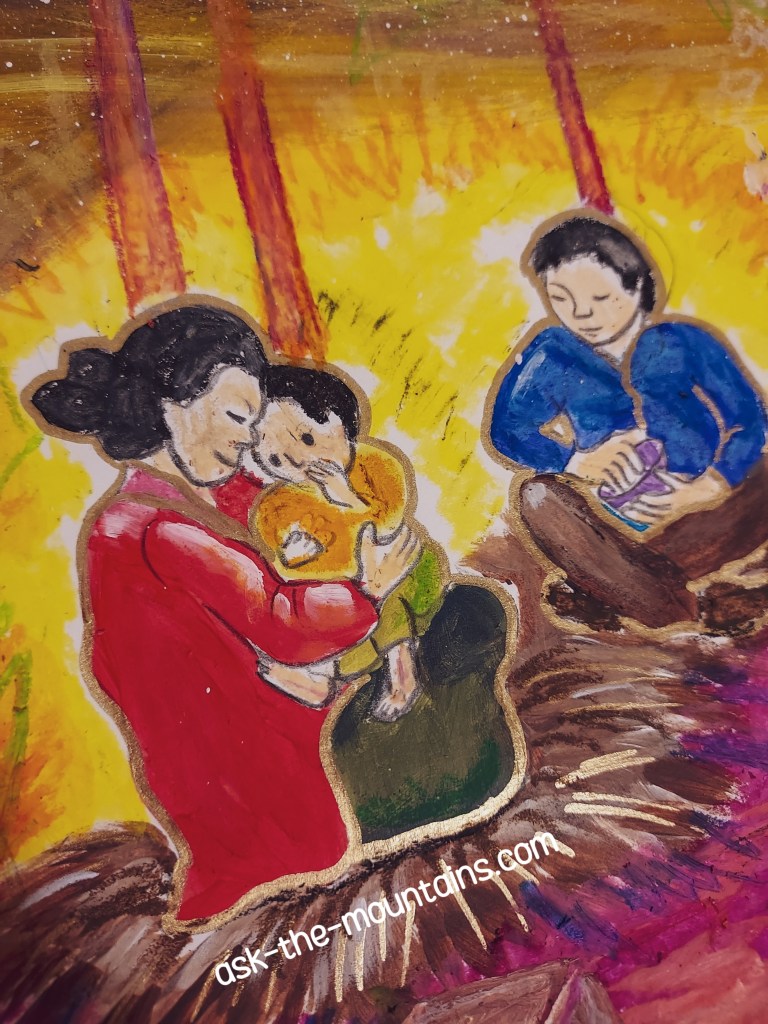
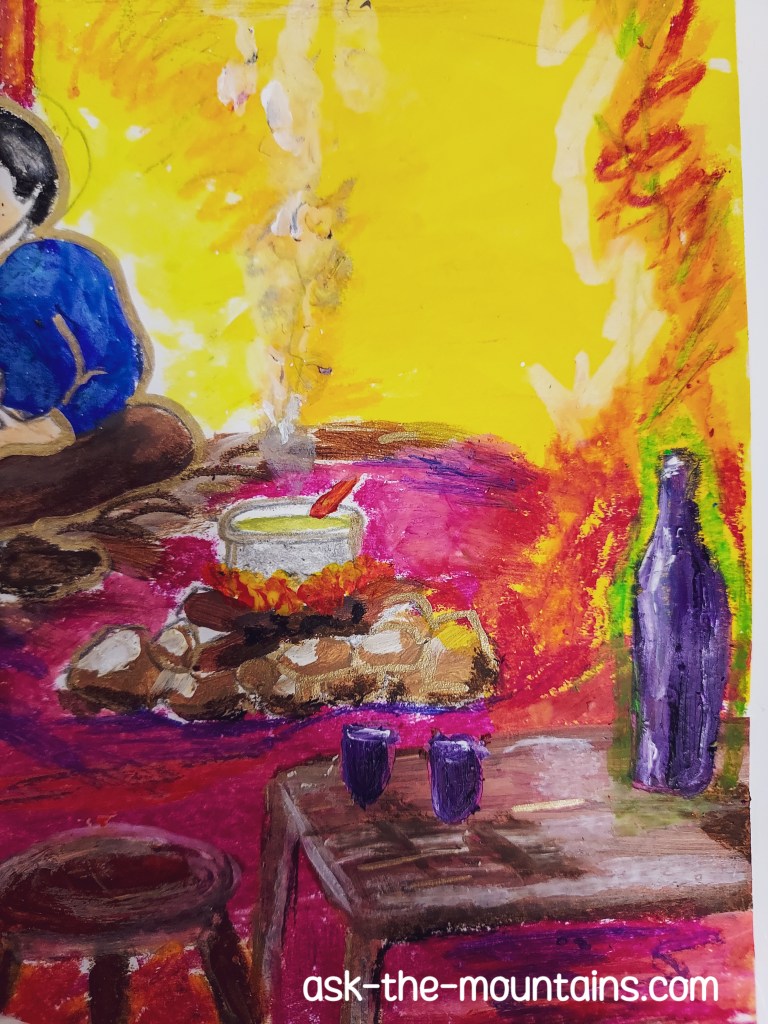
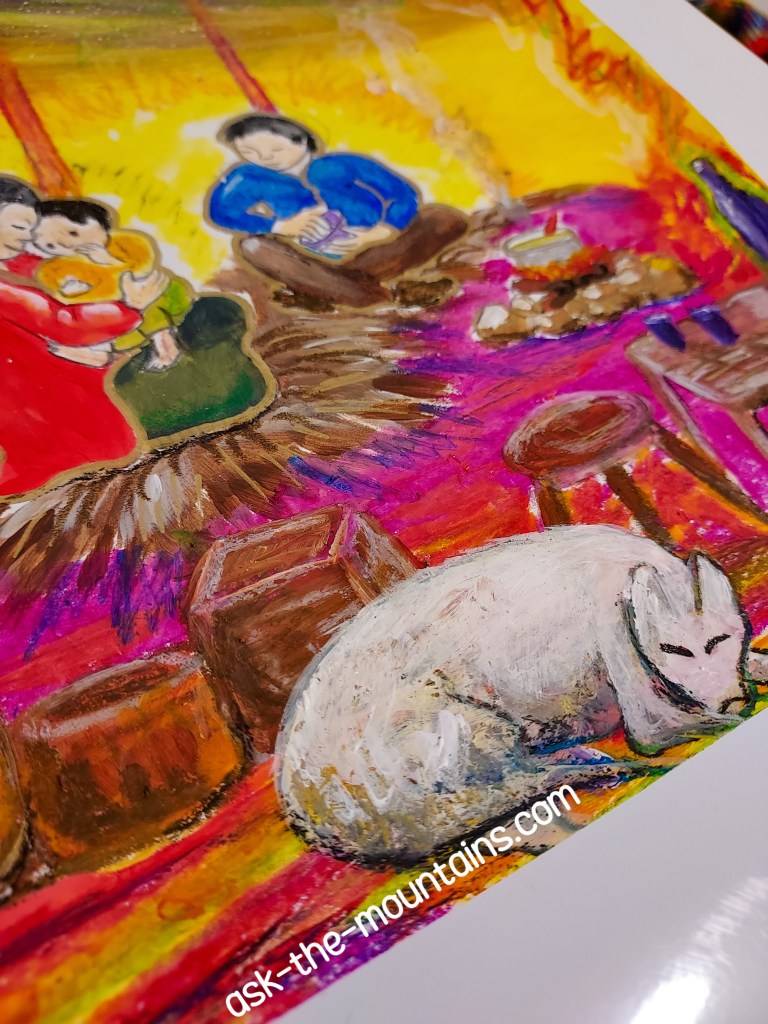
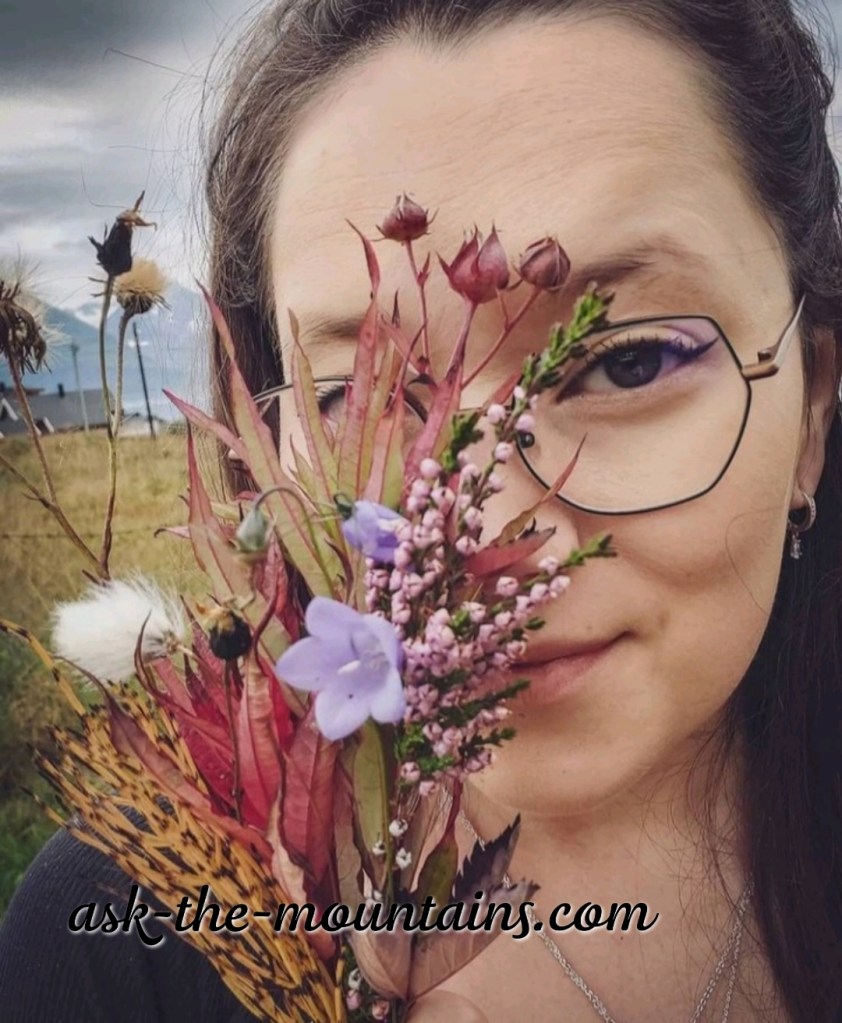
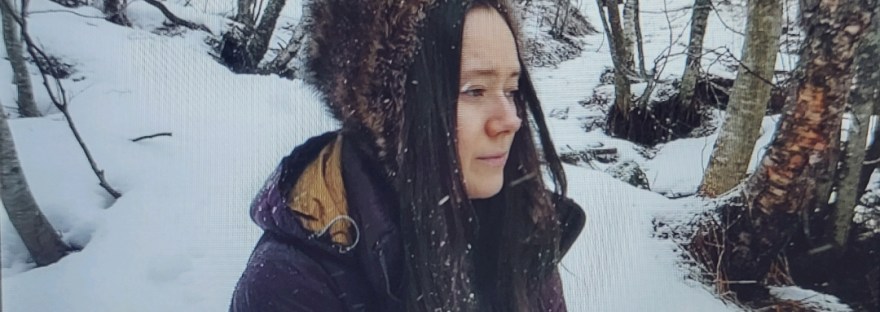
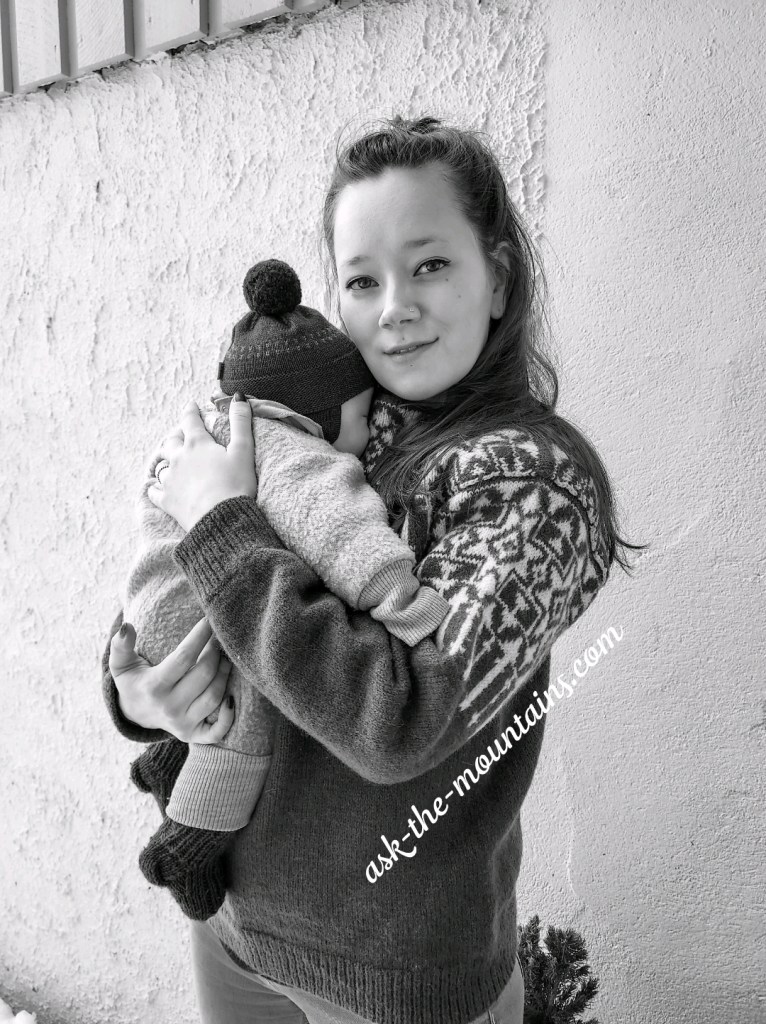
Sámi mommy breastfeeding toddler in Tromsdalen, Tromsø, Arctic Sápmi, while smoking some tobacco.

“Fasten your seatbelts, ladies and (two or three) gentlemen, because we are about to dive into the my absolute favorite topic of all time: the importance of multi-age playgroups in hunter-gatherer societies. Honestly, I get more excited about this stuff than a dog whose owner just said the word “walk.” Back when I first started reading about motherhood in hunter-gatherer societies there were two things that made me go, “ohhhhhhhh, now I get it.” One is the longer interbirth intervals that probably characterized most of human history (as I wrote about here) and the other is the critical important of multi-age playgroups as a source of substitute childcare for mothers. It was a total epiphany for me, and I suspect you may have the same reaction, because once you see how this used to work, how human childhood evolved to work, it just makes so much sense. Over millions of years, we basically evolved a perfect system involving care of children by children, in a way that was wholly compatible with their own need for play, and that we have entirely abandoned in the modern context, to the detriment of all.

But in order for you to understand why this still matters for mothers in the modern context, I need to tell you my own story about just how much I hate playing with my children (even though I love them deeply) and how misguided I was about the role of a “good mom” and what she owes her kids…

I’d rather stick a fork in my eyeball than play pirates.

Only after I had begun doing deep research on hunter-gatherer societies did I realize that this is exactly how things were supposed to work. Children are supposed to play with other children. It was never meant to be the mother’s job. But trapped as we are in single-family homes where playmates can be hard to come by, parents often end up filling this tedious and time-consuming role…[..]”

Read the full article here.

Amrita Mandala, Awareness, Bodhidharma, Buddhism, Chronic illness, Dharma, Everyday life, Mahayana, Meditation, Mental health, Migraine, Motherhood, People, Rinzai zen, Shamanism, Soto zen, Spirituality, Tantric, Taoism, Vajrayana, Yoga, Zen, Zen buddhism

Trauma healing specials – try it now 🙏🏼

Wanted to share this free online playlist on Youtube in six parts, focused on the healing of traumas in the psyche. It can be done sitting in a comfortable posture, or laying down if you prefer. It has been extremely helpful for me, so I share it in hopes someone else will benefit 🫶🏻

Adventure, Animals, Anthropology, Arctic, Art, Aurora borealis, Beauty, Culture, Duodji, Everyday life, Finnmark, Genealogy, Health, Heritage, History, Indigenous, Landscape, Motherhood, Mythology, Nordic, Outfit, People, Pets, Poems, Quotes, Reindeer, Saami, Sámi, Sápmi, Siberian, Spirituality, Uralic, Womanhood

The Sacred Bear in Sámi mythology

The Sacred Bear and “the Origin of the Sámi People”

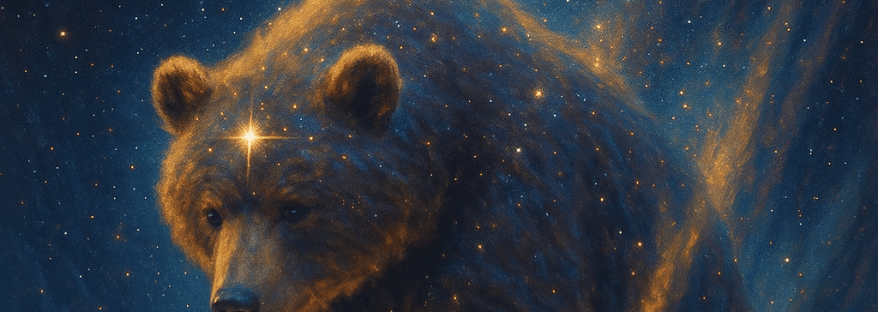
In Sámi mythology, the bear is a divine ancestor, not just an animal.

One myth tells of a heavenly bear who descended to earth and married a human woman. Their children became the first Sámi people.

Because of this, bears were/are honored as ancestor spirits, and when a bear was killed (very rare and ritualised), its bones were carefully placed in a tree to allow its soul to return to the sky.

A ceremony called the Bear Feast included songs, dances, and apologizing to the bear spirit for the killing, inviting it to be reborn.

The Bear Who Fell From the Stars:

A Sámi Creation Song of the First Bear

In the hush before dawn, where no footprints fall,
Where the wind hums secrets to the pine,
A star broke loose from the roof of night
And tumbled down through time.

He fell with a roar through clouds of gold,
Bathed in *Beaivi’s light.
He landed not dead, but dreaming still
In the heart of the forest’s white.

The reindeer bowed their crowned heads low,
The lynx stood still in her track.
For this was the First of Bears,
The Sky-Child, fallen back.

He walked like thunder on ancient snow,
His breath, a wind of flame.
Yet gentle were his dreaming eyes,
And wise, and without shame.

A woman came from a northern vale,
A weaver of skins and song.
She found him sleeping in a ring of birch
And stayed with him all night long.

They spoke without words by fire and frost,
By the rhythm of blood and bone.
She taught him the names of the winds and streams;
He gave her dreams of home.

And so their children, wild and wise,
Were neither beast nor man.
They sang to trees, they hunted clean,
They walked where few else can.

But then the bear, when spring had sung,
Felt longing rise like steam:
His fur grew light, his eyes grew wide
He vanished into dream.

And so today, when the bear is seen,
The Sámi bow and sing
“Child of stars, our ancient kin,
Return again in spring.”

If ever a bear is taken in hunt,
The people weep and pray.
They dress his skull in flowers and moss
And lift his bones away.

*Beaivi is the Sun (as a deity)

Arctic, Art, Artist, Awareness, Beauty, Bodhidharma, Buddhism, Chronic illness, Culture, Dharma, DIY, Dzogchen, Everyday life, Hair, Health, Heritage, Hinduism, History, Landscape, Meditation, Mental health, Nordic, People, Poems, Sápmi, Tantric, Taoism, Vajrayana, Yoga, Zen, Zen buddhism

Something old

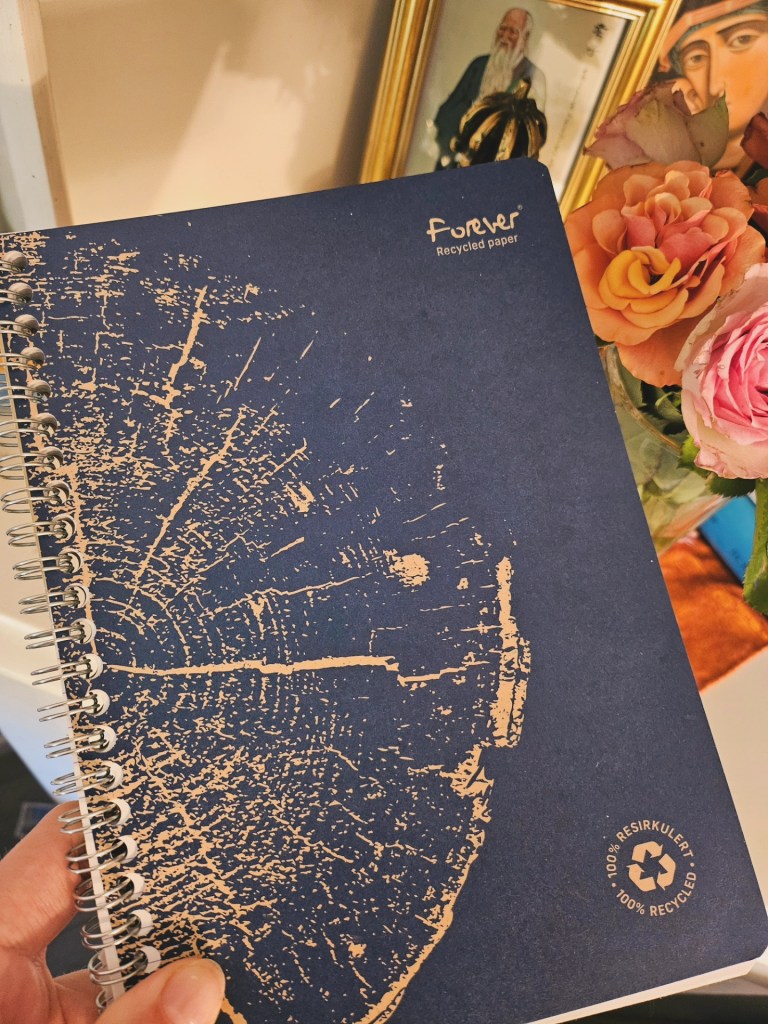
Bought a new diary, in hopes of finding time to write again; haven’t written anything in over a year. Initiated first page with this poem 😊🙏🏼💎

Acrylic painting, Adventure, Animals, Anthropology, Arctic, Art, Artist, Aurora borealis, Awareness, Beauty, Carnivore, Culture, Duodji, Everyday life, Family, Finnmark, Health, Heritage, Indigenous, Landscape, Nordic, Painters, People, Pets, Photography, Reindeer, Saami, Sámi, Sápmi, Shamanism, Shop, Spirituality, Tromsø, Uncategorized, Uralic, Womanhood

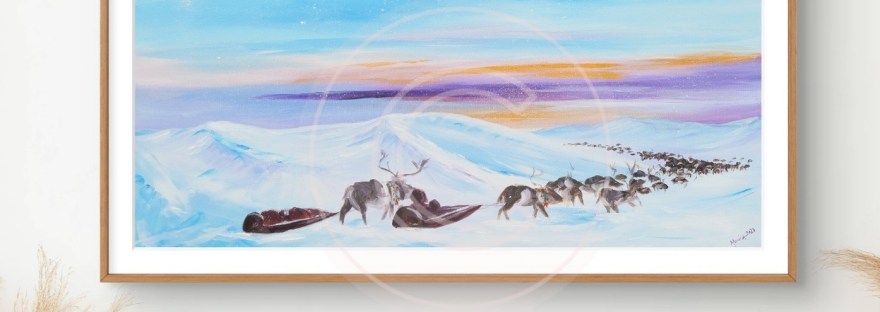
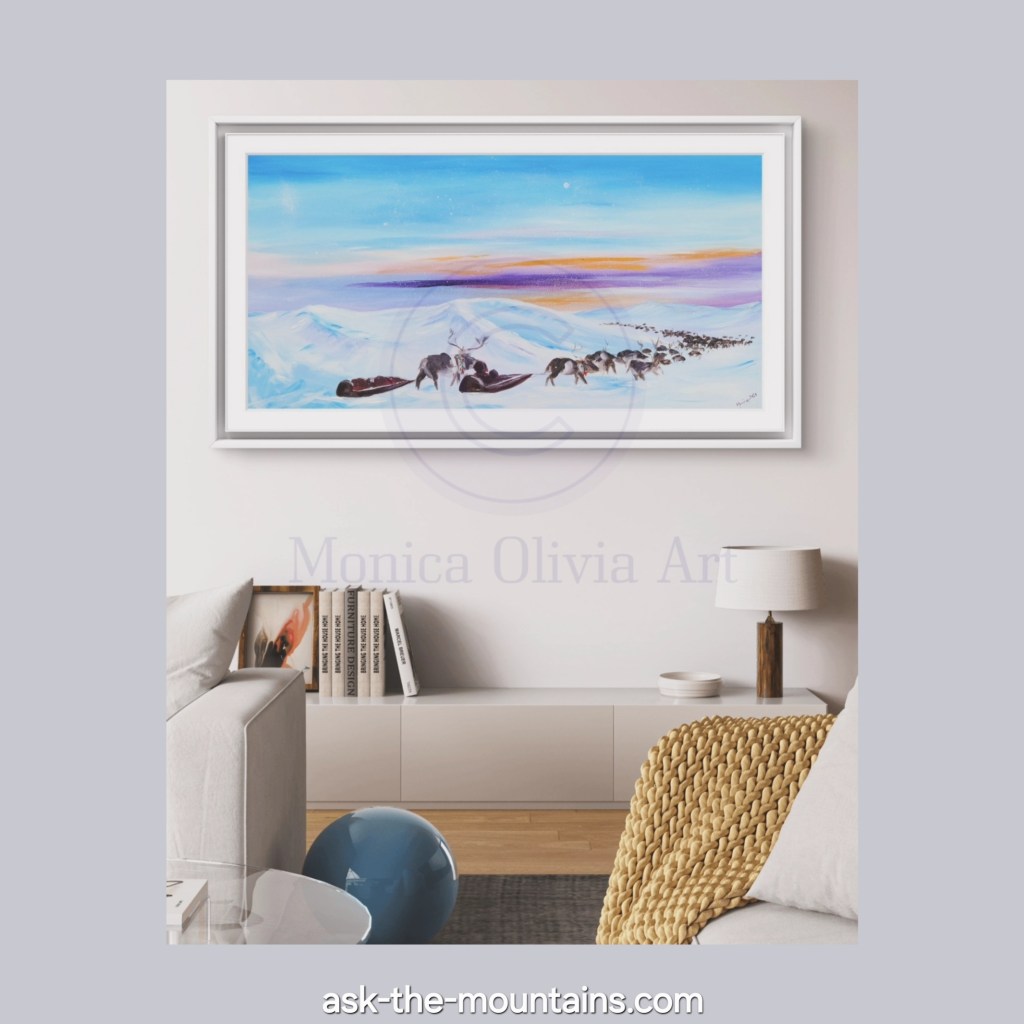
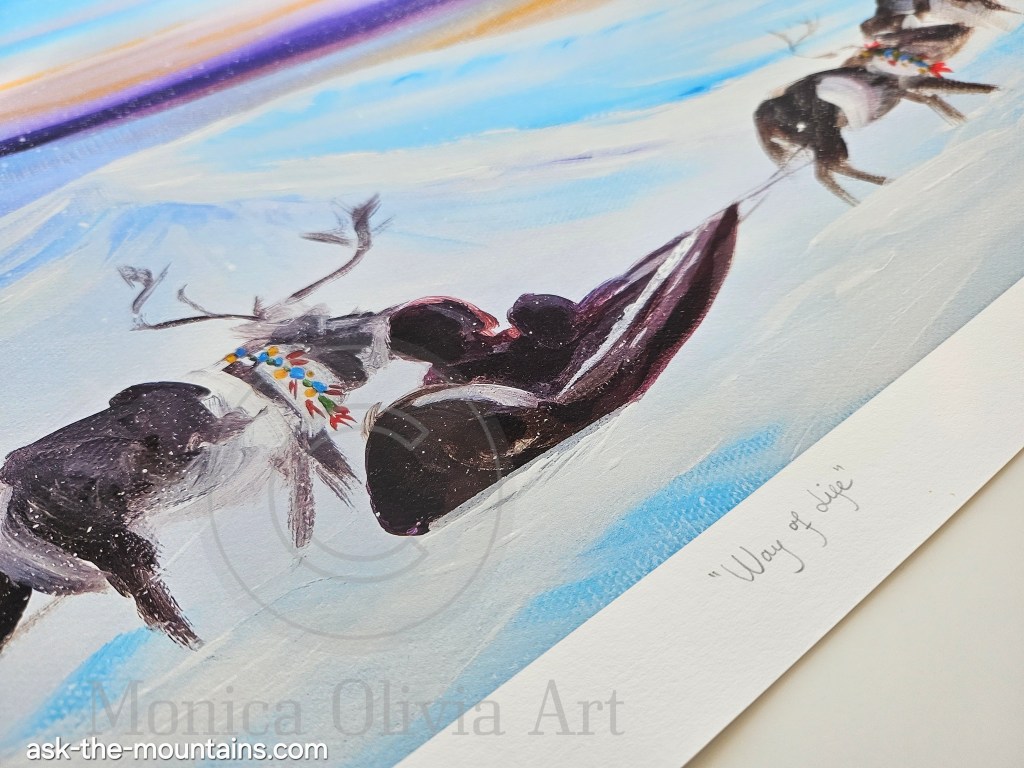
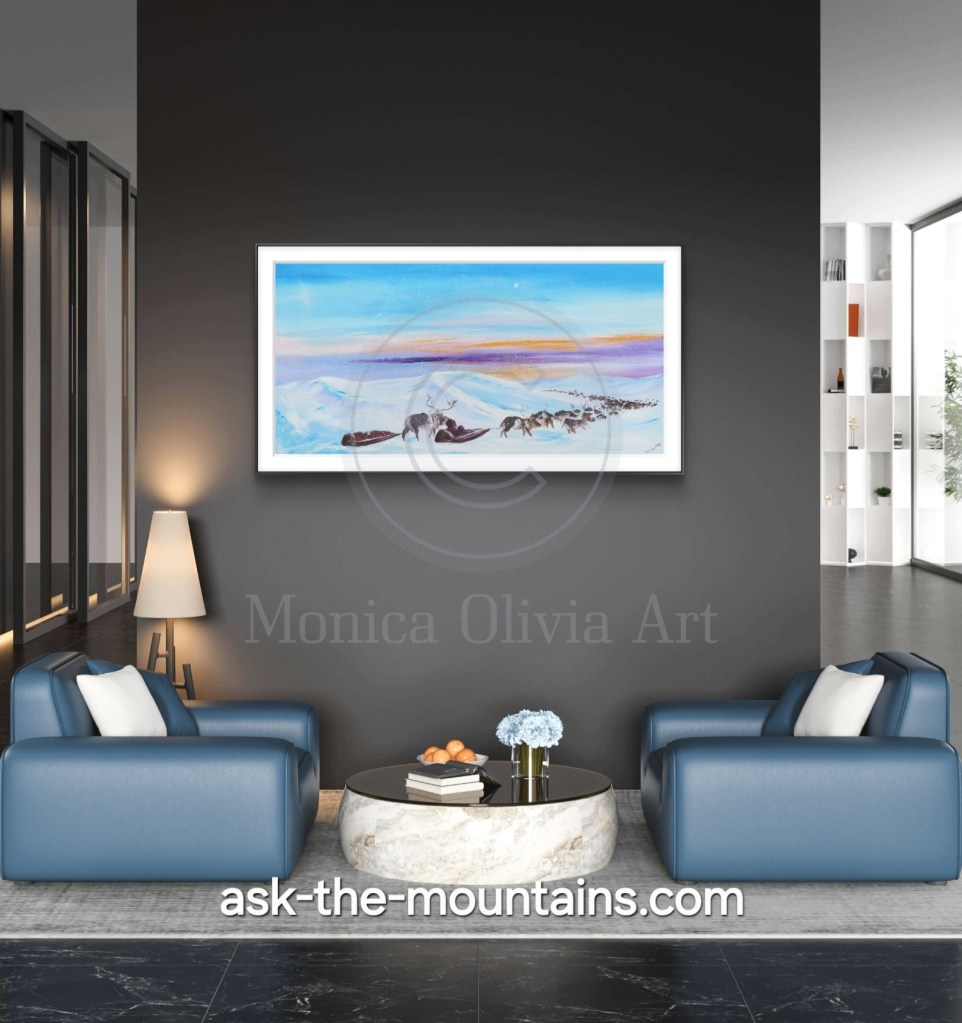
Way of Life | Art print

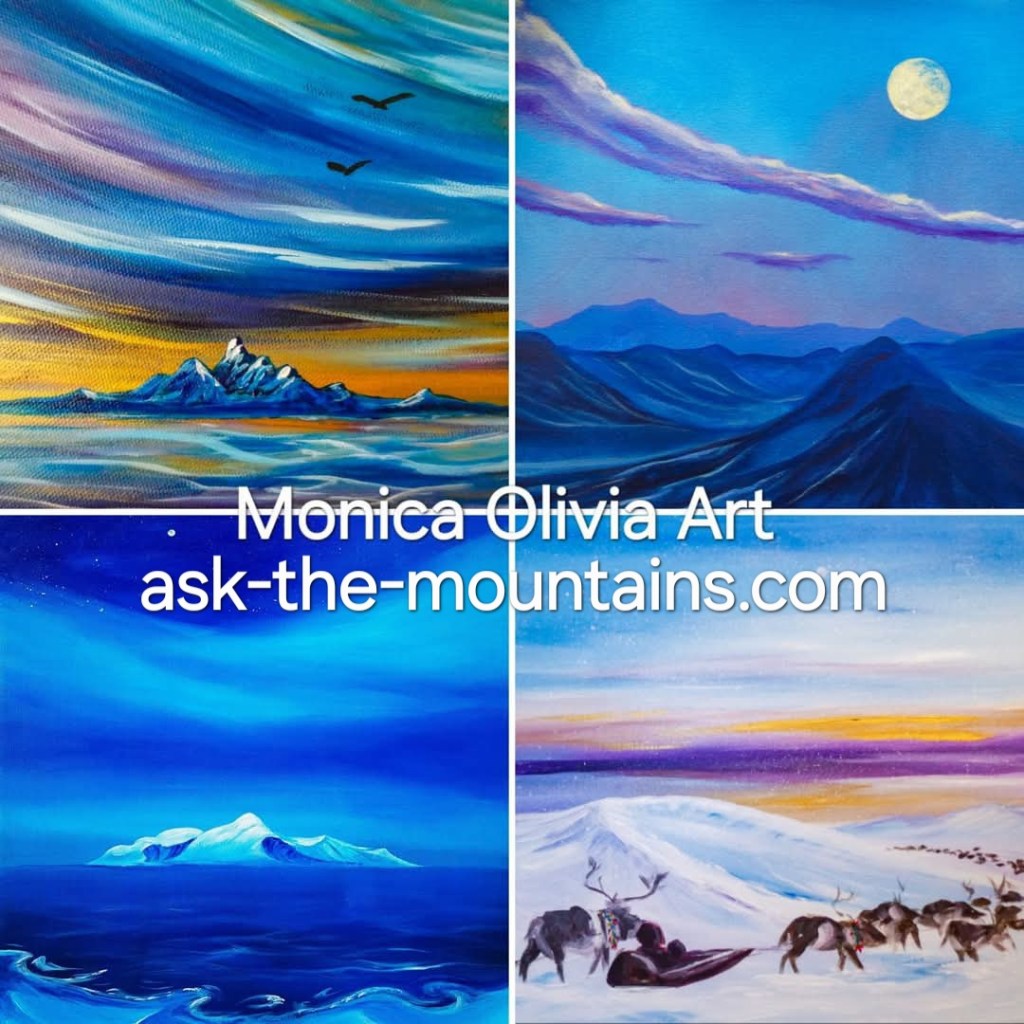
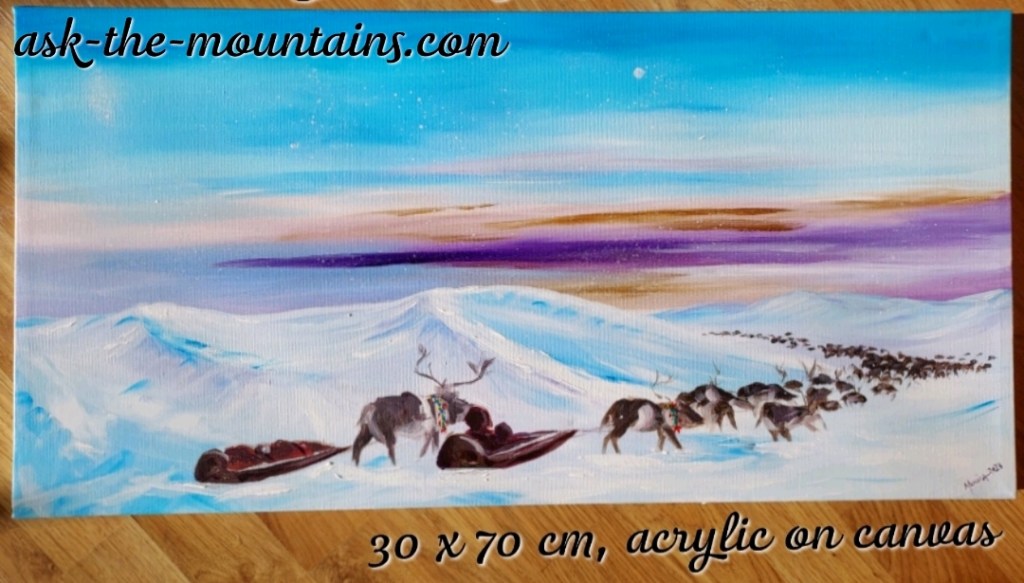
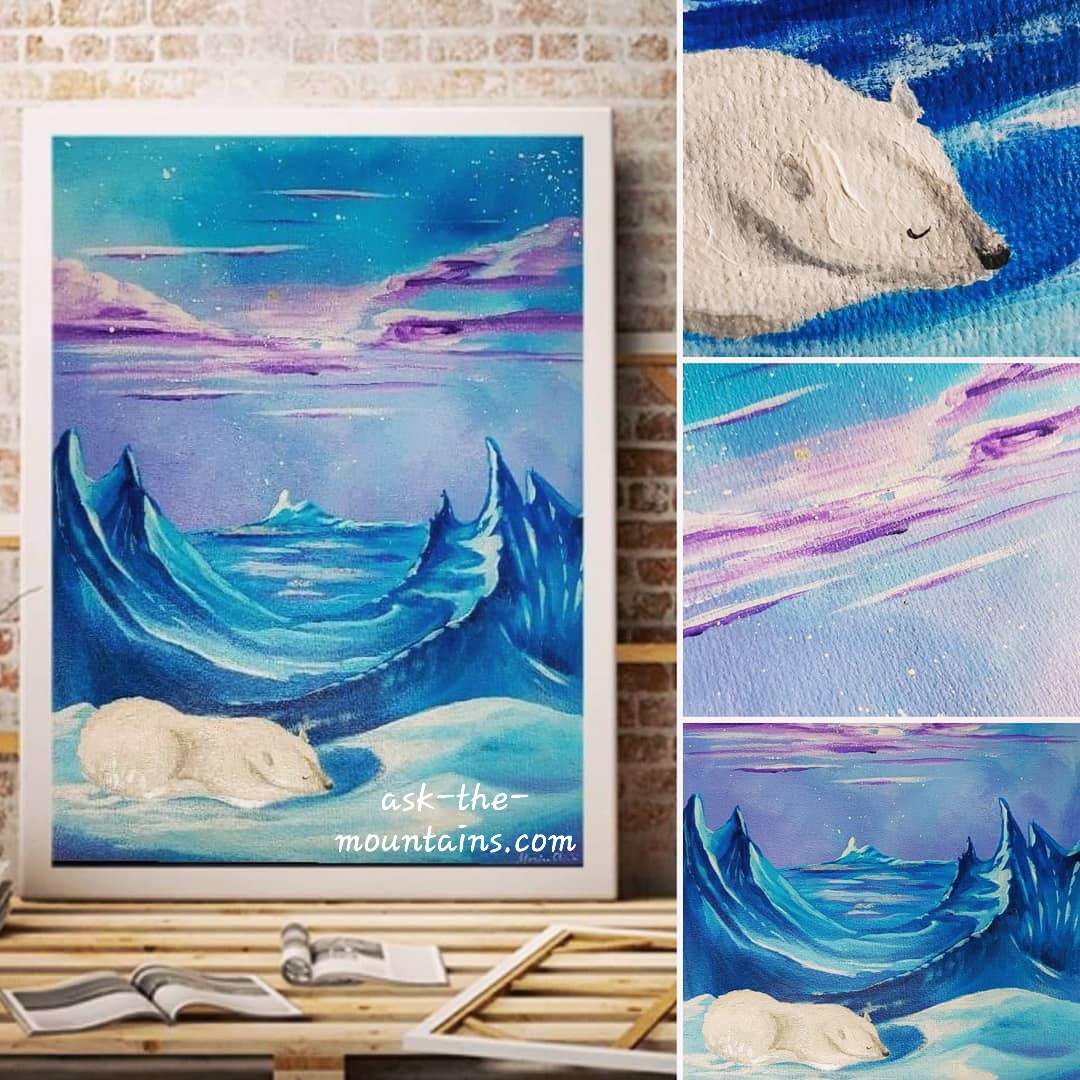
This is the landscape nomadic peoples of the Arctic have travelled for decades and generations. Moving their herds and homes and children safely tucked onto sleds, across the tundra. This is still the case in some areas. If you’ve witnessed the ever-changing play of colours and atmosphere during the Arctic winter and Polar night, it looks something like this; pastel skies, crisp clear air, moon in daytime and the sun hiding behind the horizon, blessing us with a few rays here and there before leaving for a few months. I am in awe at how my ancestors have survived and even thrived here for so long; I feel moved to my core by their know-how of the elements, seasons and animals. “Way of Life” art print, 2400 NOK 🩵💜🤍🧡 89 x 46,5 cm including white edges. The prints have the title written on the white part in front, and signature on the back.

Can be shipped anywhere 🙏🏼

Shown on dark wall 🖤
Shown on light wall 🤍
Acrylic painting, Animals, Anthropology, Arctic, Art, Artist, Aurora borealis, Beauty, Culture, DIY, Duodji, Everyday life, Family, Finnmark, Genealogy, Heritage, Indigenous, Landscape, Motherhood, Nordic, Outfit, Painters, People, Photography, Reindeer, Saami, Sámi, Sápmi, Uralic, Womanhood

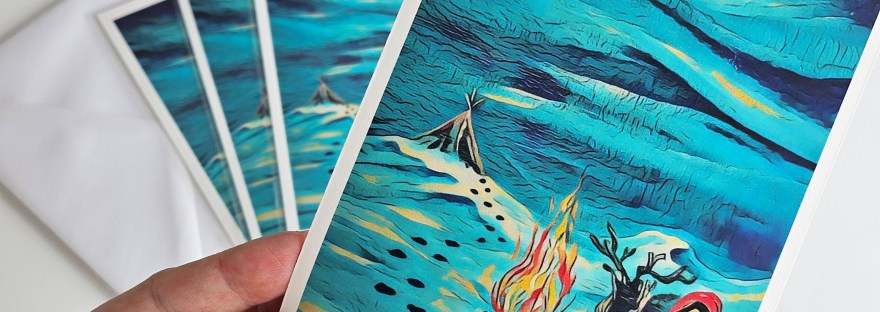
I will keep you safe and warm 2.0 / Art for sale

Art card with envolope ✉️ 17 x 12 cm including white edges. 75 NOK (norwegian kroner) Can be shipped anywhere 🤍🌍

The prints are made from a painting I did back in 2021 when I first became a mother. Afterwards, I slightly edited it digitally, and thought it looked wonderful as printed art cards 😊 I have 3 cards available currently.

Barn, Books, Culture, DIY, Everyday life, Family, Finnmark, Hjemmeskole, Homeschooling, Indigenous, Landscape, Mental health, People, Photography, Womanhood

Hjemmeundervisning?

Noen gode åpenbare grunner jeg kom på til å kanskje velge hjemmeskole.

Alle foreldre vil jo det beste for sine barn. I det siste har vi tenkt mer og mer på å hjemmeundervise våre. Enn så lenge er de jo begge under 5 år, så vi har ennå litt tid på å ta avgjørelsen, men det er per nå hva som føles mest rett. Personlig kjenner jeg ennå på ettereffektene av 13 års skolegang (10 år grunnskole og 3 år videregående) og den skolevegringen som fargela alle de årene. Jeg er altså 33 år, men tenker fortsatt på det. Men ingenting er jo svart/hvitt; man kan for eksempel velge å hjemmeundervise de første årene, og så begynne på skolen ved et senere tidspunkt, for eksempel rundt tiårsalderen.

Er det noen av dere som leser dette innlegget som har noen erfaringer å dele på dette området?😊

Acrylic painting, Animals, Arctic, Art, Beauty, Culture, Everyday life, Finnmark, Indigenous, Landscape, Nordic, People, Reindeer, Saami, Sámi, Sápmi

Godt nyttår

Har veldig ofte blitt fortalt at man ikke kan leve AV kunst, sånn inntektsmessig. Jeg tenker like ofte at man kan leve FOR kunst.
Men jeg skjønner hva de mener; det er veldig vanskelig,  nesten umulig, spesielt med tanke på alt av ressurser man putter inn i et slikt tidsfordriv, går det ofte i minus. I tillegg lever vi i en verden der man fort kan oppleve plagiering om man deler sin kunst på nettet, man kan støte på en kreativ eller eksistensiell tørketid der man er ute av stand til å lage noe som helst, man kan være i et stadie i livet der kunst fort blir siste prioritert (f.eks som småbarnsforeldre), kanskje har man ikke råd til å kjøpe mer materiale, eller man kan være så blyg og usikker at man ikke tør å dele kunsten i det hele tatt, og ihvertfall ikke modig nok til å spørre om noen er villig til å betale for det. En annen ting, er at ens kunst aldri vil være for alle, det må man alltid huske på slik at man kanskje tar avvisning bedre. Med andre ord; the struggle is real 😄 Men nå som 2025 er her, jeg nærmer meg 33 år nå i januar og jeg blir bittelitt mer sikker på meg selv og min kunst, så GRUGLEDER jeg meg til å tørre å hive litt av mine penger inn i å lage kunsttrykk og nye malerier, legge de for salg og bare se hva som skjer. Sårbart, men verdt det, tror jeg. ✨️ Godt nyttår!! 🎆

Dette innlegget var originalt lagt ut på min kunstside på Facebook.

Anime, Anthropology, Art, Awareness, Buddhism, Culture, Dharma, Dzogchen, Everyday life, Family, Health, Hinduism, History, Indigenous, Japan, Jesus, Mahayana, Meditation, Mental health, People, Spirituality, Tantric, Taoism, Vajrayana, Yoga

The Laws of The Sun

Have to share this absolute gem of a film 🙏🏼 Found it very well made and entertaining to watch, and a good Dharma film to show kids. I don’t usually watch a lot of animé but I liked it!

Here is the sequel also; The Golden Laws

Happy new year. May all being be free!

Adventure, Arctic, Art, Awareness, Beauty, Culture, Dharma, Everyday life, Finnmark, Hair, Indigenous, Landscape, Mental health, Motherhood, Nordic, Outfit, People, Photography, Saami, Sámi, Sápmi, Self portrait, Siberian, Spirituality, Tantric, Uncategorized, Uralic, Vajrayana, Yoga

The shortest way

“Maintain the state of undistractedness, and distractions will fly away. Dwell alone, and you shall find the Friend. Take the lowest place, and you shall reach the highest. Hasten slowly, and you shall soon arrive. Renounce all worldly goals, and you shall reach the highest Goal. If you follow this unfrequented path, you will find the shortest way.” -Milarepa

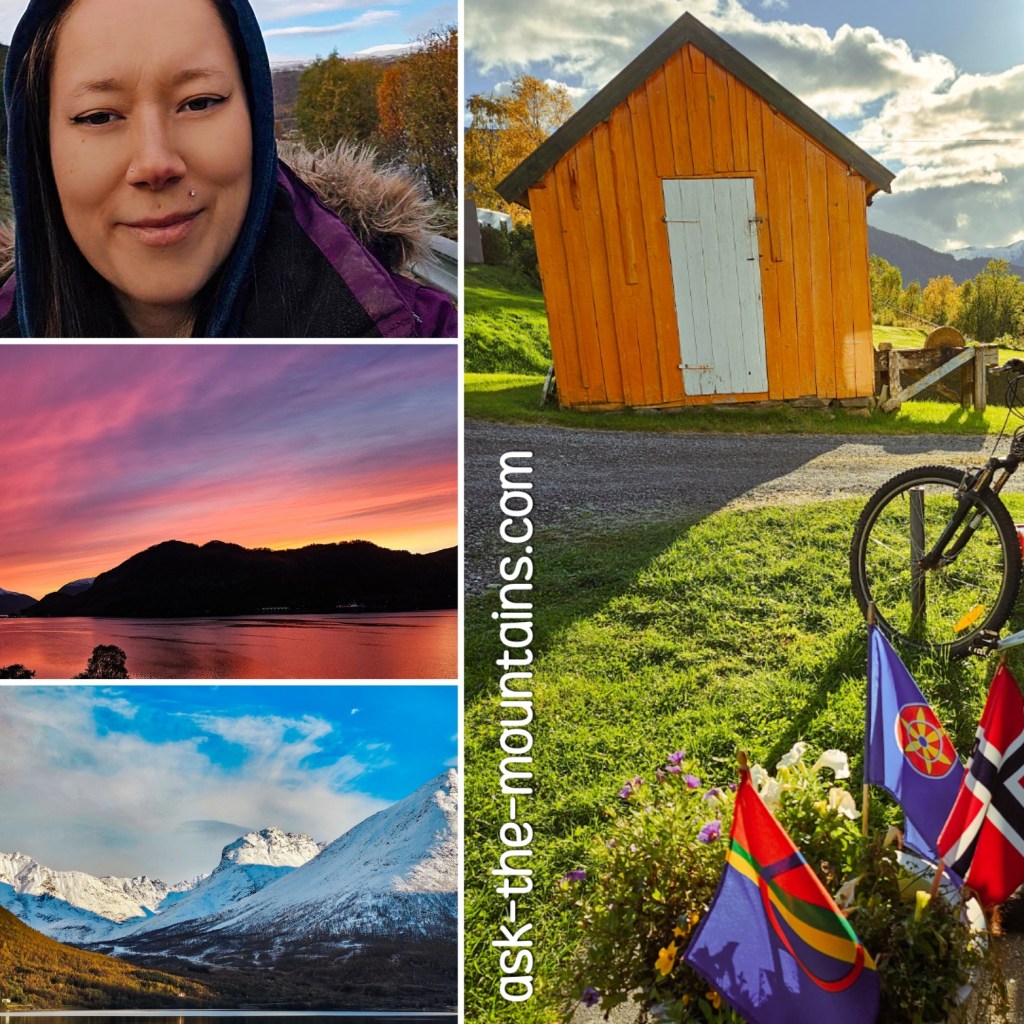
October photos. Colourful sky, sunny days and snowy days.. It’s always shifting very fast here, you could almost say there is four seasons within one season 🌅🌦❄️
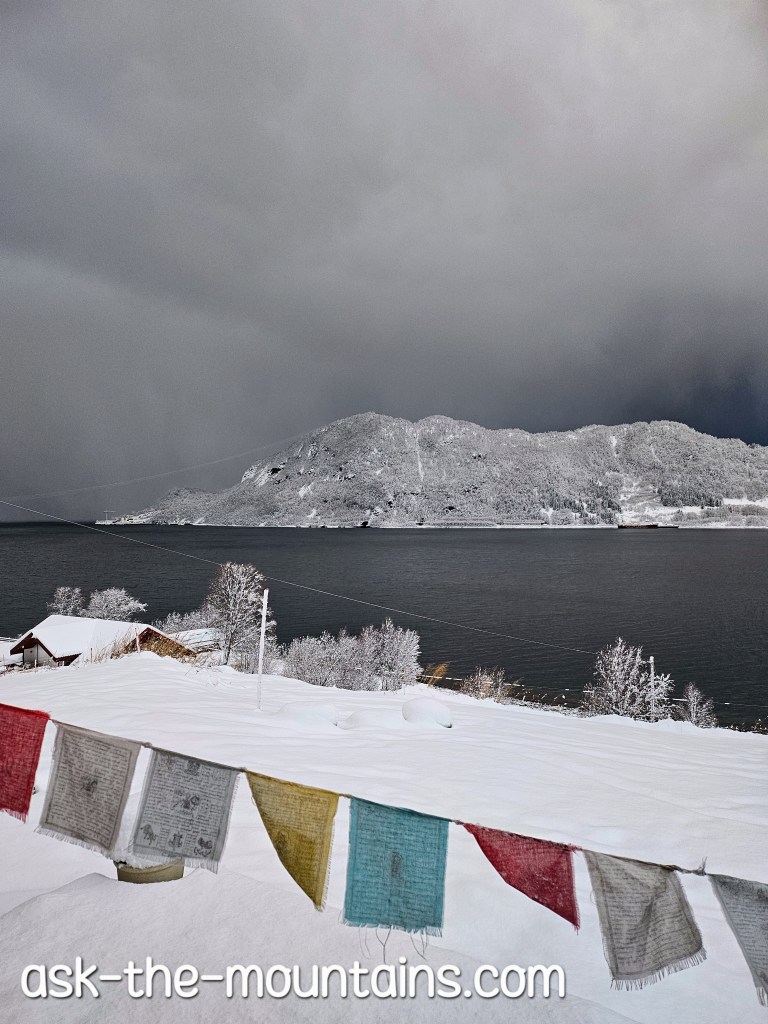
Prayer flags in our garden ☃️ The weather was interesting that day; grey sky and sea, white landscape and a heavy kind of silence.
Acrylic painting, Animals, Arctic, Art, Awareness, Beauty, Culture, Everyday life, Family, Finnmark, Indigenous, Landscape, Mental health, Motherhood, Nordic, People, Pregnancy, Relationship, Sámi, Sápmi, Self portrait, Siberian, Spirituality, Tromsø, Uralic, Womanhood

To all the lonely Mothers out there

Humans are herd animals, we’re mammals. We are literally made to raise children in the company and with the support of other women.

This is something we have lost as a modern society.

I would go as far as to say that we have a pandemic of lonely Mothers. Home alone most of the time with their babies, doing their best, often without much mental, emotional or physical support or stimuli from other mums. It’s not natural. And it’s not healthy for the baby; having their start in life defined by this kind of isolation.

It’s not long ago in our human history that women and mums were much closer, and could rely on each other more. I often wish I could turn back time, and experience that closeness, that kind of Motherhood.

In rare small (indigenous) communities around the world, this is still the case, and used to be like that here too (in Troms and Finnmark).

Loneliness sucks a lot of the joy out of Motherhood. It sits like a gray veil over us and makes us even more isolated. Not to mention the shame and guilt many mums feel for even feeling lonely, bacause we have our babies, so we should feel more than content.

But the truth is that women need women. Mums need mums. Only other mums can truly understand the ordeal of birthing and raising children.

So, if you feel lonely in Motherhood, like me, please do not blame yourself, the fault is not with you. It is that we as a modern society have separated ourself too much and we don’t see the importance and value of a supported mum. It’s kind of obvious though; a healthy happy mum = healthy happy start of life for baby, and thus for the all humans and society at large. It all starts with mum.

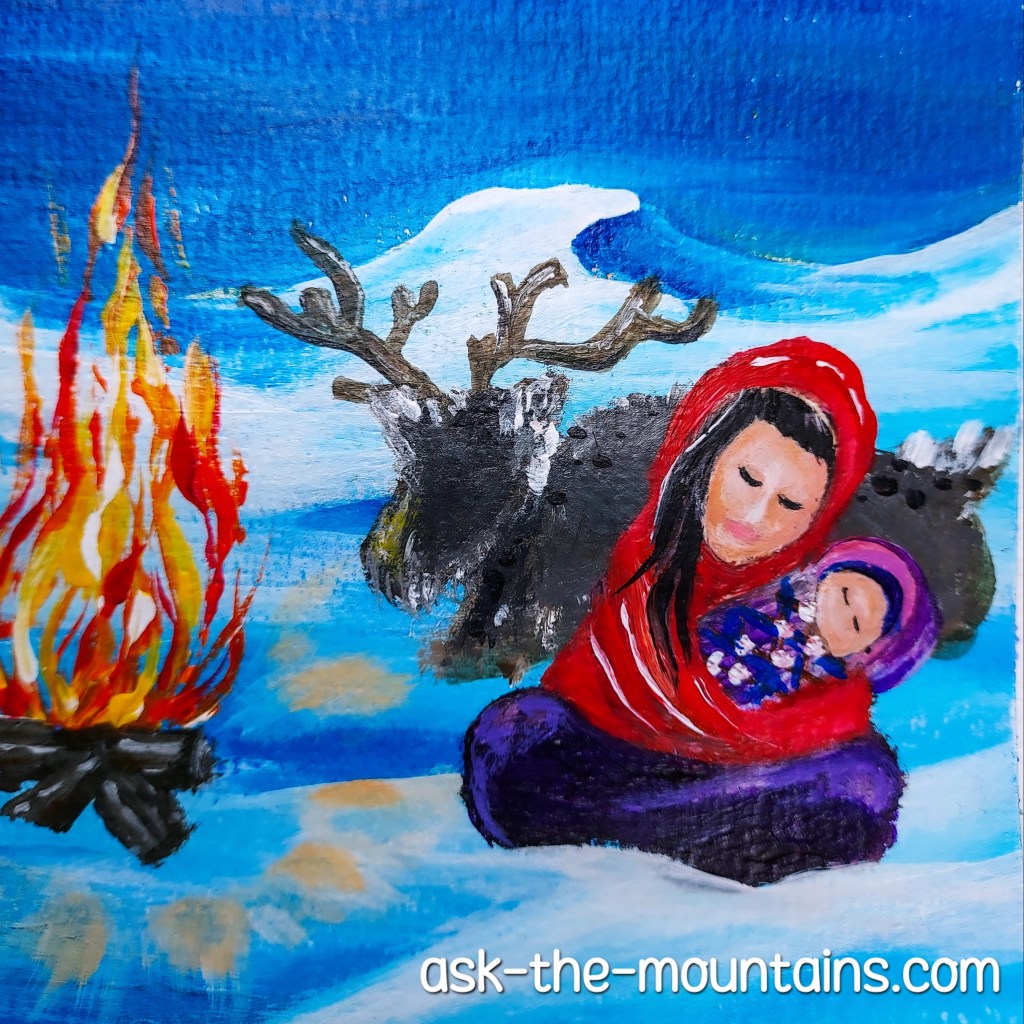
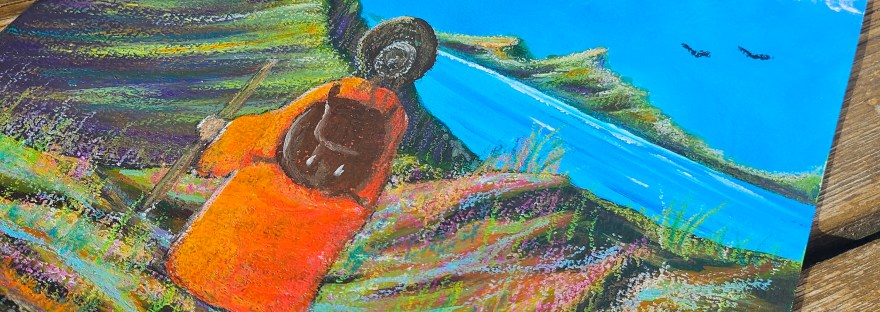
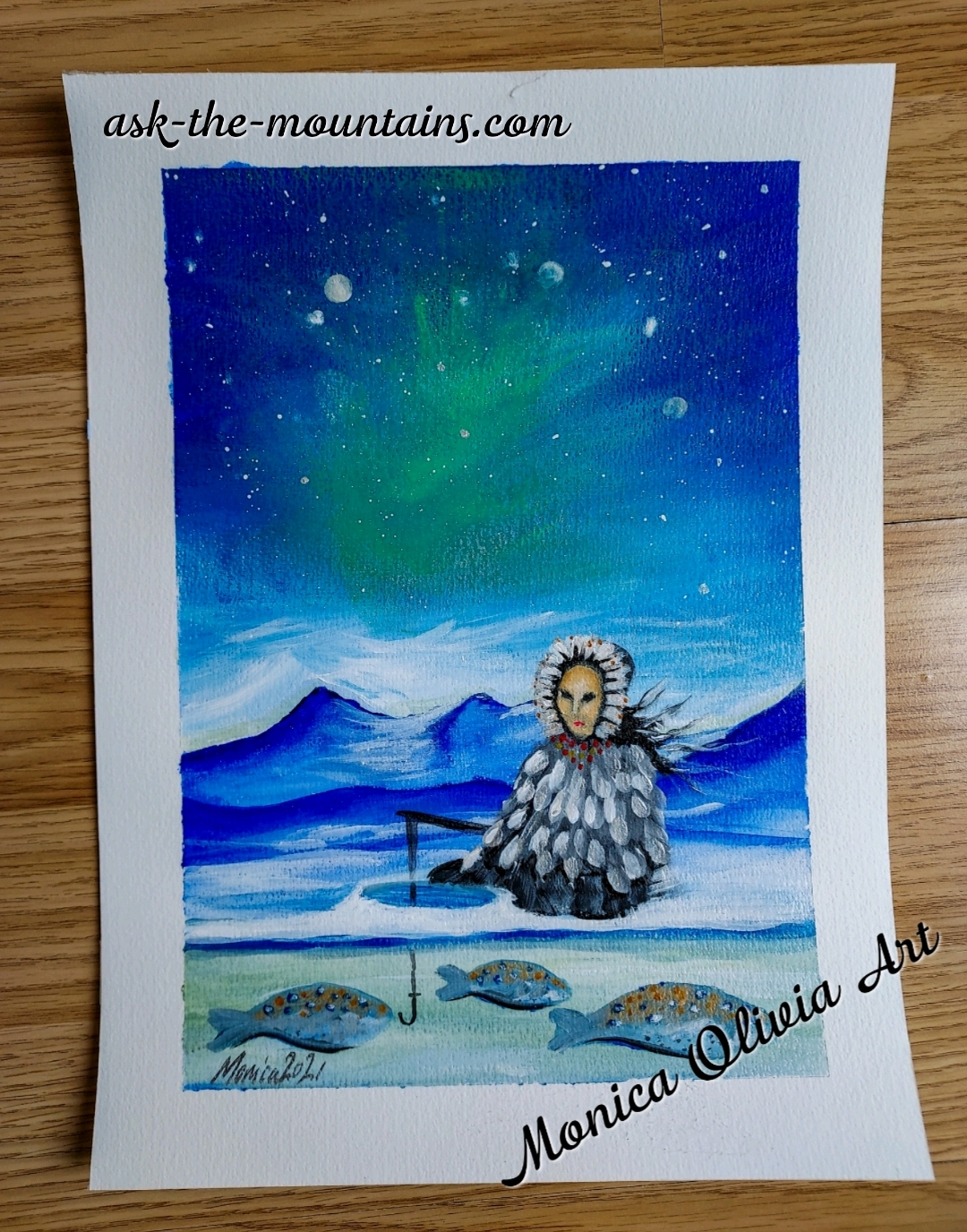
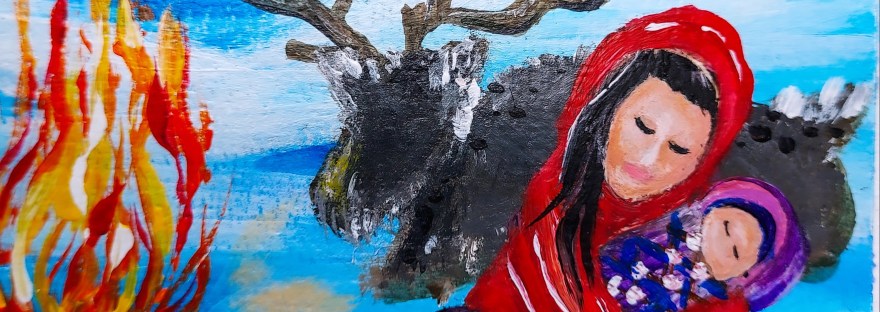
A painting I did some years ago. “I will keep you safe and warm”.
Anthropology, Art, Awareness, Beauty, Buddhism, Dharma, Everyday life, History, Mental health, Neurological, People, Spirituality, Taoism

Smartest guy alive

Really enjoyed this 2 hour interview with “the smarteste man in the world”. Of course IQ isn’t everything, as he says himself, but I guess what I liked about this interview is how he early on in life decided to look for truth and meaning rather than using his brains to make money. They got into all sorts of topics, like beauty, reality, globalism, God, even aliens, cancel culture, etc. Very relevant atuff. Also, I found it funny how he said most buddhists nowadays don’t understand emptiness/sunyata, I think that is true.

Art, Awareness, Beauty, Dharma, Duodji, Finnmark, Indigenous, Jewellery, People, Photography, Relationship, Saami, Sámi, Sápmi, Wedding, Womanhood

Sámi wives’ silver ring

My Traditional Sámi wives’ silver ring 😍💍🥂 It was a gift alongside actual wedding rings. Got married to my best friend and partner in September. Very small short wedding, no guests, just our kids and two witnesses. It was perfect:)

(Made in Kautokeino, Northern Sápmi)

Gold wedding ring inscribed with my now husbands dharma name inside, and he has mine. Never owned anything made from gold before 😄 Always wanted an inscribed gold ring ever since I saw LOTR as a child😜
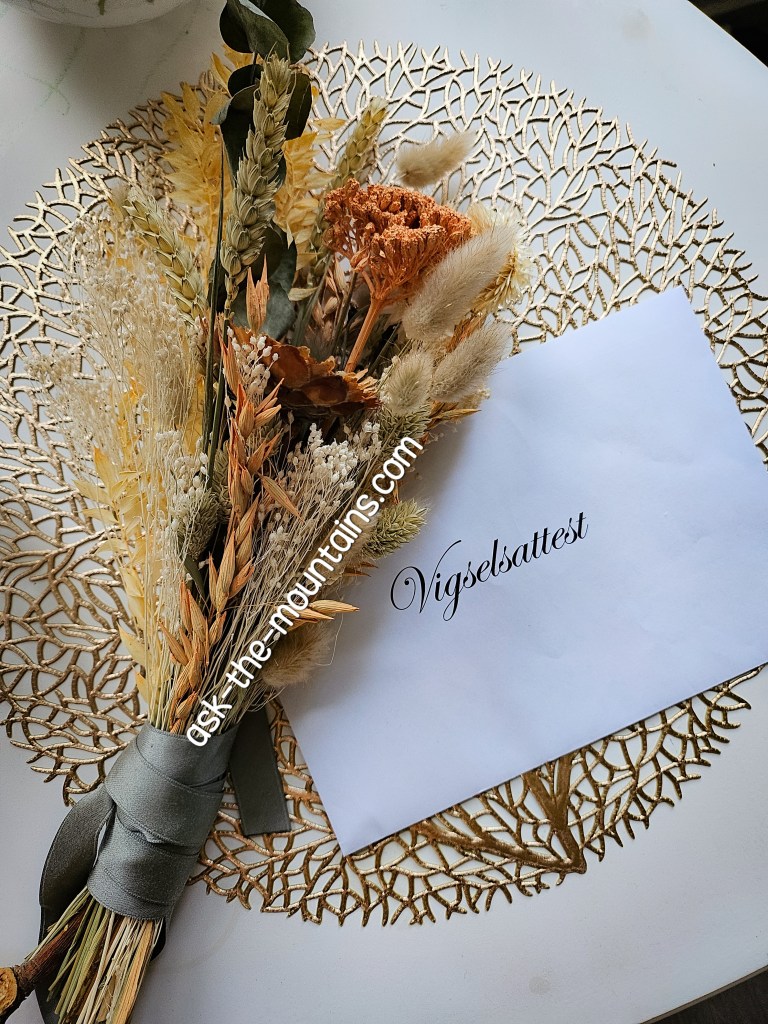
My bouquet was something I put together from dried flowers and the band around it was same colour as my wedding dress; actually I cut the band (belt) from the dress itself because it was too long.
Art, Awareness, Beauty, Culture, DIY, Everyday life, Family, Finnmark, Heritage, Indigenous, Motherhood, People, Photography, Relationship, Saami, Uralic

So simple

Being a parent means receiving a unique invitation back to the present moment by these small individuals who only asks for you to be yourself around them, to be fully in the moment and to see them for who they are. It’s so simple that even a child can understand it.

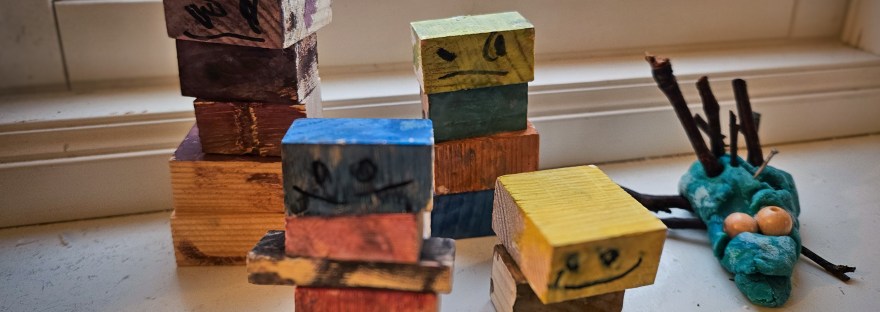
Our oldest son, who is almost 4, made these funny little “dolls” representing our little family 😅 Apparently, I am the grumpy one 😂
A hedgehog he also made from blue dough and a stick from the forest.
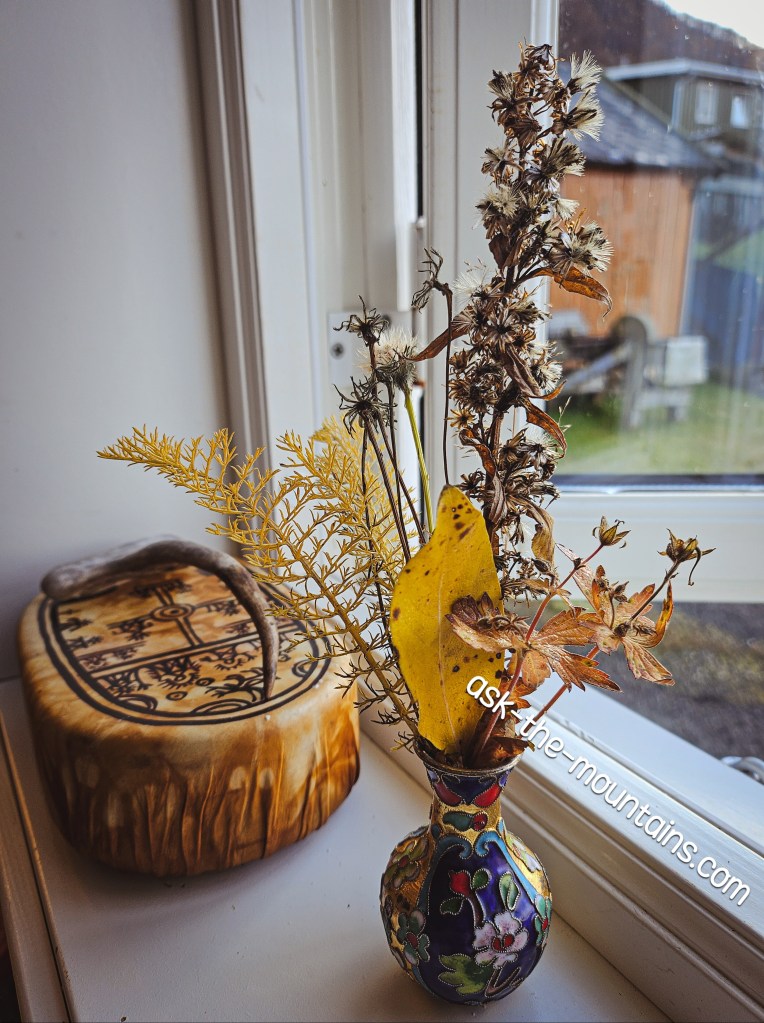
An autumn bouquet I picked on that same trip into the forest 🍂 Next to it is a small Sámi shamanic drum that our son received for his 3rd birthday.
I drew this little boy recently 🩵
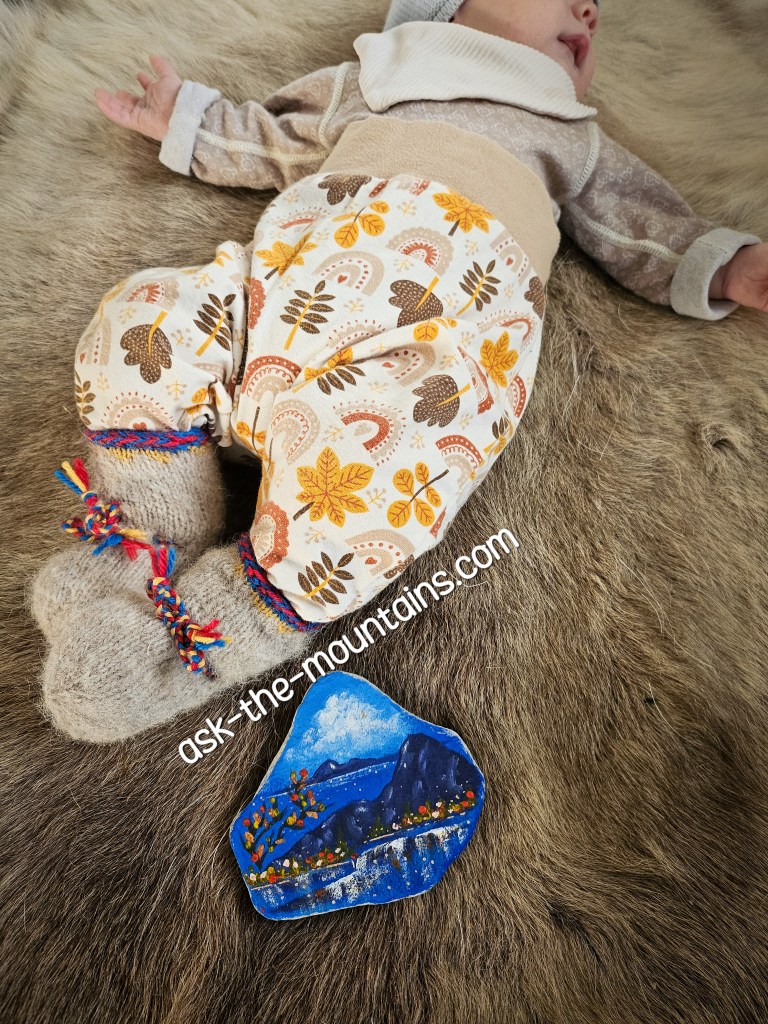
And gave birth to this little boy in August 😄🩵 Healthy and beautiful, 3250 g, ten fingers and ten toes. The birth went so well and quite fast, all due to how much I had prepared my mind and body for it. Days are a bit monotone at the moment, like postpartum days usually are; diapers and carrying baby around, but felt much more up for the task this time than when we had our first son back in 2021 when everything was new to us. I have to admit though it is a bit lonely sometimes due to not having any mum-friends nearby, and not much time for painting either, but found this flat rock one day me and him were out walking with the baby shawl, and so made this quick little autumn painting 🍁

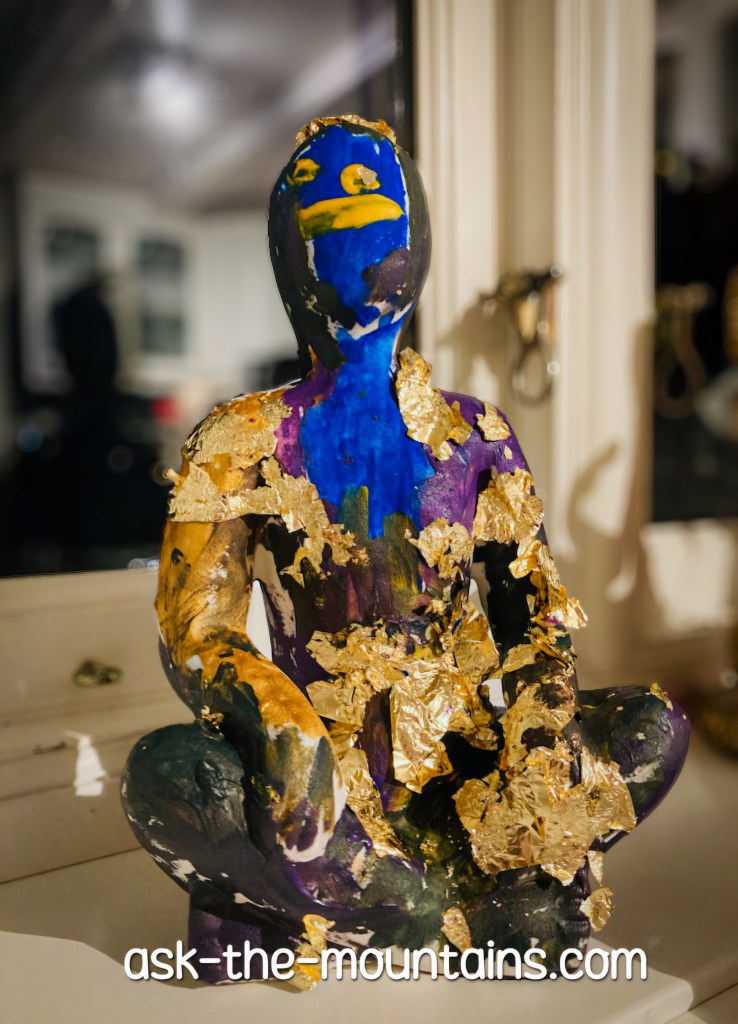
Oh, and I just have to show this gift our oldest made for his dad/my husband for his 35th birthday in October. It was a white statue that I bought, and then he decorated it with paint and gold flakes ✨️🎁

Arctic, Art, Awareness, Beauty, Culture, Everyday life, Finnmark, Hair, History, Hypnobirthing, Indigenous, Keto, Landscape, Make-Up, Motherhood, Nordic, Outfit, People, Photography, Photoshoot, Pregnancy, Quotes, Saami, Sápmi, Self portrait, Womanhood

Surrendering to an unseen force

“Pregnancy is a process that invites you to surrender to the unseen force behind all life.” 💚🧡🤍🩵 Photos taken by Gunhild Berg Johansen, I was ca 6 months pregnant here.

I highly recommend this very helpful and insightful podcast episode on breaking the fear-tension-pain cycle that most women go into when in labour, myself included. I am very close to giving birth to our second child, and feeling all the emotions that comes naturally leading up to that. This podcast episode really helped me, along with a hypnobirthing course I’ve been doing lately.

– Monica Amrita Mani

Adventure, Arctic, Art, Awareness, Beauty, Buddhism, Culture, Dharma, DIY, Dzogchen, Everyday life, Finnmark, Health, Indigenous, Keto, Landscape, Mahayana, Nordic, Outfit, People, Photography, Poems, Pregnancy, Saami, Sámi, Sápmi, Self portrait, Spirituality, Tantric, Uralic, Vajrayana, Yoga

Photo series: Everyday life

In my summer sea sámi gákti. And small baby “shoes” made by mother-in-law 🙏🏼
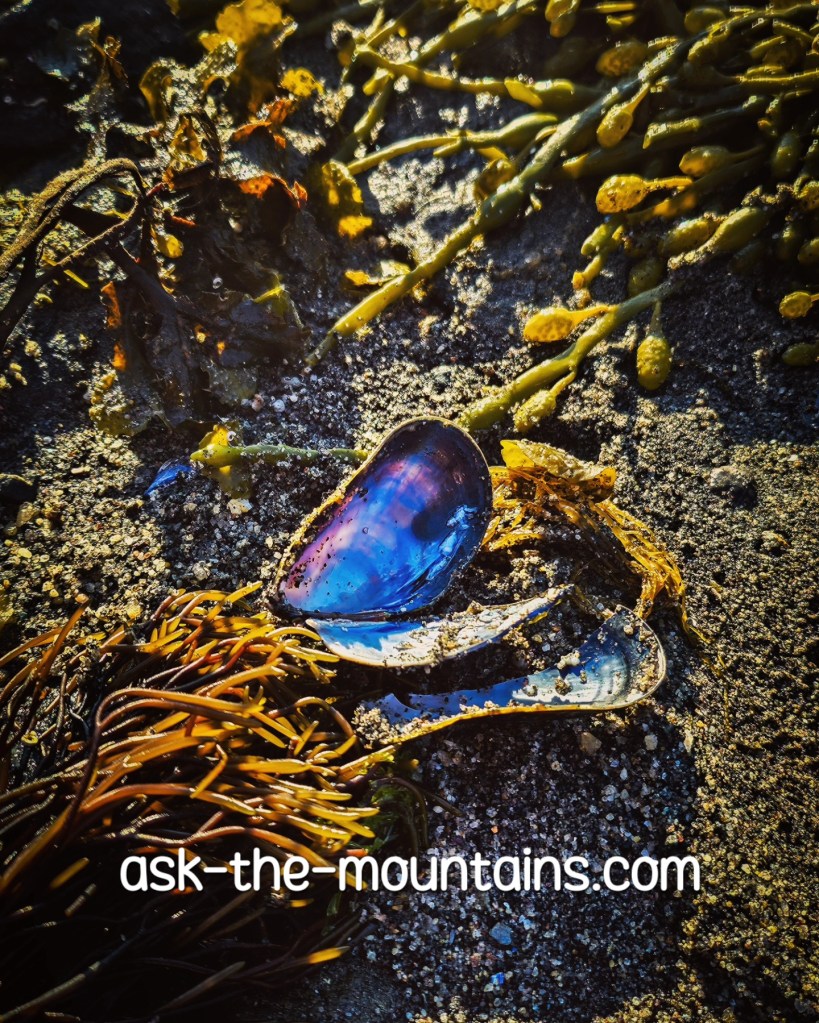
Shades of blue shell
Rusty colours
Blue and purple hues
“Det er morgen igjen, vesle håp
og verden frotterer seg med nyvasket solskinn.
Livets ansikt er aldri det samme
selv om vi ser på det i all evighet.” – Kolbein Falkeid
#home #kitchen #midnightsun
Curious little guy on a short hike in the rain. ☔️
Summer details in some of my older paintings.
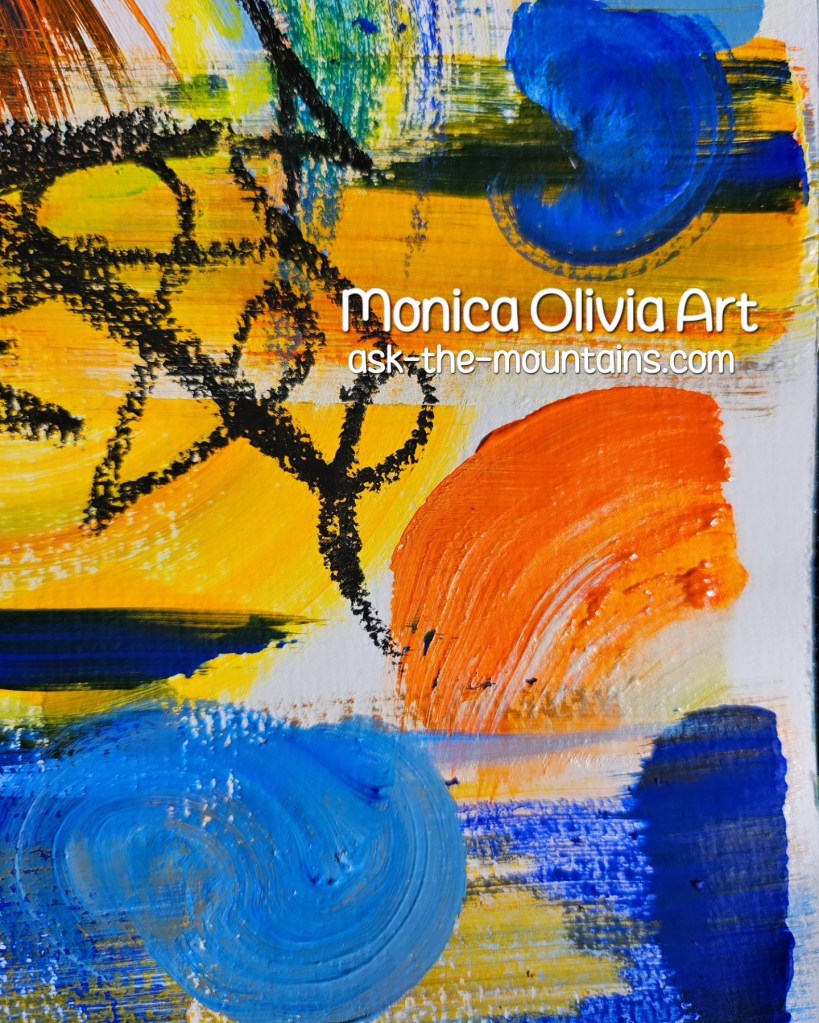
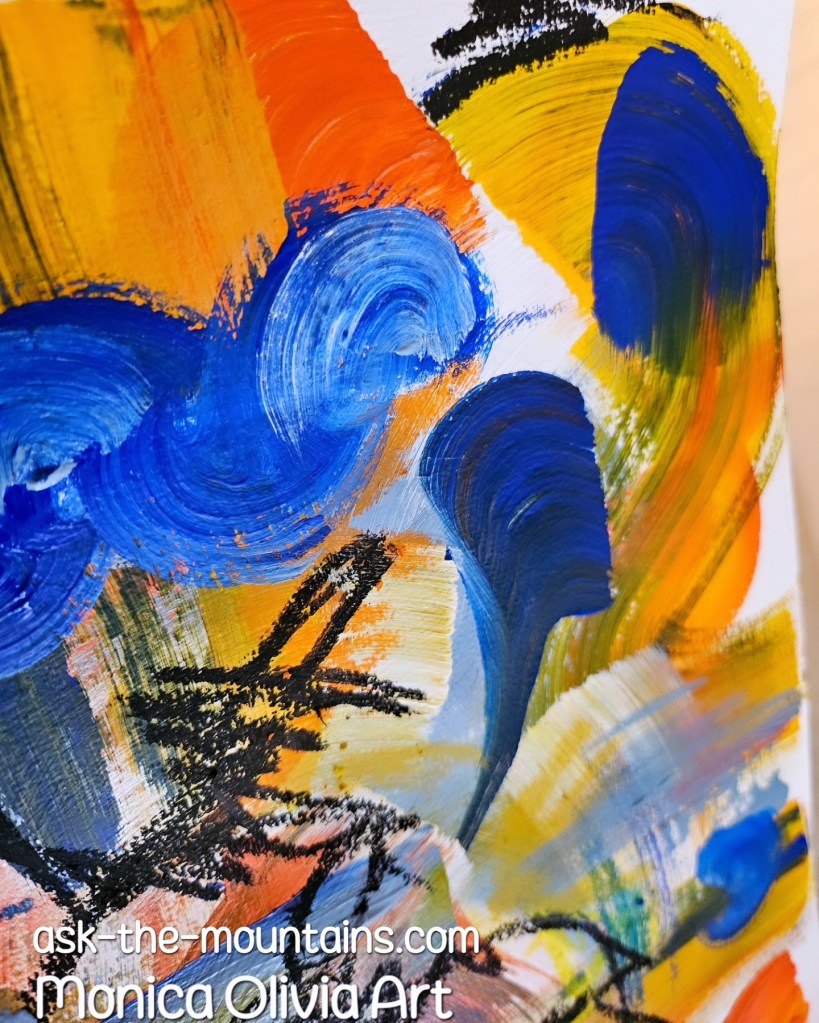
Just playing and experimenting with colours and techniques so that I will hopefully find the Joy of painting again 😄 I guess I have a little dry spell in my creative life at the moment..
Blue, orange and yellow are great together.
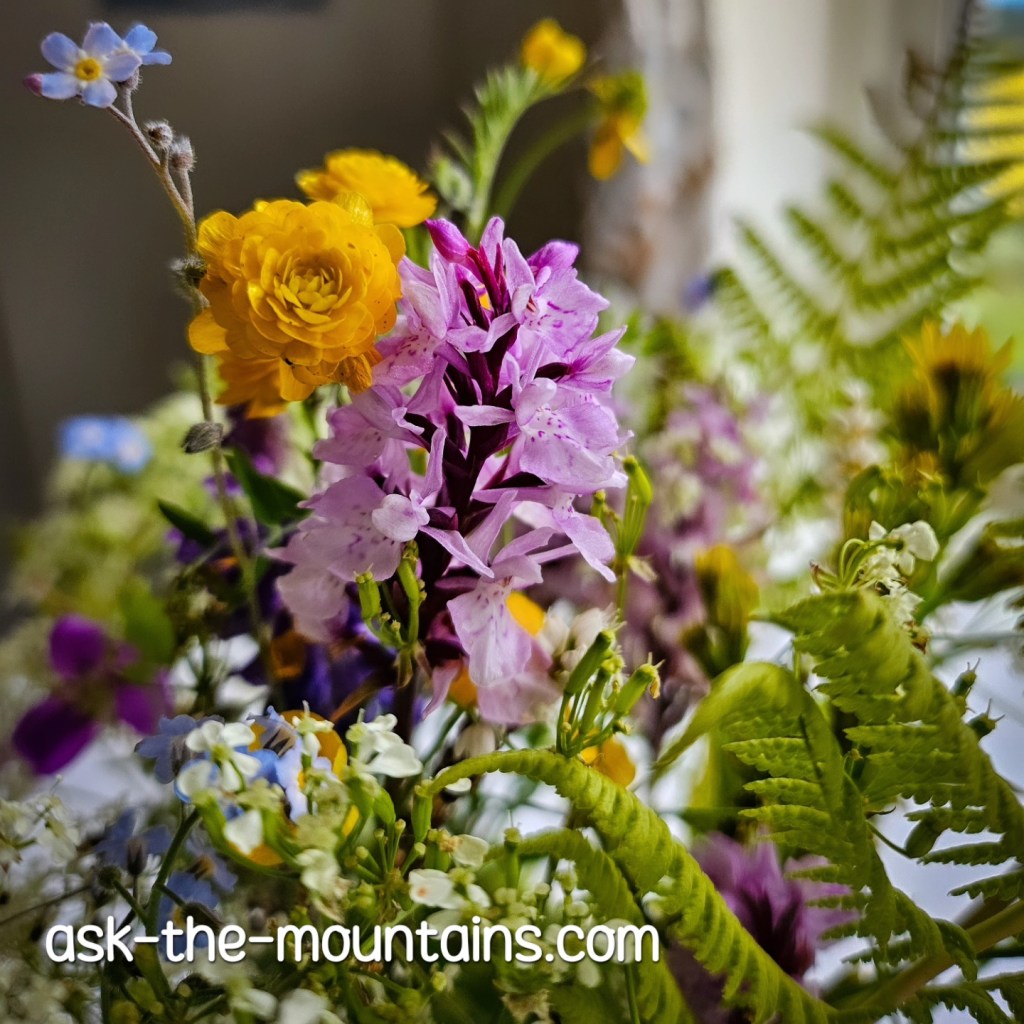
A bouquet I picked by the side of the road.
Details
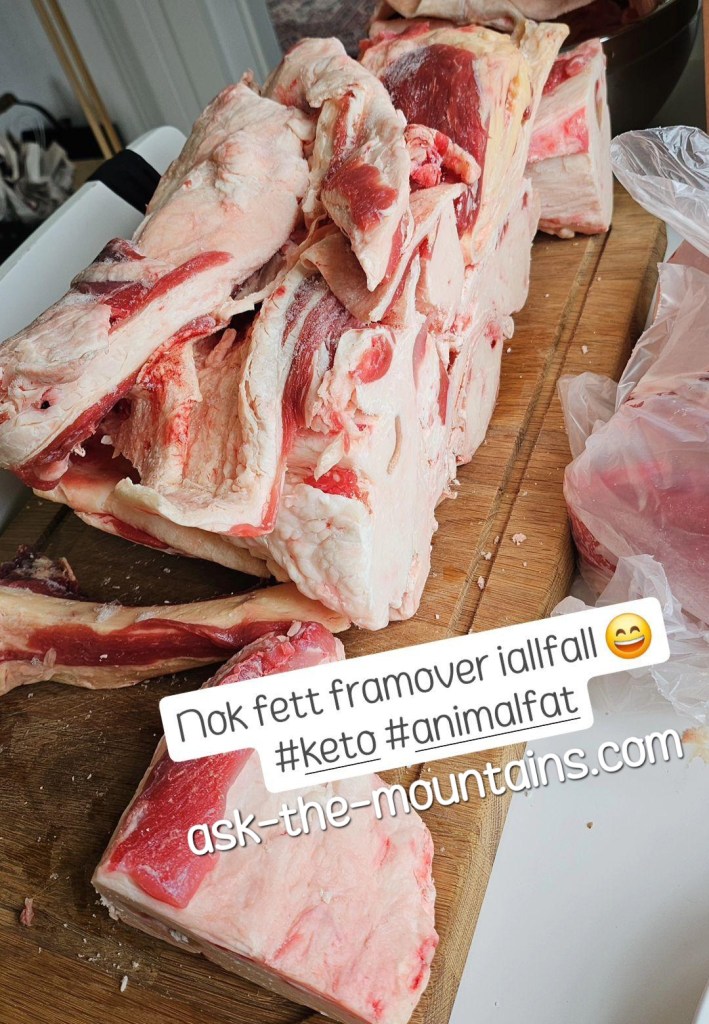
Beef tallow.

Son and daddy 💙💛❤️💚
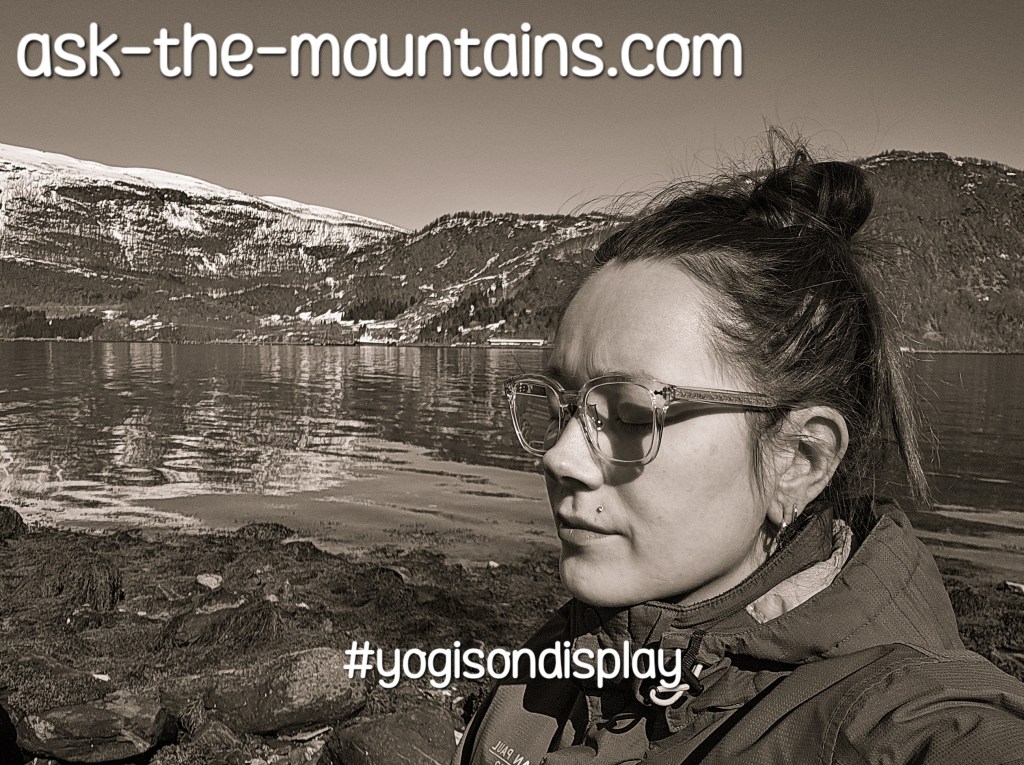
My partner of 14 years meditating. #yogisondisplay
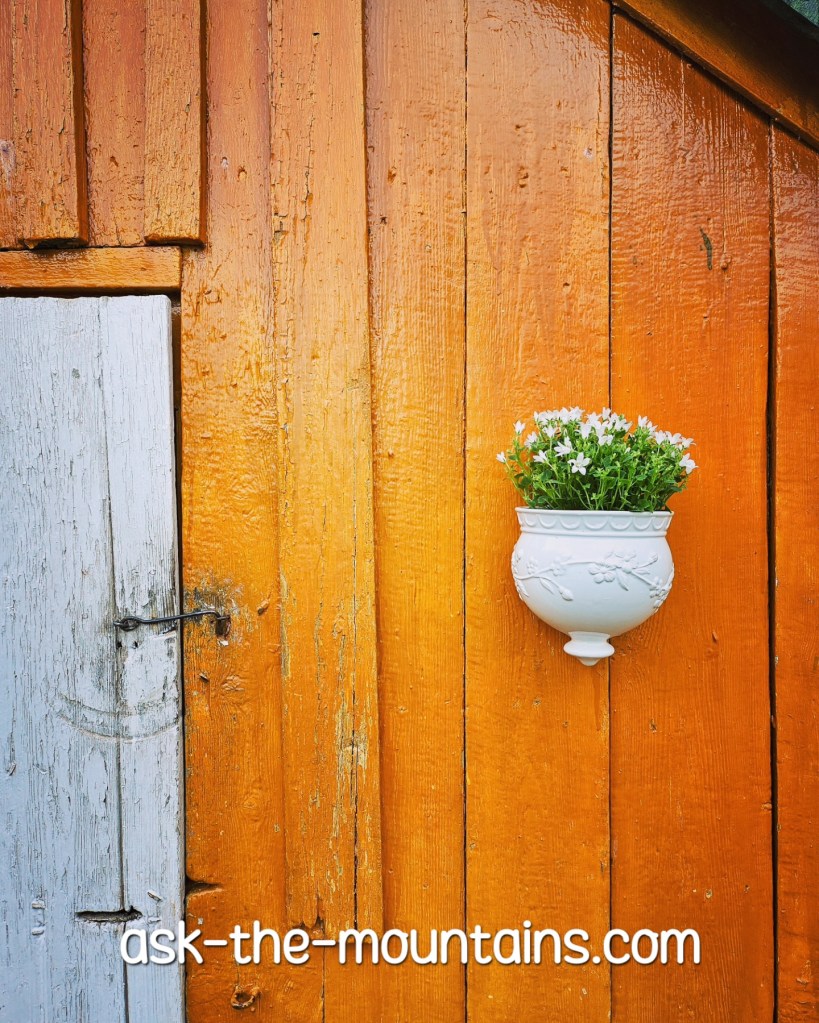
Our shed with some new flowers.
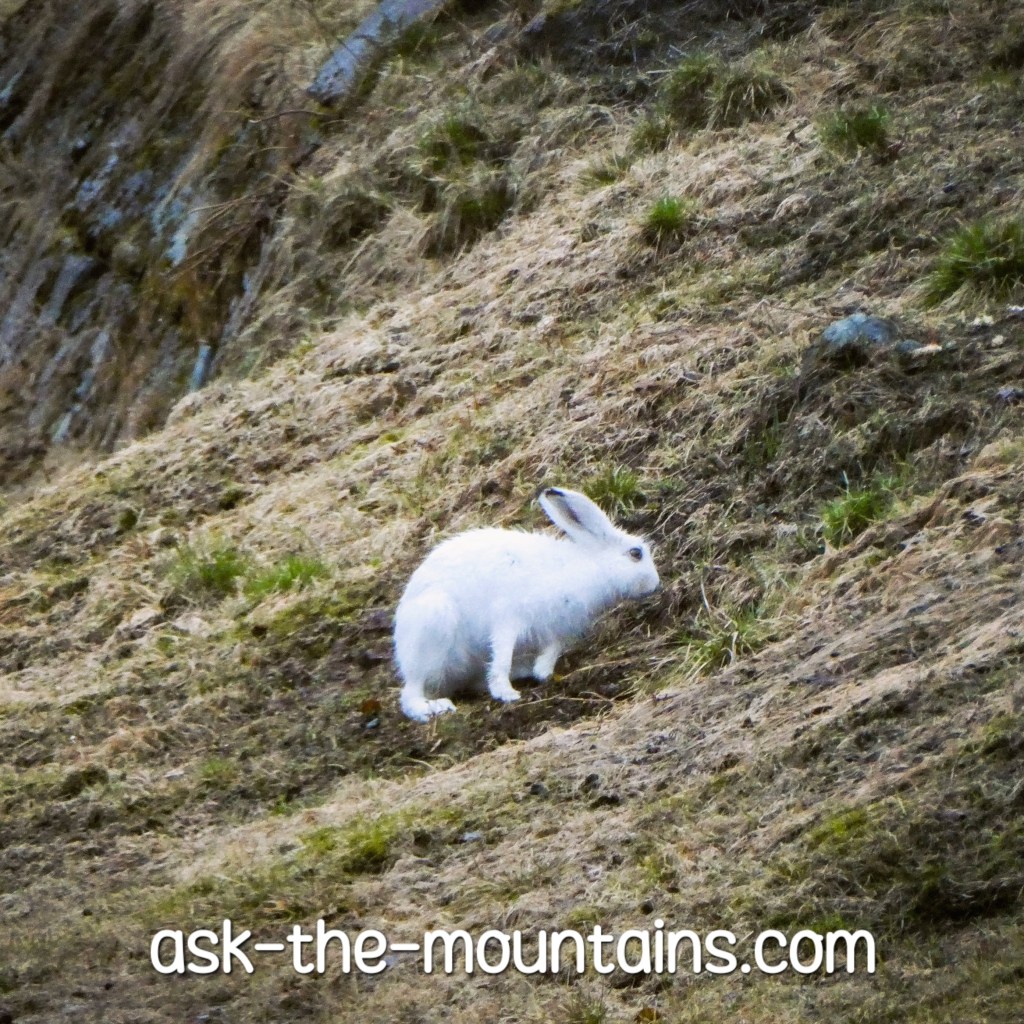
Curious little rabbit in our garden.

Xx Monica Amrita Mani

Animals, Anthropology, Awareness, Chronic illness, Culture, Everyday life, Health, Keto, Neurological, People, Pregnancy, Saami, Sámi, Sápmi, Tromsø, Uncategorized

Is the Ketogenic Diet Safe in Pregnancy? (Very Important)

This short video really highlights something that is close to my heart; right nutrition in pregnancy. Am currently pregnant with our second baby, and since going keto, the difference before and after is like night and day. Especially if I compare to my first pregnancy 4 years ago when I was not in ketosis. I was binging carbs all day and gaining a lot of weight, and barely had any energy. At the end of that pregnancy, I had to use crutches and/or wheelchair. The really shitty thing about using glucose as main energy source is that the more carbs you eat, the more you crave. I’ve noticed that when switching to (animal) fat as the main fuel, I don’t have cravings, mood and energy level is quite stable and I can function a lot better as a mum and basically as a human being 😅 I can write a longer more in detail post about what exactly I eat to maintain ketosis and how it makes sense for me to do that both from a health perspective but also from an ancestral point of view.

(Pictured: beef tallow I eat every day.)

Xx Monica Amrita Mani

Animals, Anthropology, Arctic, Art, Awareness, Beauty, Buddhism, Culture, Dharma, DIY, Dzogchen, Everyday life, Finnmark, Heritage, History, Indigenous, Landscape, Mahayana, People, Quotes, Saami, Sámi, Sápmi, Self portrait, Shamanism, Spirituality, Tantric, Tromsø, Uralic, Vajrayana, Yoga

Yogi on display

Yogi on display in nature for the birds, foxes and rabbits to see 😄 also i found a long-ish animal bone that was perfect to use for hitting on a rock to keep the rhythm while chanting and singing prayers.  🐰🐦🦊🦴

What is #YogisOnDisplay?

“Unlike in cultures long established in the dharma, spiritual practice is not visible in the everyday life of Western society. While many Westerners practice some form of spiritual practice, the actual practice is often kept private. This is a great pity. Not only does it speak volumes about the level of spiritual maturity of the West, but it also means that many people never encounter dharma in the first place. If spirituality is not publically displayed, the fact that there is an alternative to existential confusion and suffering does not reach the masses.

In an attempt to counter this, Amrita Baba has initiated the Yogis on Display project. The idea behind Yogis on Display is to encourage spiritual practitioners of the West to become living examples for others. Instead of hiding away in our modern city caves, we need to bring meditation, mantra singing, yoga practice, and so on, directly to where it matters; straight to the middle of the hamster wheel. Displaying the solution to existential confusion and suffering is a hands-on, time-tested way of practicing care and compassion for all beings.
To spread the message of Yogis on Display the hashtag #yogisondisplay has been created. Practitioners who chose to take part are encouraged to take a picture of themselves and share it on social media using this hashtag. This way more people can learn about the initiative and become inspired to light the torch of dharma in our public spheres.” (AmritaMandala.com)

Acrylic painting, Adventure, Animals, Anthropology, Arctic, Art, Awareness, Beauty, Culture, Everyday life, Finnmark, Genealogy, Heritage, History, Indigenous, Landscape, People, Pets, Relationship, Saami, Sámi, Sápmi, Siberian, Spirituality, Tromsø, Uralic

“Ancestral” 80 x 80 cm

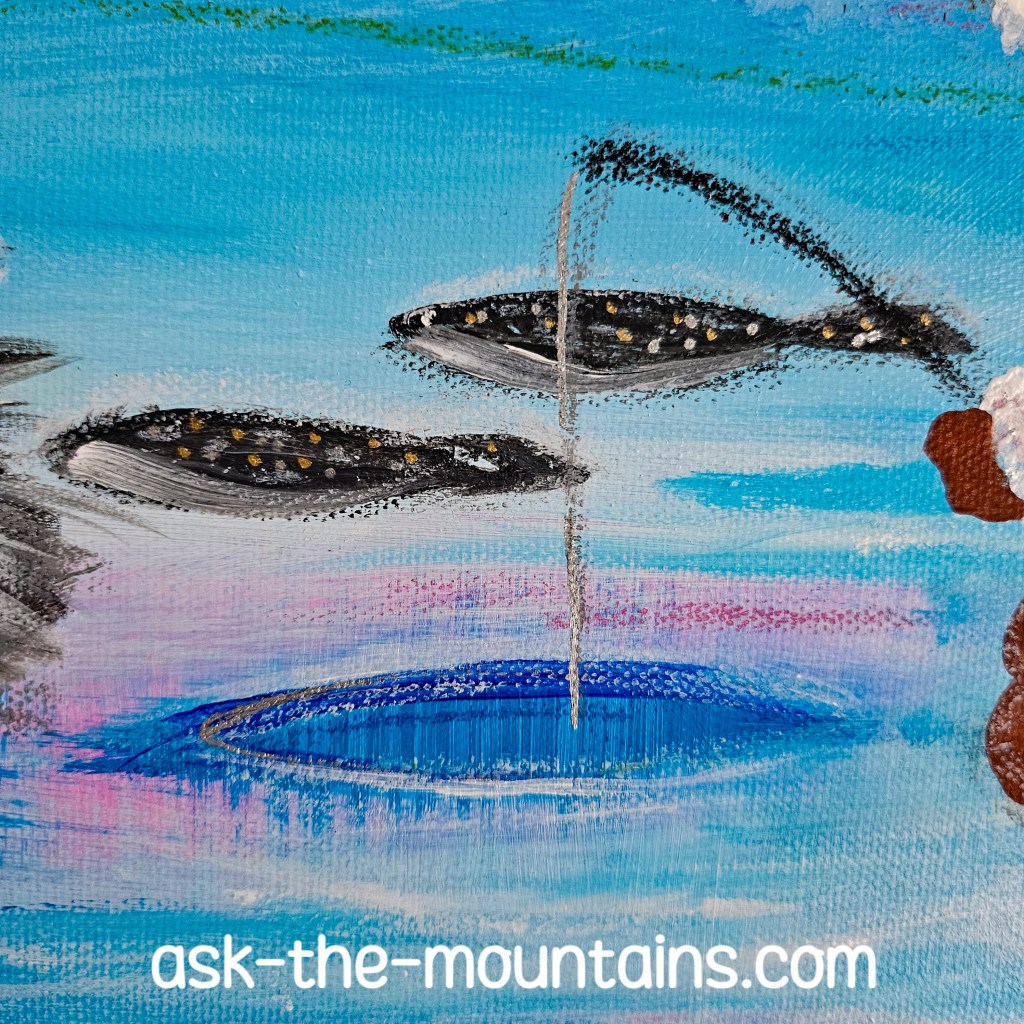
Food and how to get that food is a huge part of any culture. In the Arctic, that food culture has been mainly catching, hunting, fishing and herding, making the foundation of our food for thousands of years an animal based one. We don’t have a lot of local edible plants here, with a few exceptions like berries for example. With the influx of trading and new borders, new foods were introduced, but if you are like me, I don’t tolerate them well at all, especially grains, and a lot of carbs . So I stick to an ancestral Arctic diet that my stomach and body loves, and I feel extremely passionately about food culture, so I guess that is what I made this painting about. I also added 3 samoyed sled/herding dogs, as a little head nod to another Uralic Arctic people neighbouring Sápmi; the Nenets. (An obsolete name for them used to be the Samoyed people, a name not used by themselves).
Acrylic on 80 x 80 cm canvas, details in silver and gold pen, oil pastel crayons.
🩷🩵💜🤍💚

Acrylic painting, Animals, Arctic, Art, Awareness, Beauty, Buddhism, Culture, Dharma, DIY, Everyday life, Heritage, History, Indigenous, Landscape, Meditation, People, Photography, Saami, Sápmi, Shamanism, Siberian, Spirituality, Tantric, Uncategorized, Uralic, Yoga

Tantra with shamanistic roots

It is from Eastern Siberia that the word shaman comes from, which means to ‘heat up’. Where it originated before that, I do not know. The ‘new shananism’ people in the west speak of today can hardly be compared.
Shamanism and animism has permeated most if not all of the nomadic and semi-nomadic cultures in this part of the world. The shamans have traditionally been both women and men, though the word ‘shaman’ is masculine form. The feminine word for a female shaman is ‘udugan’ in Tungusic language. In Northern Sámi a shaman is known as a Noaide.
(Acrylic on mixed media paper, A4)
Shaman’s drum to aid in the trance travel

Here is some pictures I used for inspiration for my painting.

I can also highly recommend these practices on youtube by a Uralic Tantric yoga teacher Amrita Baba; where he teaches tantric practices with ancient shamanic masters. Here is part 1 of 4, and the other parts linked below video.

Part 2: https://youtu.be/vS-7P3B7N2Q?si=14fzDmiSptsM0a_q

Part 3: https://youtu.be/2h04mO6bPt4?si=jfKcEQCKLXDRqCcJ

Part 4: https://youtu.be/Auq6GWt-u84?si=BMk0oaolL6tJYPgC

Acrylic painting, Animals, Anthropology, Arctic, Art, Awareness, Beauty, Buddhism, Culture, Dharma, DIY, Dzogchen, Everyday life, Finnmark, Heritage, History, Indigenous, People, Spirituality, Uralic, Vajrayana, Yoga

Two wings of the same bird

I often think about how the two genders are put up against each other in todays’ society, and we forget how to cooperate. We forget that men and women are dependant on each others’ strengths and that we complement each others’ weaknesses. We tend to focus on “who has it worse and who does what is most important”, instead of focusing on “what can we accomplish together, and how can we best raise the next generation, and be there for one another in life’s traumas, challenges and victories”. We hear absurd statements like “what is a woman”, and “do we need men”. The feminine and the masculine are two wings of the same bird, we need both to soar. The feminine power represents creation and wisdom, while the masculine represents stability and action. The whole Universe – and thus you and me – are made of these, and we should not forget that.

(Acrylic and oil pastel drawing/painting size A4, on mixed media paper)

– Monica

Adventure, Animals, Arctic, Beauty, Culture, Everyday life, Health, Heritage, Ice bathing, Indigenous, Landscape, People, Photography, Saami, Sámi, Sápmi, Tromsø, Uralic

Autumn and winter in Arctic Sápmi

Winter is on our doorsteps, snow is here, polarnight is 2 weeks away, and it’s time for cosying up, hibernating, perserving our energy – and perhaps do some more icebaths. A small photo series from September, October and a few from November so far 🤍 Much love from Arctic Sápmi 🙌🏼

Crips air
Half autumn, half winter
Woman walking…
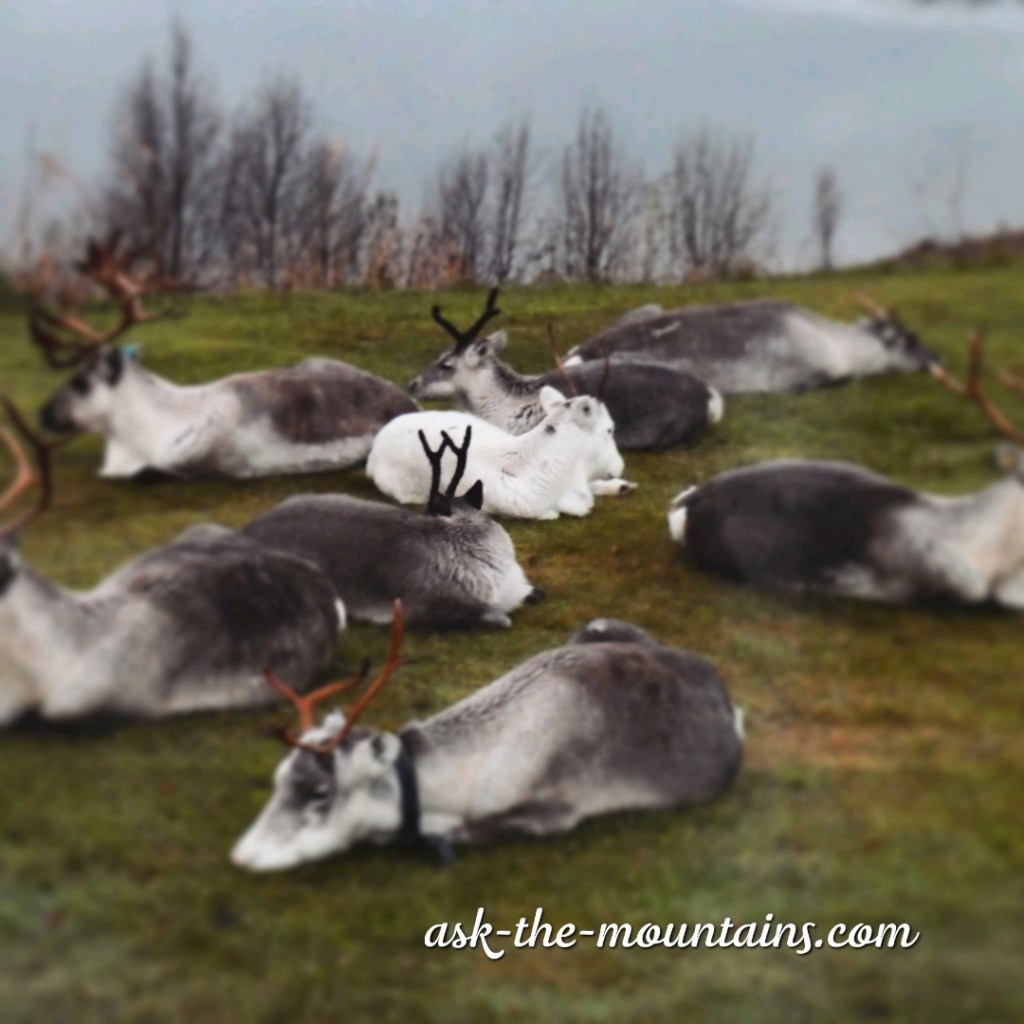
Kitchen view 22.oct. The adults were watching over the white baby reindeer.
Colours of autumn
We are 6-7 women doing ice bathing every week together
Helps to have a fire when icebathing
Sálasvaggi
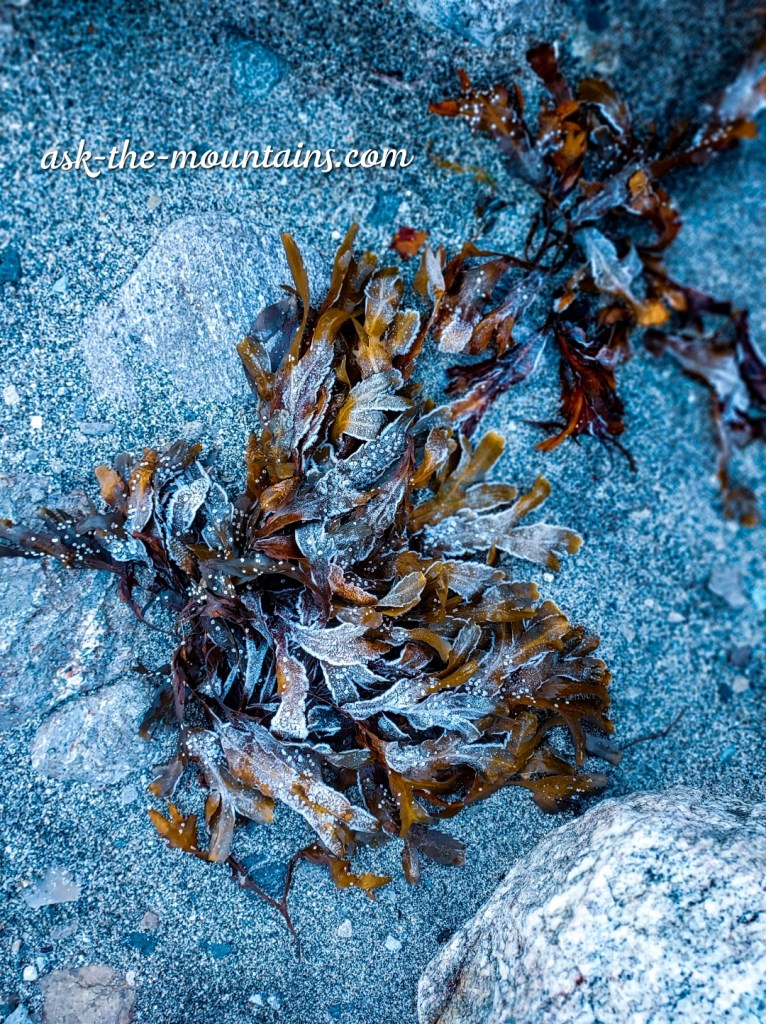
Frost on seaweed
Frosty boat
When winter crept down the hill side
12:30 light
Ida swimming
Kali on a reindeer pelt
Ladies ice bathing
Me ice bathing
Afternoon light in autumn
Reindeer heart…Cooked it with onion and full fat cream
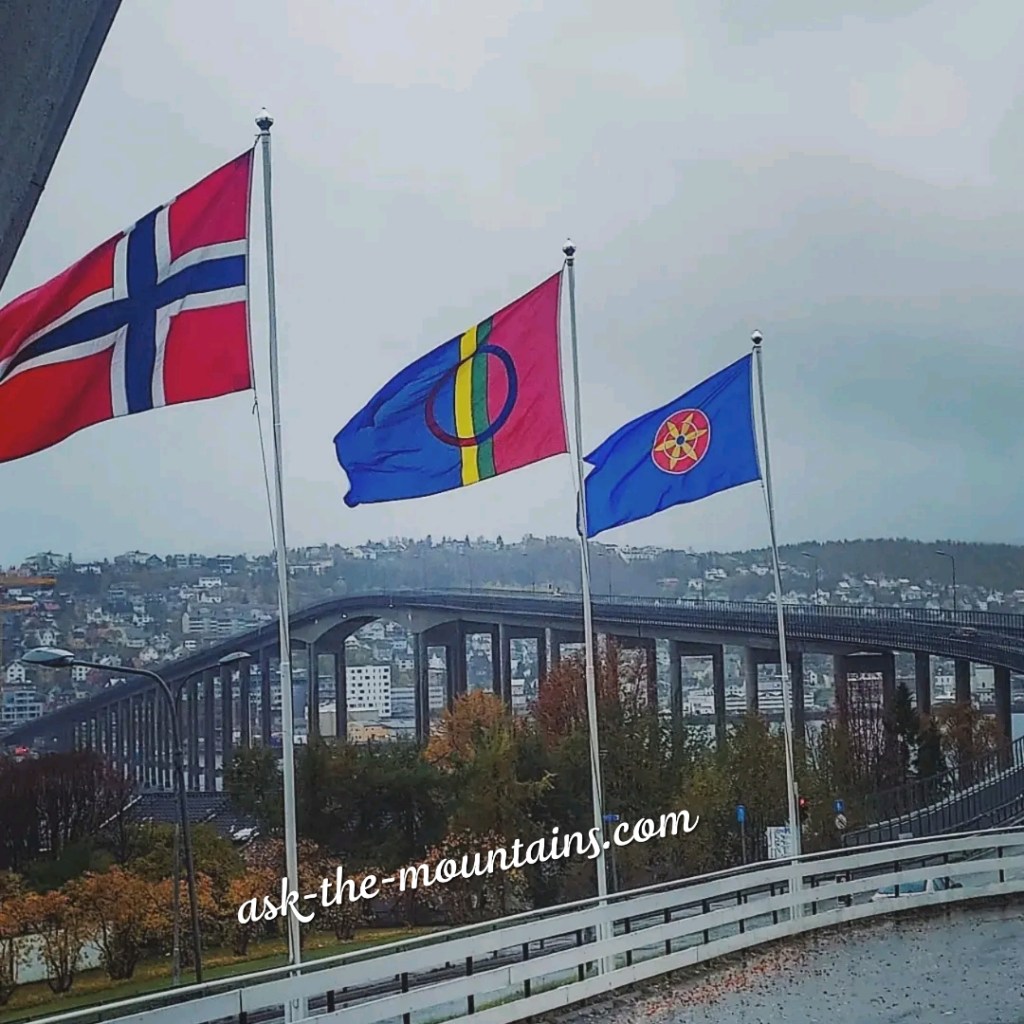
Norwegian, Sámi and Kveni flag next to each other
Blue tones by the river
Pastel hues
Adventure, Arctic, Beauty, Chronic illness, Everyday life, Indigenous, Landscape, People, Sámi, Sápmi, Siberian, Spirituality, Yoga

Nature heals

Been spending most days outside this past few months, especially since we discovered that we have mold in our house, that has been contributing to my health issues, and resulted in me being diagnosed with CIRS/mold illness. It’s a hell of a thing to live with, and we are currently looking for treatment and a new place to live. I hope and pray these things sorts out, so that we can focus on our daily lives as a family and not live in a state of emergency.

In other news, I am (still) working on my film on remaining and recently extinct Arctic Indigenous languages in Europe and Asia. It will hopefully be done sometime soon, and I am so looking forward to share it with the world. I hope that it will be interesting and valuable information for people to watch.

Wishing you all a great and bountiful autumn (or spring if you are on the other side of the planet😅) 🙏🏼🍂🍁

Acrylic painting, Arctic, Art, Beauty, Finnmark, Indigenous, Jewellery, Landscape, People, Photography, Photoshoot, Saami, Sámi, Sápmi, Tromsø, Uralic

Art exhibition May 2023

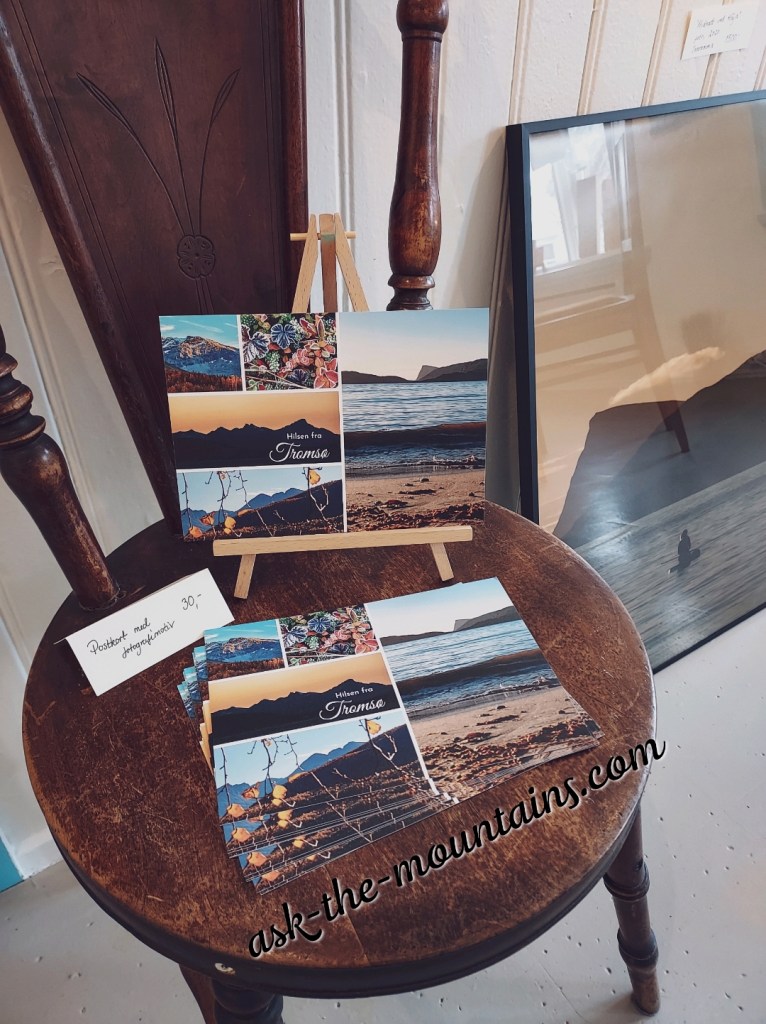
Kunst -og fotoutstilling på SevenDesign Atelier fra 3.-31. mai, oppe i andre etasje, i rommet med de blå vindus-og dørkarmene 💙 Rommet har ett kafébord og stoler, og rommet før har kaffe -og snackservering samt utstilling av andres kunst. Åpent alle ukedager 09:30 – 17:00 (18:00 på torsdager). Har også postkort, print og øredobber til salgs. Jannicke på SevenDesign har utrolige mye annet spennende der, i begge etasjer og flere rom.

Adventure, Animals, Art, Awareness, Beauty, Books, Buddhism, Dharma, Dzogchen, Mahayana, Meditation, People, Relationship, Sámi, Spirituality, Vajrayana, Yoga

The healer within

The following text is from Barbara Brennan’s book “Light Emerging”, page 337 – 343 💜

“Once upon a time, aeons ago before time was known as it is today, there was a spark of light in the heart of the divine. That spark in the divine burst forth into millions of stars. Each star had a name that was written in the word of God. One of those stars is you. As a star, you grew and developed and sang across the heavens to the other stars. In this time before you were born as a human, you knew light, love, and wisdom. Being unborn, of course you had no body, so there was a great deal of freedom. You were completely aware of the essence of your being. You had great freedom to move about the universe at your will. You moved in the direction that you focused in. With your intention, you began creating things. If you had a wish, you automatically created it. You created stone and earth; tree and flower; star and planet; even cloud and wind.

Your essence moved easily, changing from one form to another. You experienced being a cloud, a moon, a sun, or a fish, or a cat. You continued to move as your pleasure led you. As you moved from one form to another, creating more forms, you slowly became identified with form, and shadow was born. You got so excited in the creating that memory slipped and you forgot who you were. You were so busy creating, you didn’t even notice that you began to think you were form.

Shadow grew darker, and pain was born out of forgetting that the true self is essence. The true self is the creator, that which is beyond form. That is how you created shadow and pain. You forgot who you are. You split yourself in two: the part that forgot and the whole that remembers.

Within every human being, there is the spark of the divine in every cell of your body. It is the essence of self. Within that true essence of who you are is the healer within you who has all of the creative power of the universe. The healer within you is named according to the word of God. That is who you truly are. Move your awareness now to your inner essence, your power and light that are completely unique. You are the word of God made manifest. Move your awareness to the total essence of your being—that is the healer within you. You have felt it your entire life. The golden threads of this power have been woven through the tapestry of your life since before you were born. You knew as a small child, as you know now, what this means. Feel the essence, the power, flowing through you. It is your uniqueness. It is your beauty. It is your love. It is the sweetness that you experienced life to be as a child.

Your power lies within the sweetness of who you are. It is within the sweet longings you have protected and shielded from others. You are like a flower unfolding in the sunlight. Feel the power and the nature of your divinity, unlike any other. Now ground that well in your body. That part of you is still free. That part of you can still move freely through space, time, and other realities. Feel yourself in this freedom now. As you are moving through time and space to different types of reality, in the far distance you hear a cry. That cry wells up and becomes more audible, and you say, “Oh, what could that be?” You hear the longing in the cry for help. Then you spot it and you see the beautiful blue and white shimmering planet in the sky. You are drawn closer to that beloved planet by the cries of need. As you get closer, you say, “What can I do to help? How can I answer this cry, this call? How can I help heal the pain that is upon the earth?” Then you have a great idea. You decide to create a physical form by drawing it up out of the earth and drawing the pain with it. You intend to use the physical form to heal the pain. You descended into a tiny physical body.

After nine months or so, you were born into this world as a human being. The longer you remained attached to that body, the dimmer the memory of your original essence became. As a child, and perhaps way before that, you began taking on the pain. During the experience of the pain, you completely forgot who you were. When the pain would leave, you would remember. When the pain would come back, you would forget. The pain that you chose to heal grew inside of your body.

Look over your childhood. Find the deepest pain that you have carried in all those years. With that pain, you will find your deepest longing. What is it that you want to be? What is it that you longed to be as a child that you now and then thought you could never be? Did you want to move among the stars? Did you want to heal everyone on earth? Did you want to paint or to create beautiful music? Did you want to make everyone feel safe? What was it that you wanted more than anything? If you could be or could have anything you wished on earth, have any fantasy come true, what is that fantasy? How is the un-fulfillment of that related to your very deep pain?

Look backward over your life. As you moved through each moment of your life carrying that pain, there is one thread: a repeated cycle on the spiral of life, where that deepest pain from childhood has been repeated over and over and over again in the many different experiences that you have had. If you look at all of those experiences, you will find a common thread among them all. When you find that common thread, then allow yourself to begin feeling that pain. Allow your body to experience this pain. Where has it affected your body? When you feel it in your body, where does your body tense? Explore now throughout your body where that pain has affected your psychic, your spiritual, your mental, your psychological, and your physical being. That thread runs holographically through every portion of your being, and as it runs through your body it hits in particular places that eventually become experienced as physical pain. Find it in your body. If you are sensitive to the auric field, then find it in the auric field.

As you find that pain, on whatever level it has manifested most profoundly—perhaps a fear, perhaps a problem with relationship, perhaps in a physical disorder, perhaps in your profession—then ask yourself a question: “What has this to do with my deepest longing? How is this particular problem associated with my deepest longing of who I wish to be, what I want to do with my life, where I wish to live?” The first job you have is to heal that pain within the body. For it is by the pain in your body and life that you will learn the personal skills that you need to fill your longing, no matter what it is. Find that pain within your body, and put your hands on it: that which you have carried for a lifetime, that darkest belief system that has the most profound forgetting, that one major, deepest pain, be it in your heart, your belly, or in your throat. Put your hand there now, and experience the consciousness there that believes in separation. It is the shadow. It believes it is separate and isolated from everything, isolated and separate with no hope. Find that pain that has been there from the earliest of days, and let that shadow begin to dissolve. Enter into the shadow. Accompany yourself into the dungeon within the self that needs healing. Do not deny the human experience of that real pain from the human perspective. It is not a new pain. It has been there ever since you can remember. It is not the kind of pain that goes away easily, for it is deeply, deeply ingrained. Spend some time with the pain. Then when you are ready, move your conscious awareness to the healer within you. Here is your wisdom. Here is your longing and your light with which you came here to heal the pain that is in your body. Move back to the pain and feel the pain. Then move to the longing and feel the longing. Move back to the pain and then to the longing again. Continue moving from one to the other until you find the association between the two, until you can answer the question, “What does this pain in my life mean to me? What is it trying to tell me? What is the message it brings to me?”

While you are feeling that pain with your hands, from the human perspective, ask the essence of healer that you are what you need to do. What is the deepest cause of this pain? Ask for help to heal this pain. Ask the healer within for help to heal that which you have been unable to heal in yourself up until now. Truly ask, and it shall be answered. Ask very specifically what you can do. What is the cause? What is the belief system? What do you need to do every day? Allow the essence of the healer within you to work through your hands to heal your body. Be a channel to heal the self. Let the light flow through you. After you have received as much information as you can, reach for the highest spiritual reality you know; your higher self or your guides. Reach for the memory of who you are from that highest spiritual reality. You will find that the pain within you is precisely the pain that you were drawn to earth to heal, way back before you were born, when you were that wondrous spiritual being. That is who you truly are. So reach up to that part of the self that has incarnated in order to heal the very pain that you carry within yourself and that you have carried since your birth. For it is precisely the pain you have come to heal, and it is you who have chosen to take on this pain and in doing so you chose to incarnate with precisely the best combinations of energies and wisdom and love to heal that particular pain. That is what you have come to heal, and you are fully equipped to do so. You have fully equipped yourself to heal it. And that wondrous spiritual being that you were before your birth when you heard the cries and the longing from the earth and were drawn toward the earth is the healer within you.

You are the person who knows how to heal that pain more than anyone else. That is your healer within. Be the healer within you, and heal that thread of pain that you have carried throughout your whole life. Touch your body in places you feel pain. As you are working, move your consciousness back and forth between the healer within and the inner person who is in pain. As you continue to move back and forth, you begin to understand the relationship between the healer within you and the pain that it has come to heal. You have drawn this pain up from the earth to transform it. Give yourself plenty of time to complete this process. You are integrating the pain within, the longing that you carry within your heart, and the healer within that can heal you. Let the healer within you draw out that pain and return you to wholeness. Move back and forth between the human with the deep pain, and the healer with universal power. Move them closer and closer together as you move back and forth until they merge. Continue the process until you become completely merged. When you feel satisfied that the merging is complete and has stabilized, I would like you to remain silent for at least an hour. Remain silent, sit in meditation, or simply get up and go for a walk in the woods.”

Adventure, Animals, Arctic, Awareness, Beauty, Buddhism, Dharma, Dzogchen, Everyday life, Film, Health, Heritage, Indigenous, Landscape, People, Photography, Saami, Uralic, Vajrayana, Yoga

November in photos

The sky is always so colourful right before polarnight sets in
Early in November
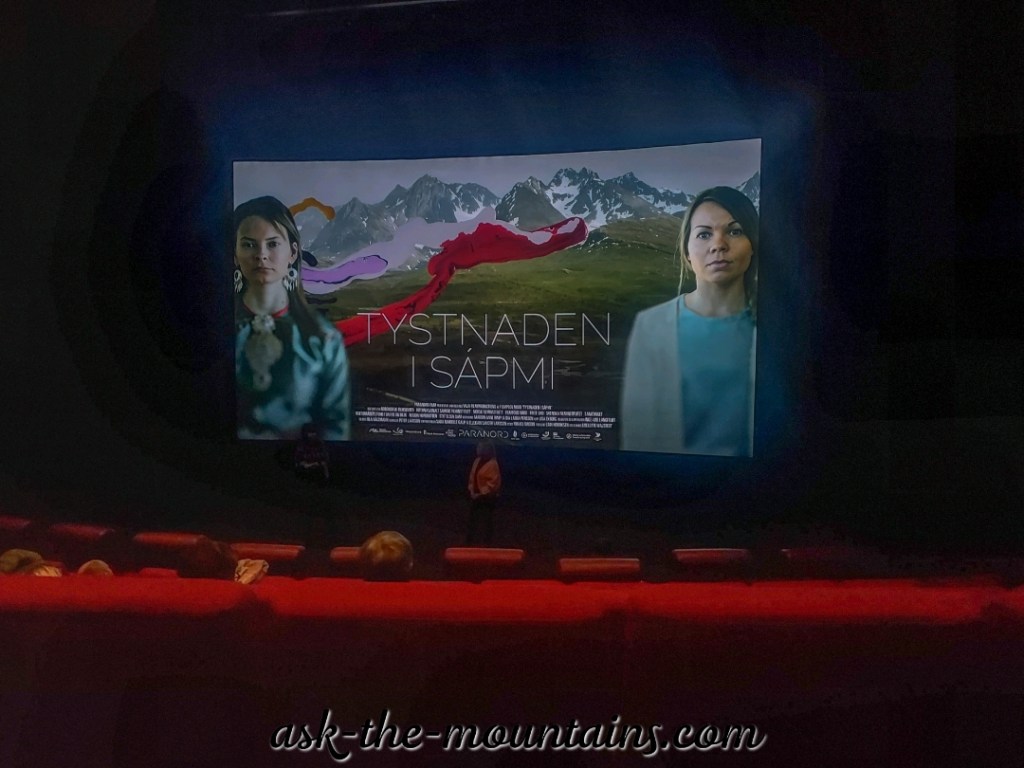
An important topic and film (“The silence in Sápmi”) Saw it in the cinema, I think it will be put online later.
Made some Christmas decor with our son ❤️
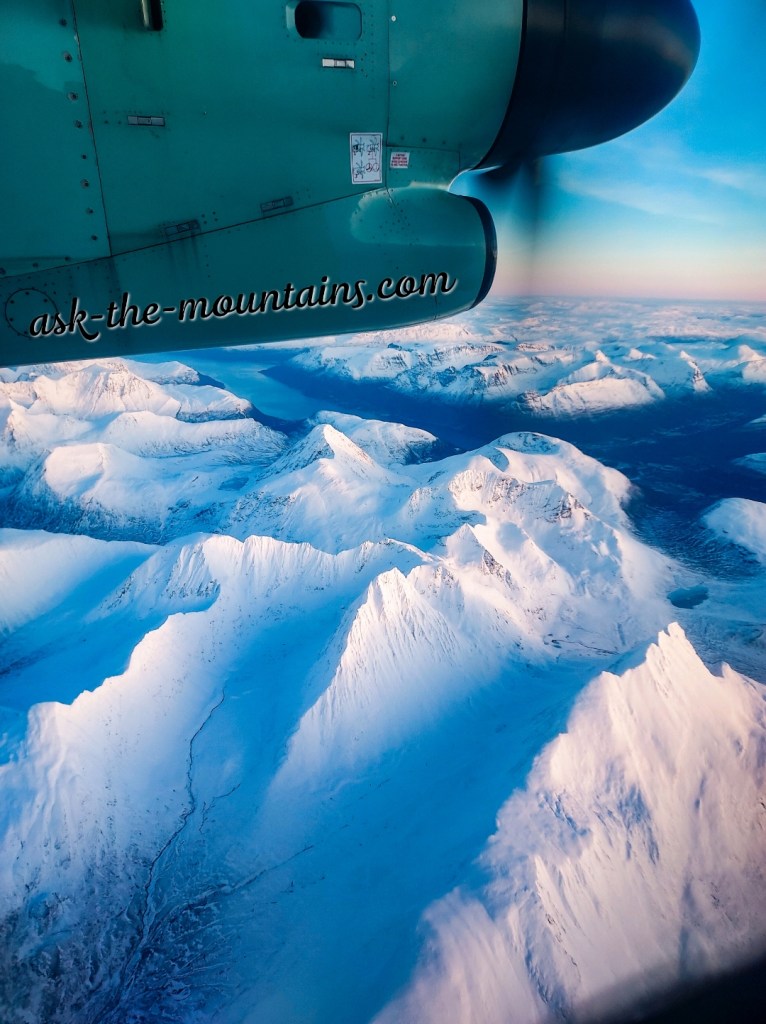
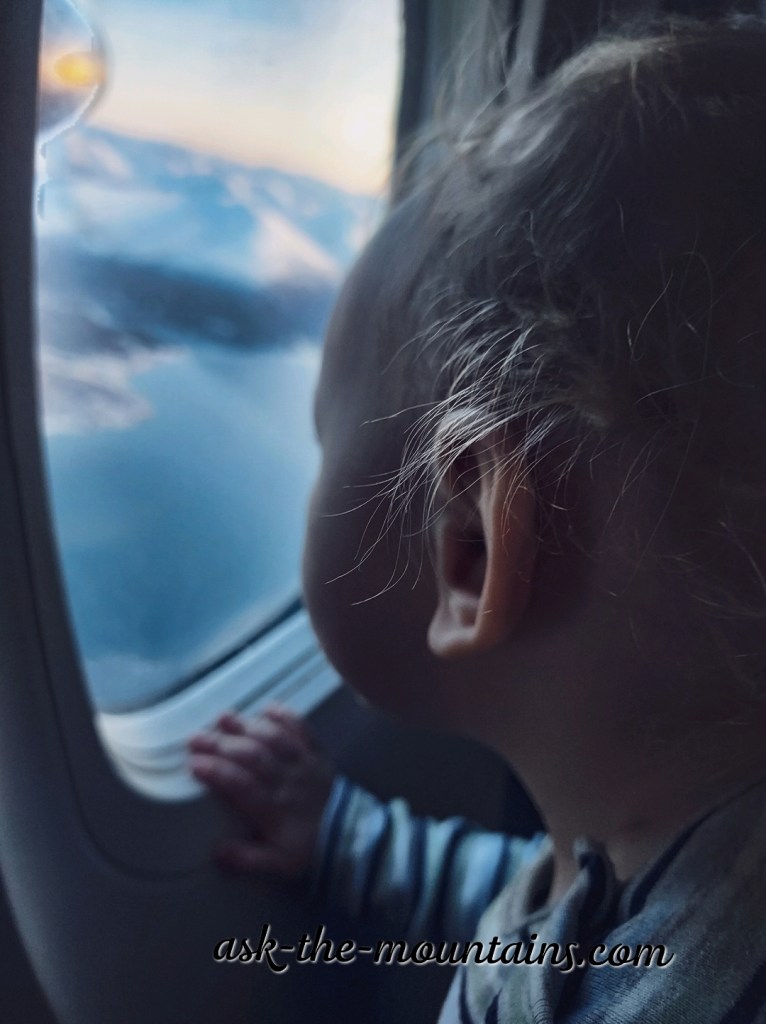
From high up! Propeller plane ride from Arctic to Southern Finland ❄️🤍🌌
His third plane ride, and he isn’t even two!
Amrita Mandala yoga retreat
20+ people in person and online, practising yoga-dharma together for 4 days.
In Porvoo
Me doing Dzogchen Metta practice with Jenna ✨️
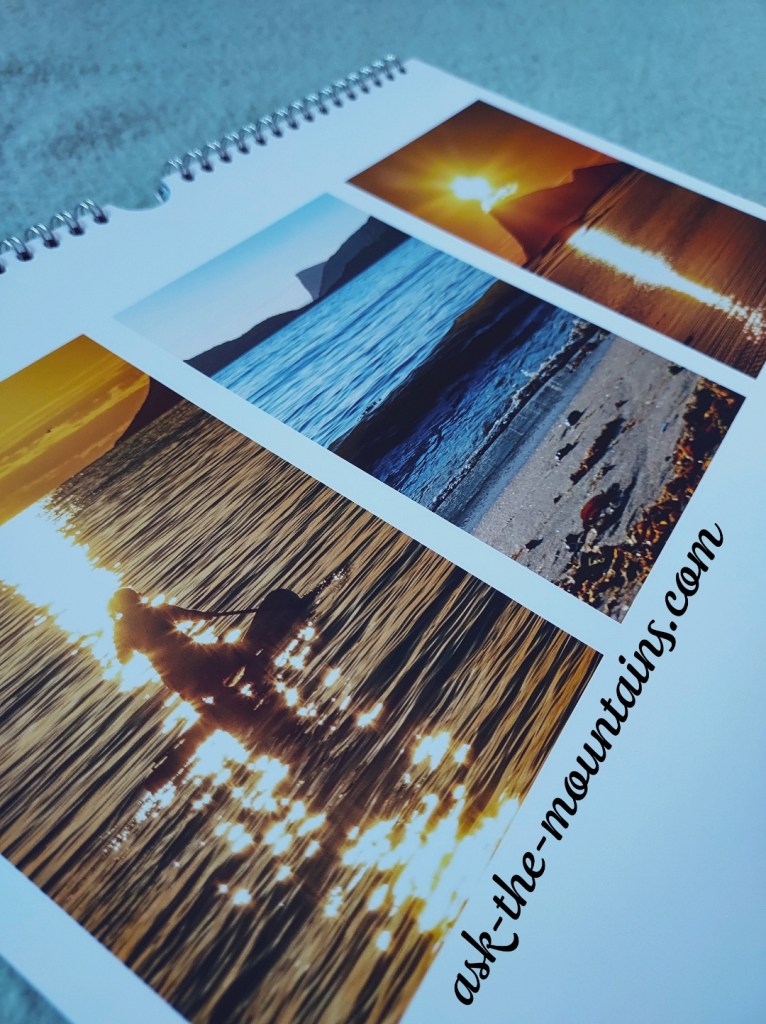
Photo of calender I printed with my own photos. These are for June, because they were taken in June at midnight.
I chose this photo for March because that is when these little birdies return.
11 am 💜💛🤍

Soon we enter December and thus the last month of 2022. Hope you are all staying warm and safe, and that Christmas is not a source of stress, but a time for relaxing and magic ✨️❄️

Adventure, Arctic, Art, Awareness, Beauty, Chronic illness, Culture, DIY, Duodji, Everyday life, Hair, Health, Indigenous, Jewellery, Knitting, Landscape, Make-Up, Neurological, Outfit, People, Photography, Photoshoot, Quotes, Saami, Sámi, Sápmi, Self portrait, Sewing, Spirituality, Uralic

My creative energy

Can I just say, this is the best photo anyone has ever taken of me? Susann, thank you for capturing my essence. Here I am wearing a headdress and silk liidni I sewed myself, and the gákti summer dress is made by Nadezda Johnsen.
Autumn wind…🧡🍂🙌🏼
Life is a lot of chopping wood and carrying water… I think that is how the saying goes 😉

“Your healing journey will, of course, include a consideration and use of all the best tools modern medicine can offer you, as well as the best tools holistic healing can offer you. From a deeper perspective, illness is caused by unfulfilled longing. The deeper the illness, the deeper the longing. It is a message that somehow, somewhere, you have forgotten who you are and what your purpose is. You have forgotten and disconnected from the purpose of your creative energy from your core. Your illness is the symptom: The disease represents your unfulfilled longing. So above all else, use your illness to set yourself free to do what you have always wanted to do, to be who you have always wanted to be, to manifest and express who you already are from your deepest, broadest, and highest reality. If indeed you have discovered yourself to be ill, prepare yourself for change, expect your deepest longing to surface and to be brought to fruition. Prepare yourself to finally stop running and turn and face the tiger within you, whatever that means to you in a very personal way. I suggest the best place to start to find the meaning of your illness is to ask yourself: “What is it that I have longed for and not yet succeeded in creating in my life?”’ (From Barbara Brennan’s book Emerging Light)

Adventure, Arctic, Art, Awareness, Beauty, Dharma, Everyday life, Finnmark, Indigenous, Landscape, People, Photography, Poems, Relationship, Saami, Sámi, Self portrait, Spirituality, Uralic, Yoga

A thimbleful of light

“Darkness, no matter how ominous and intimidating, is not a thing or force: it is merely the absence of light. So light need not combat and overpower darkness in order to displace it – where light is, darkness is not. A thimbleful of light will therefore banish a roomful of darkness. The same is true of good and evil: evil is not a thing or force, but merely the absence or concealment of good. One need not ‘defeat’ the evil in the world; one need only bring to light its inherent goodness.”

– Rebbe Menachem Mendel Schneerson

Arctic, Awareness, Beauty, Culture, Everyday life, Finnmark, Hair, Health, Heritage, Indigenous, People, Photography, Photoshoot, Saami, Sámi, Sápmi, Self portrait, Sewing, Uralic, Vajrayana, Yoga

What that means to me

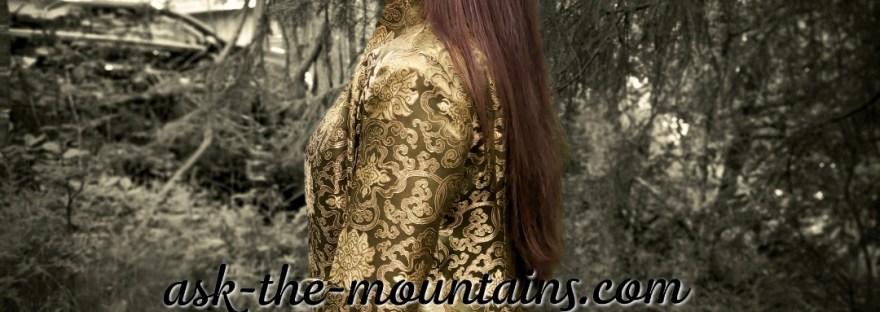
Vajra brocade jacket in green and gold I was lucky to find in local second hand store. It is handmade, too, wonder who made it and gave it away.

I wanted to make a post on the physical body. I have noticed in social media a trend called ‘body positivity’, and I wanted to share my own version of what that means to me:

  • Knowing that my body is made from the natural elements and is a result of thousands of generations
  • Reminding myself that all my cells are working hard to keep me alive every day
  • Eating traditional sustainable foods that my body easily turn into energy
  • Deep sleep and meditation to give body healing and vitality
  • Practice prayer and mantras to help body get rid of karmic traces stored inside the cells
  • Strength training to keep joints stable and posture straight
  • Keeping in mind how ancestors lived, and how they treated their bodies
  • Reminding myself to breathe with my belly, through nose and keeping my tongue in the roof of mouth, while jaw relaxed, as this feels most natural and it makes body relax
  • Tapping into body’s innate healing powers if I feel sick
  • Feeling how the body is an anchor that keeps us in the present moment

Maybe I could add more later. What would you add? Thanks for reading, have a lovely day. -M

Adventure, Arctic, Awareness, Beauty, Everyday life, Indigenous, Landscape, People, Photography, Photoshoot, Saami, Sámi, Sápmi, Sewing, Tromsø, Uralic

Photo series: Arctic summer, pt 1

My mum staring into the ocean 💙
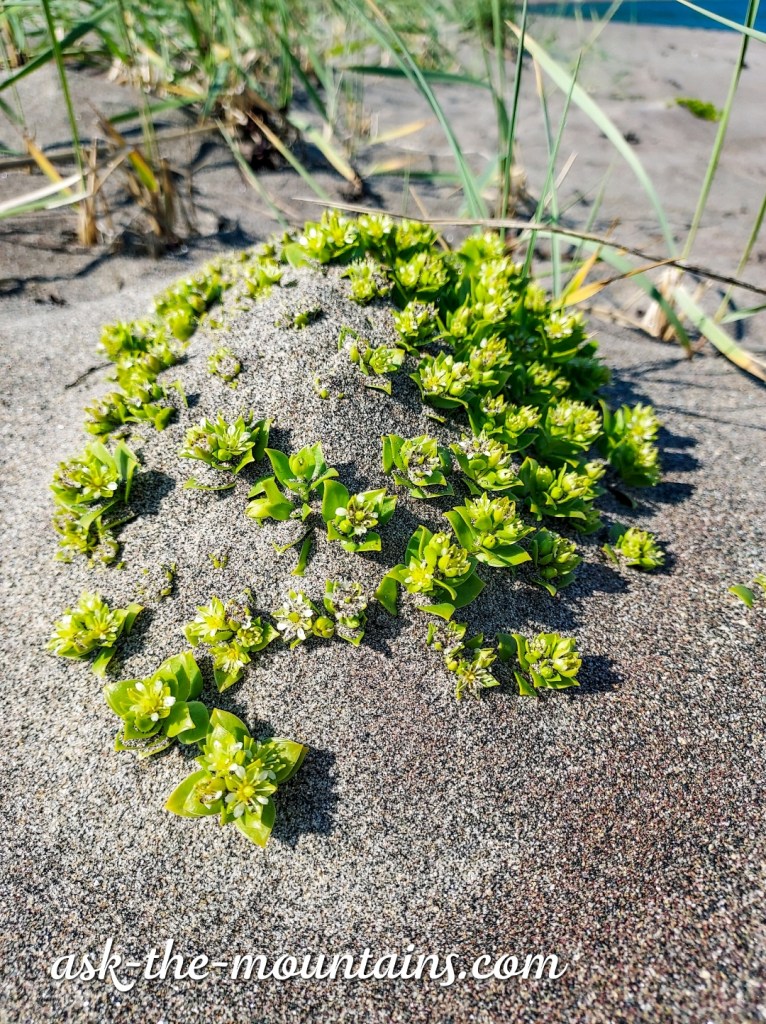
Little flowers in the sand at our hidden secret beach.
Beach view.
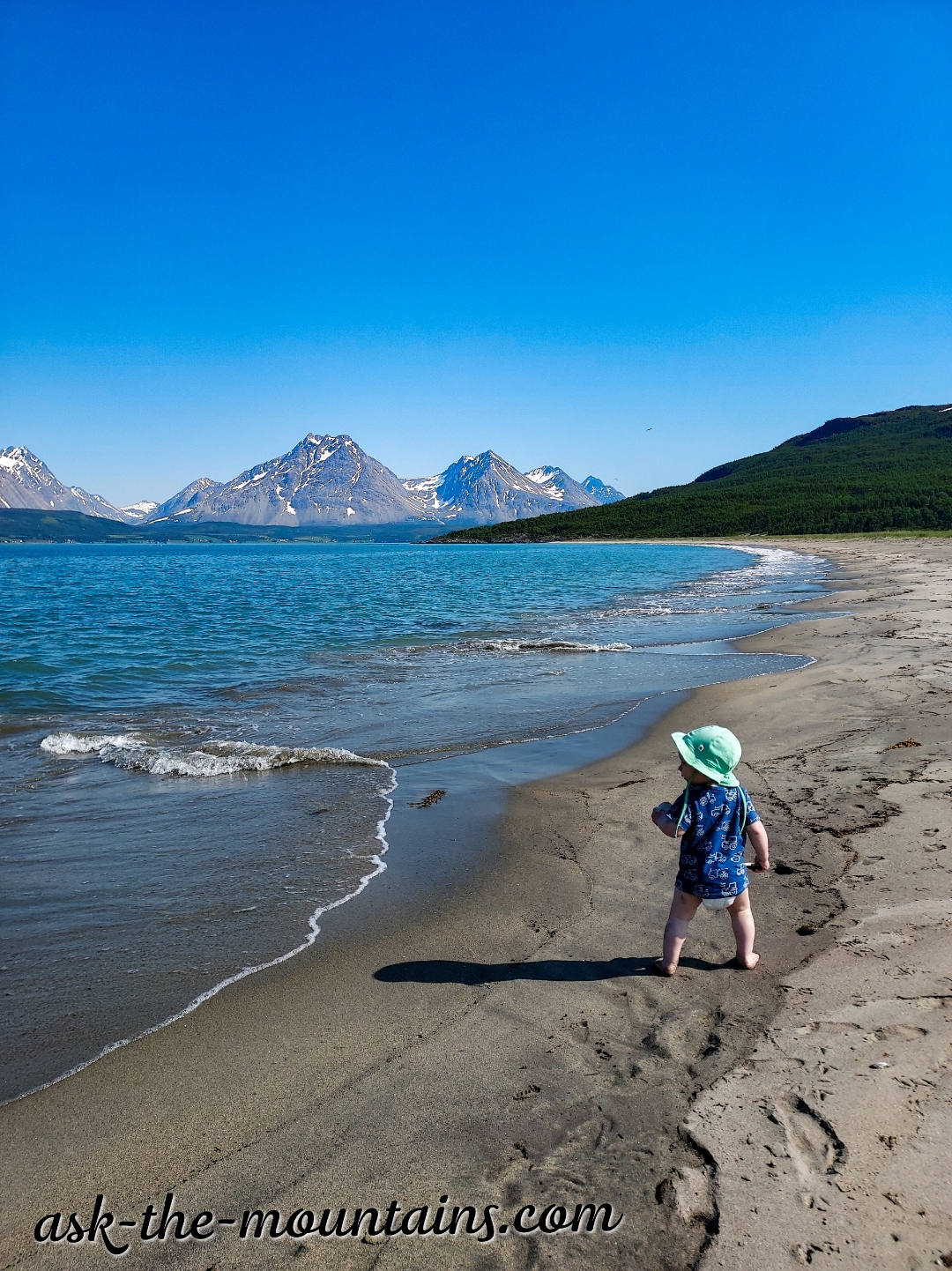
Our son got to see and play with the ocean waves. He was kind of scared, but also curious!
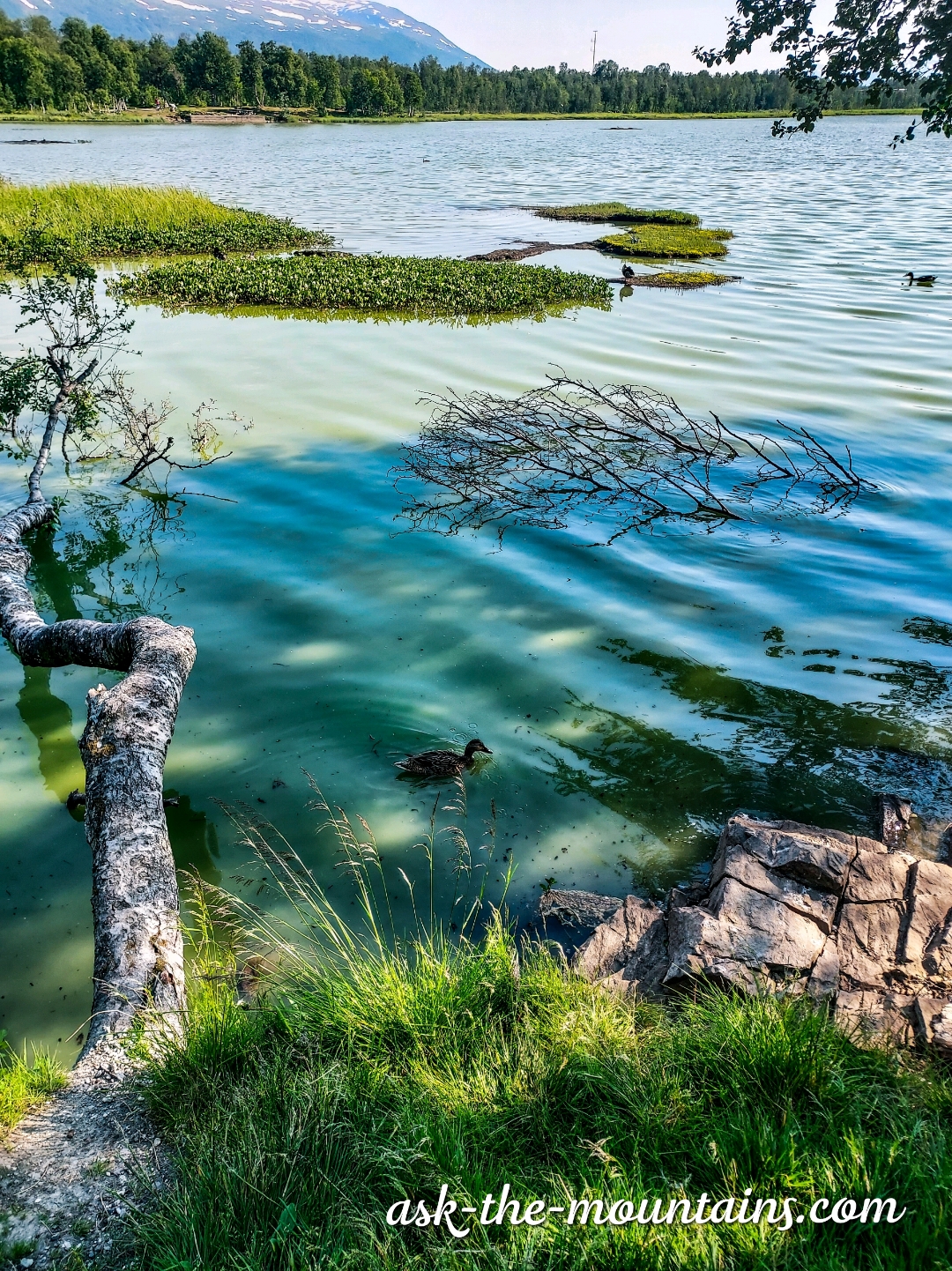
Prestvannet / Báhpajávri
Some lotus like flowers at the Arctic Alpine botanic garden.
In the forest 💚
Some gorgeous tulips outside the Polar Museum in Tromsø.
My beautiful coffee bag sewn by duojár Inga Nilsen Eira. It’s made from reindeer skin, wool and cotton bands, and braided reindeer skin string. Perfect to bring my coffee on walks and trips ❤️
Arctic, Beauty, Chronic illness, Culture, Dharma, Finnmark, Health, Indigenous, Neurological, People, Photography, Saami, Sámi, Sápmi, Self portrait, Spirituality, Uralic

Forgetting who we are

“From the perspective of a healer, illness is the result of imbalance. Imbalance is a result of forgetting who you are. Forgetting who you are creates thoughts and actions that lead to an unhealthy lifestyle and eventually to illness.” – Barbara Brennan, Hands of Light

Healing can occur spontaneously and over time. The spirit has an innate ability and longing for healing, health and happiness. We can all access this healing ability, we just sometimes need some help to tap into that. Never think that healing is not an option for you, or that it’s too late. We can always be reminded of who we are, where our strength lies and how strong our spirits are.

I’d like to recommend 2 books that helped me: Healing back pain: the mind-body connection by Dr. John Sarno, and Hands of Light by Barbara Brennan.

Much healing love to anyone and everyone who needs it. -M

Pictured: me at age 10 ca., on a hiking trip with my family. 🖤

Arctic, Art, Beauty, Dharma, Everyday life, Hair, Indigenous, People, Photography, Sámi, Sápmi, Self portrait, Spirituality, Uralic, Vajrayana, Yoga

The real you remains..

Emotions make us act and feel in strange ways

But the real you remains unchanged

Experiences and challenges shape us, like pots of clay on a spinning table

Still, the real you remains untouched

Illness, pain and grief chip away our vital energy

Even so, the real you remains ever so vibrant

Death arrives, entering without knocking

Yet, the real you remains.

A poem I wrote today, while contemplating impermanence. ❤️

Anthropology, Arctic, Awareness, Culture, Duodji, Finnmark, Genealogy, Landscape, People, Photography, Saami, Sámi, Sápmi, Sewing, Spirituality, Tromsø, Uralic

We Are Uralic

Who are Uralians and Ugrians? We are different peoples with unique cultures and common linguistic roots, stretching from Russia, over Siberia and the Ural mountains, into Scandinavia. Some have moved further south, like the Hungarians. Many of us live Arctic and sub-Arctic lives and livelihoods. Many of us also have lost our traditional cultures and language.

We are Sámis, Kvens, Finns, Karelians, Khantys, Maris, Mansis, Nganasans, Nenets, Komis, Tornedalians, Selkups, and many more. I added a small variety of photos from our community below.

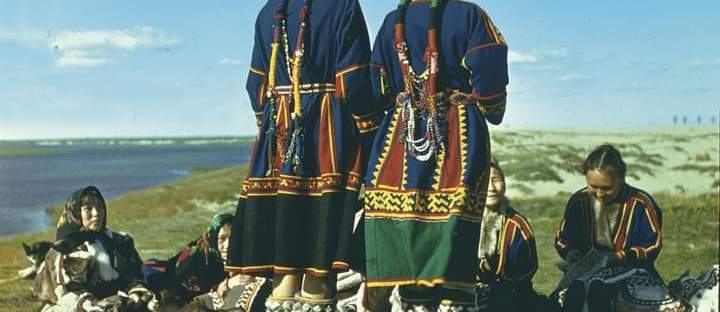
Uralic clothing vary from boys and girls/men and women, and is usually made just to fit the climate. Sewing patterns are often kept within the family and only used by the ethnic group and not outsiders. Summers can get pretty warm, and winters of course get extremely cold, so there are different garments for the seasons. More text and a poem below 😊

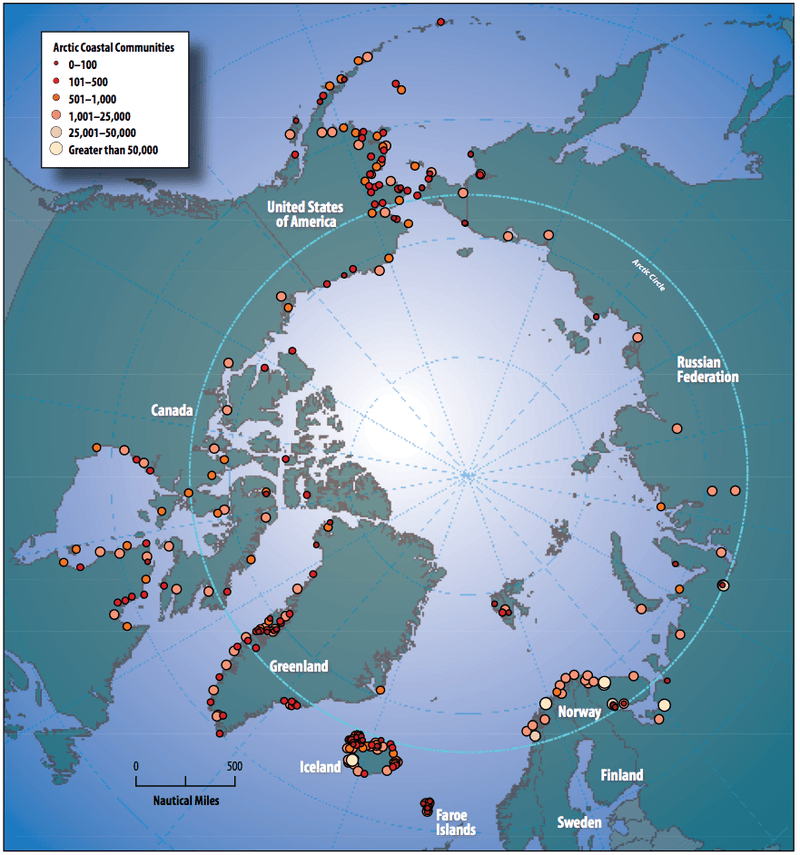
The Arctic circle and some coastal settlements. Uralians live mainly in Europe and Eurasia.
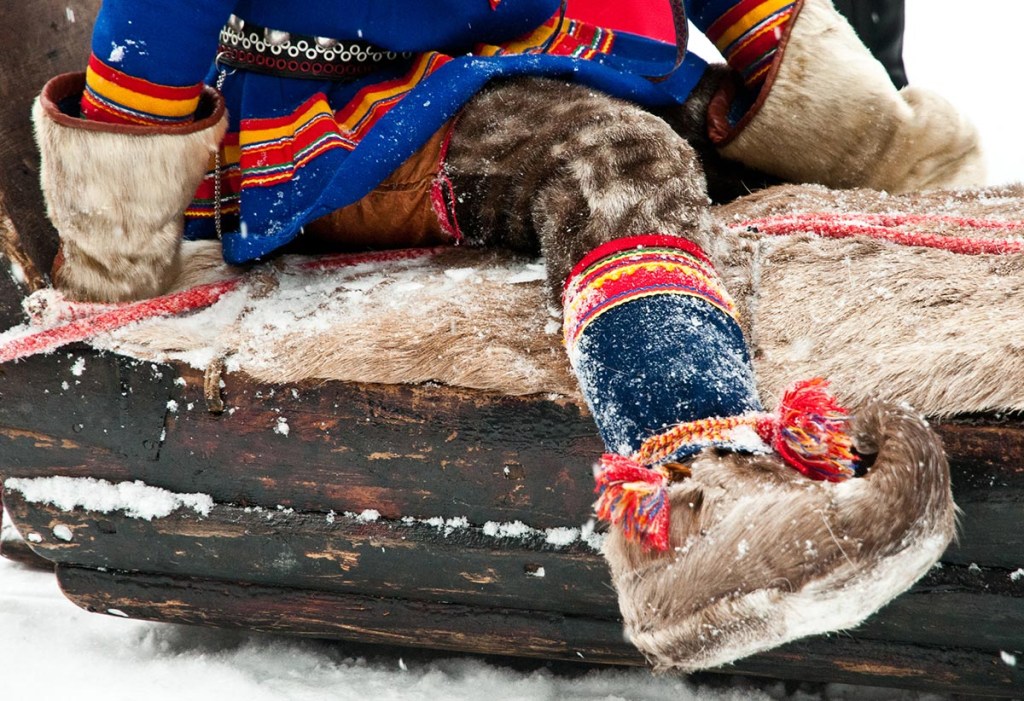
Nganasan womens pants and shoes. (C) Bryan and Cherry Alexander, Arcticphoto.com
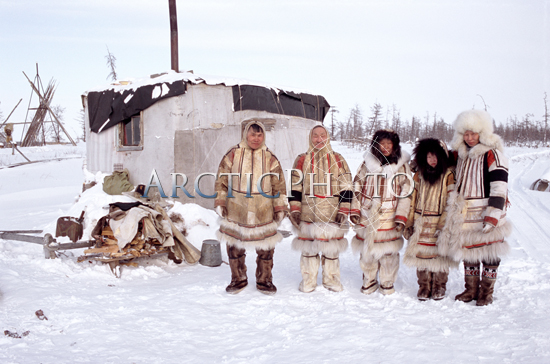
A group of two Nganasan men and three women in traditional dress outside a hut at a camp on the Kheta River. Taimyr, Northern Siberia, Russia. 2004. © Bryan & Cherry Alexander Photography. Arcticphoto.com
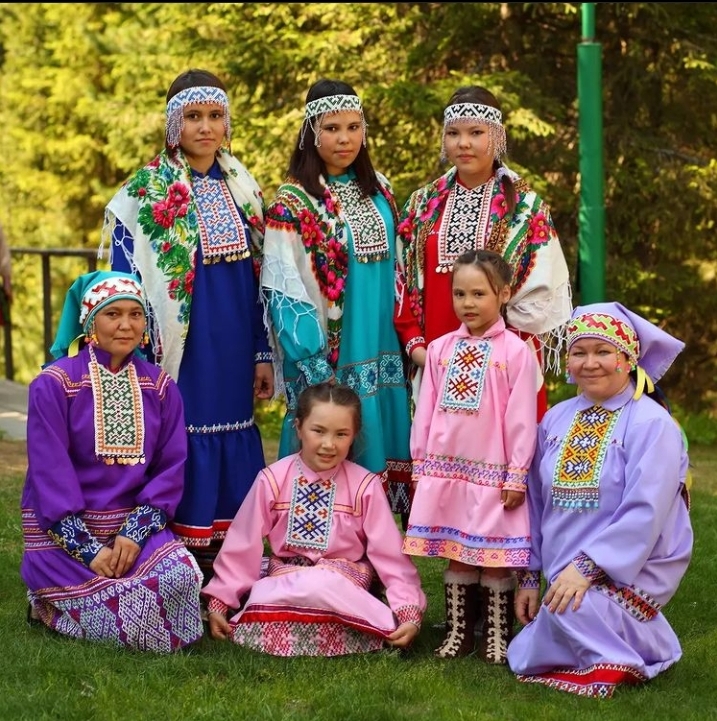
Mansi girls in traditional clothing and shawls. Credit: unknown.
Rita Morokova, a young Selkup woman, at a summer camp in the taiga. Krasnoselkup, Yamal, Western Siberia, Russia
© Bryan & Cherry Alexander Photography. Arcticphoto.com
Nora Ollila in traditional Kven dress. Kvens are Finns who emigrated to Finnmark, Arctic Norway. Very few speak Kven nowadays. Three out of my eight great grandparents were Kven.
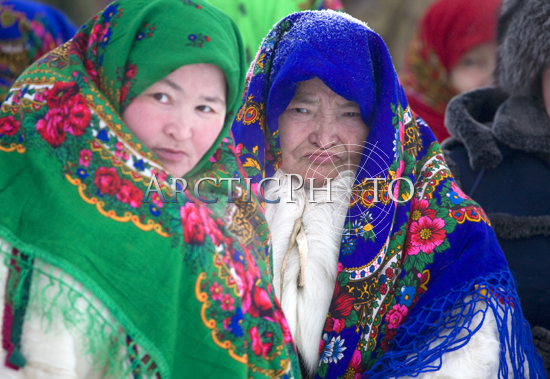
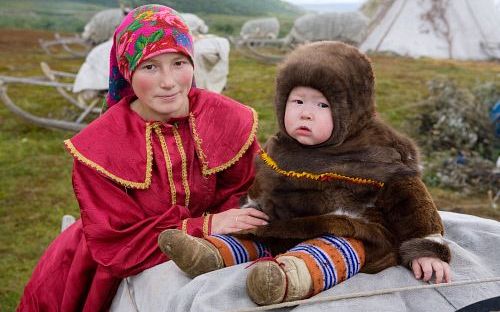
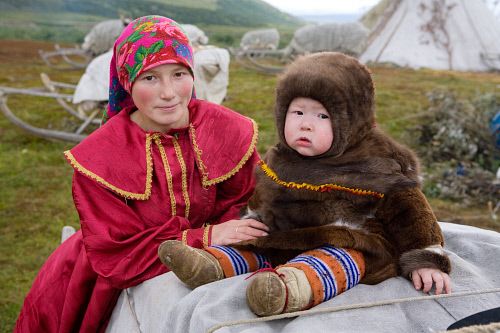
Nenets women with pelt clothing and head scarfs.
Traditional Karelian dress from Republic of Karelia. Located between Finland and Russia.
Anne Bull in a pesk made from reindeer hide, and silver jewellery. Sámi woman.
Skolt Sámi headdress for married woman to the left. I took this photo at Ä’vv skolt sami museum in Neiden, Arctic Norway. There are different headdresses depending on your marital status.
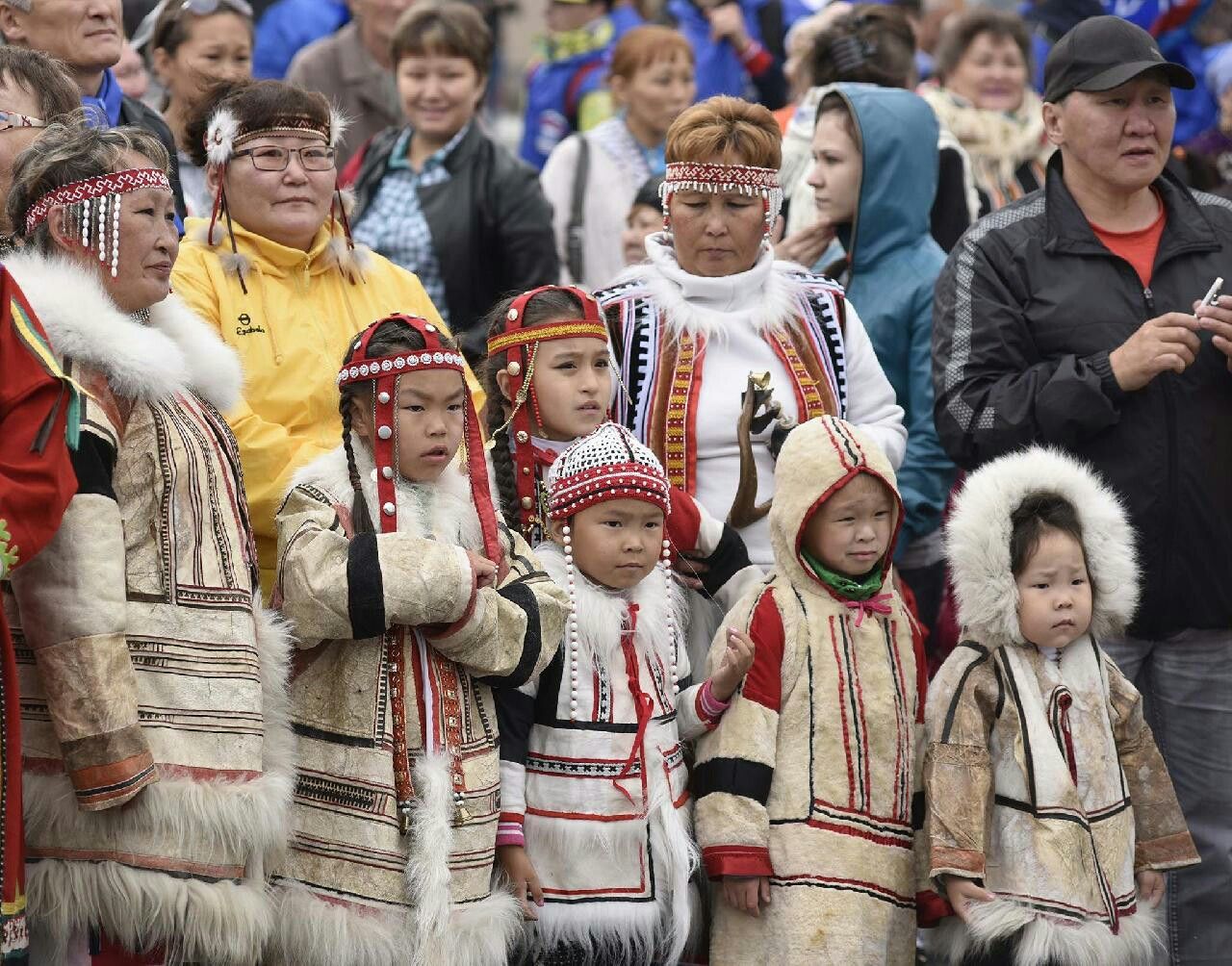
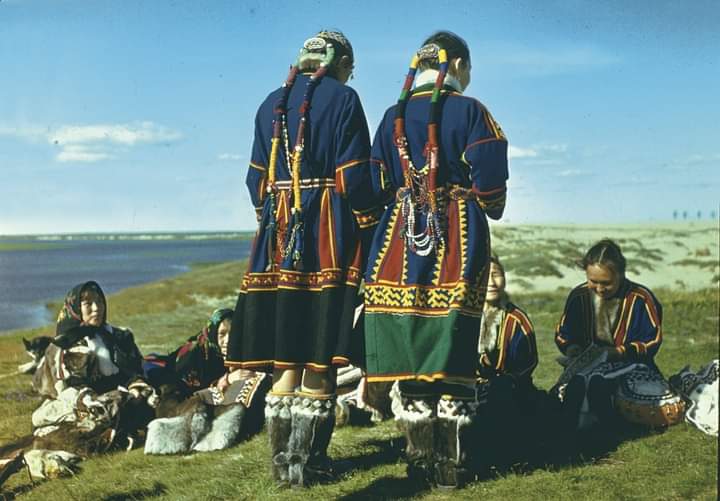
Tundra summer life. Nenet women and toddlers.
Khanty women in traditional dress at a Spring festival in the village of Pitlyar. Yamal, Western Siberia, Russia© Bryan & Cherry Alexander Photography. Arcticphoto.com
Vassilly Longortov, an elderly Khanty man, out fishing in his boat on the Synya River. Yamal, Western Siberia, Russia. © Bryan & Cherry Alexander Photography. Arcticphoto.com
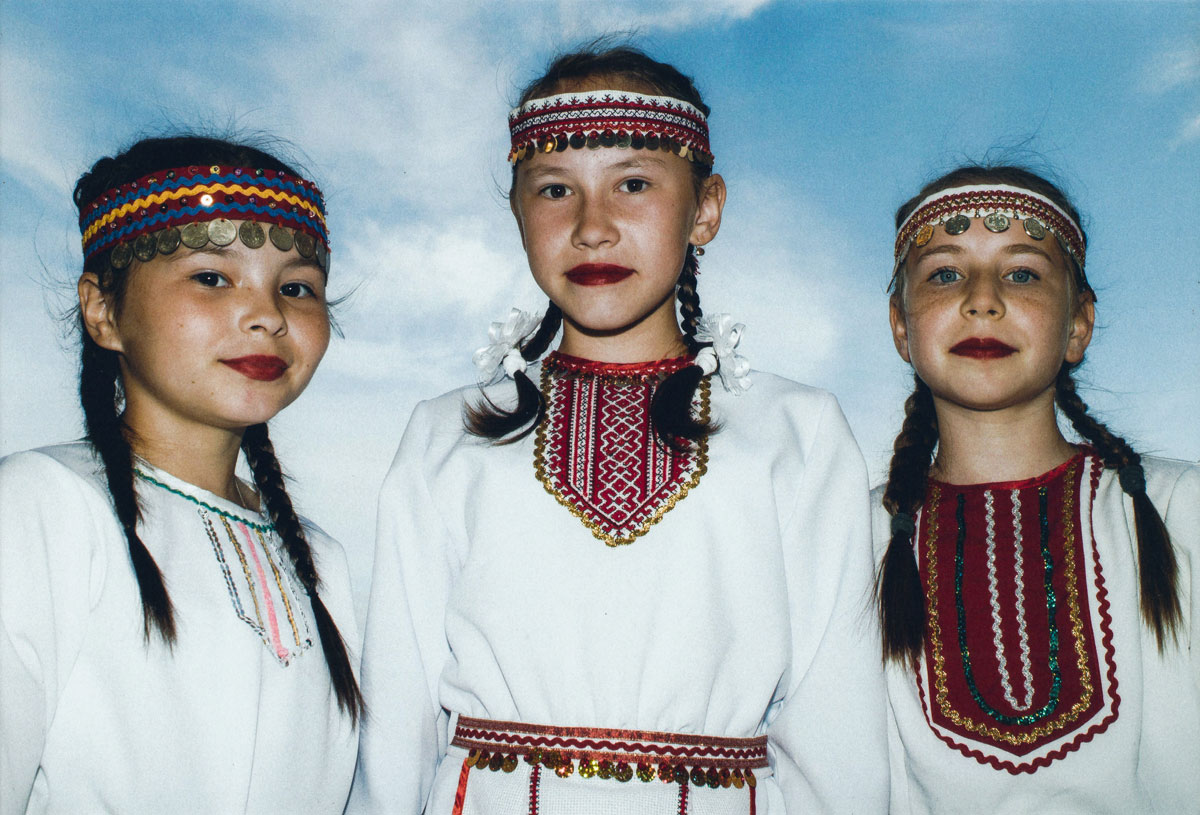
Mari children, photographed by Dima Komarov. See full photo series here.
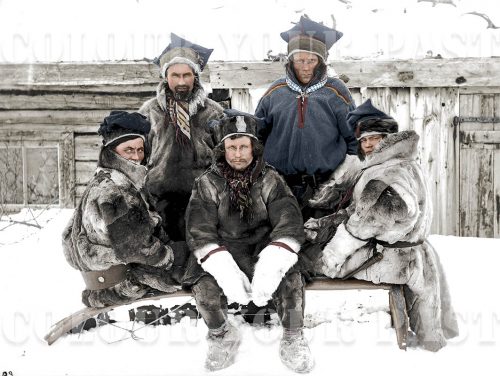
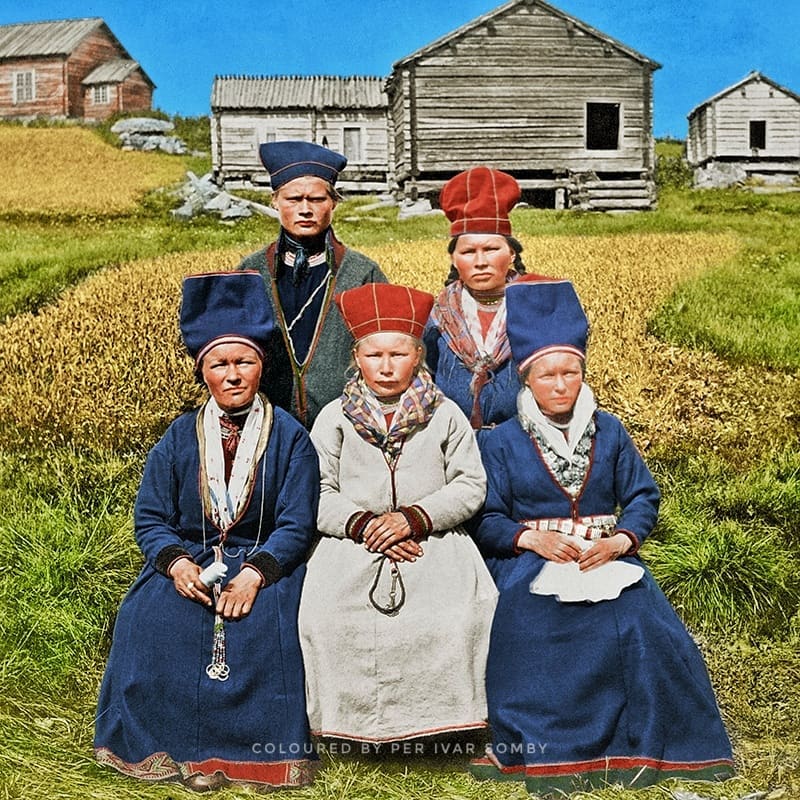
Sámi men in Guovdageaidnu, Arctic Norway. Wearing pesk/finnmudd/beaska. Blue wool gákti on the 4th man. The four pointed hat is Northern Sámi. Photo by Sophus Tromholt.
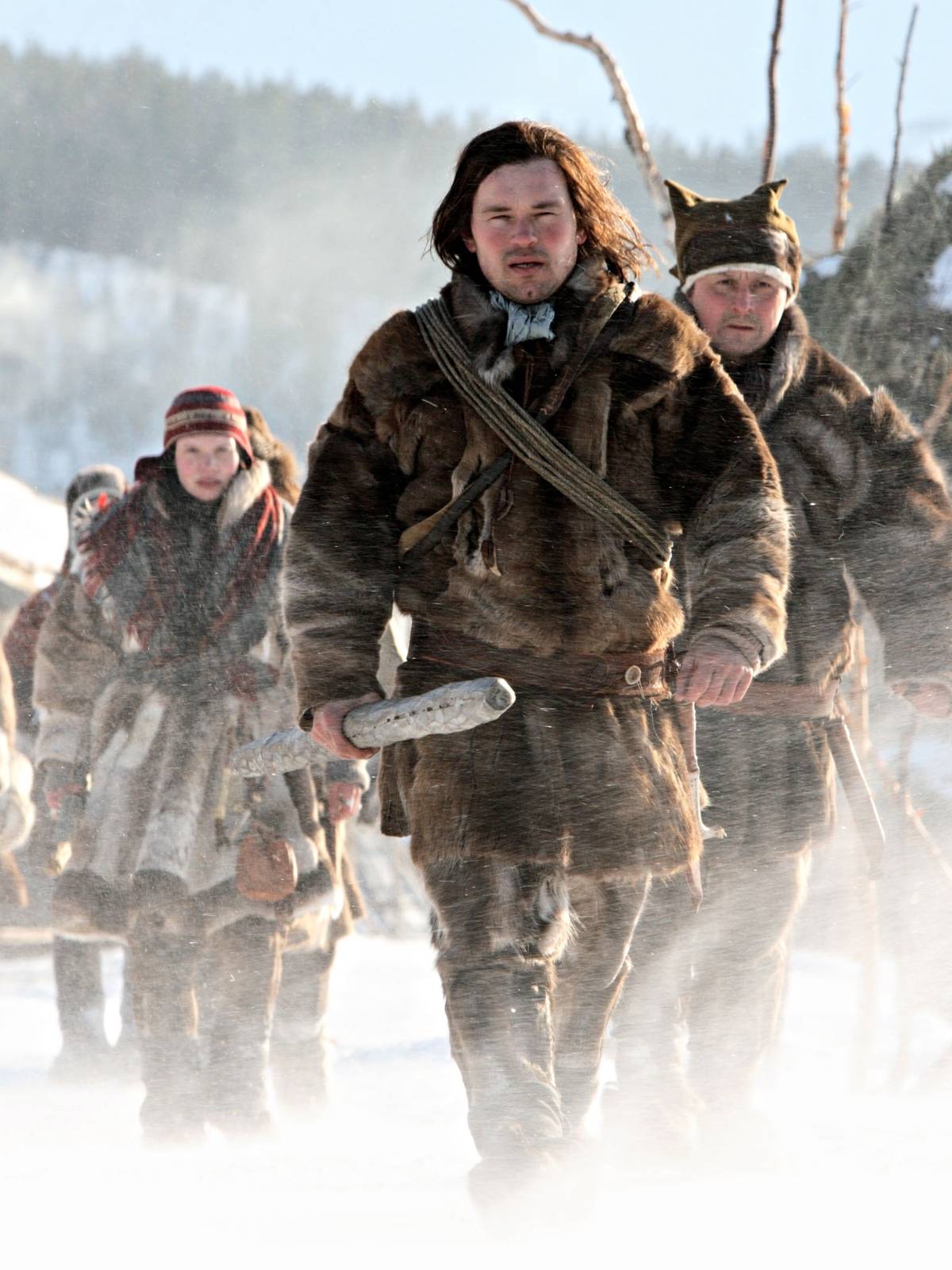
Mikkel Gaup in pelt clothing. Sámi. From the classic movie The Pathfinder, one of my favourite movies.
Mikkel Josefsen Näkkälä. Reindeer herder. Colorised by Per Ivar Somby. Photo by Sophus Tromholt.
Nganasan toddlers and women in traditional clothes. Nganasans are Uralics from the Samoyedic branch, native to Taimyr, Siberia.
Guovdageaidnu Sámis, Norway. Gáktis and pesks. Women wear chest silver risku for protection. Gáktis are Sámi dresses that vary from each region. The more colour, the better.
Duodji handcraft by Hilde Marie Lund. Coffee bag with The Shaman with Drum symbol. The small mug is a miniature version of a guksi. Duodji can be translated to “beautiful things made practical”.
Shot from Kautokeino-opprøret. Wearing pesks and reindeer gákti. Arctic Norway.
Sámi languages/tribes. This map shows part of Scandinavia, Finland and Western Russia.
Siberian child at the Ä’vv skolt Sámi museum in Neiden i visited in 2018.
Arctic languages. Uralic in orange. Great map. For more high resolution map go here. Also, they are looking to complete the map with more information on dialects, please let them know on the link too if you have somehing to add!
Komse/gietkka for baby.
Komi women in winter clothing.
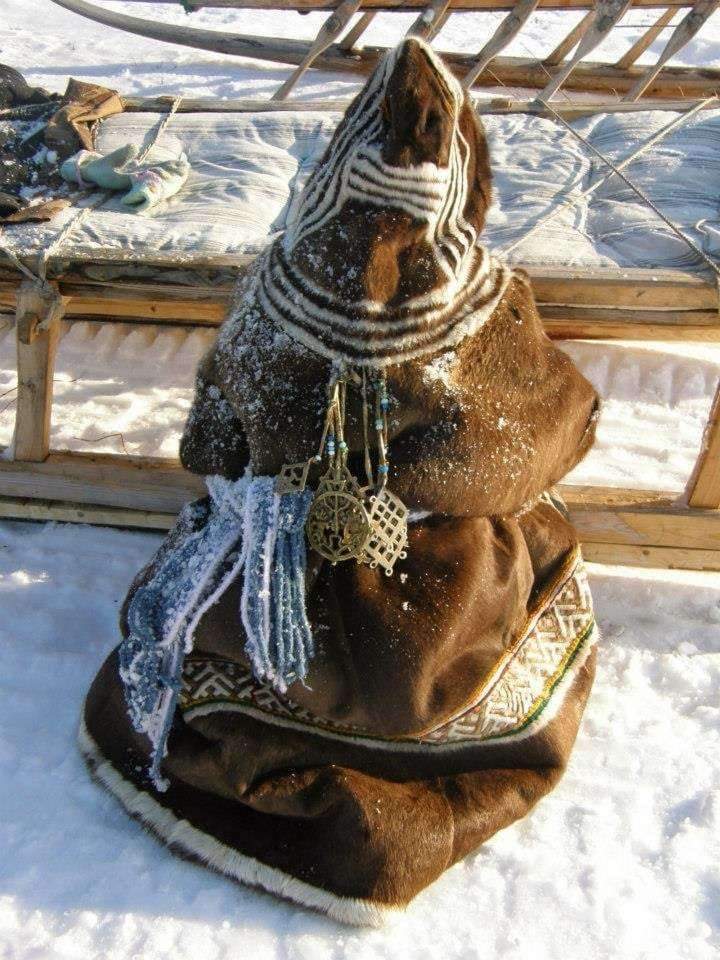
Nenet woman in reindeer clothing with traditional decor. Reindeer sled.
Nenet man and women in traditional winter clothing.
Nenet girls/young women hairstyle called ta’ne.
Mansi woman in traditional clothing. The chest piece and shoe decor is beaded.
Credit: khanty_mansi_mir on instagram
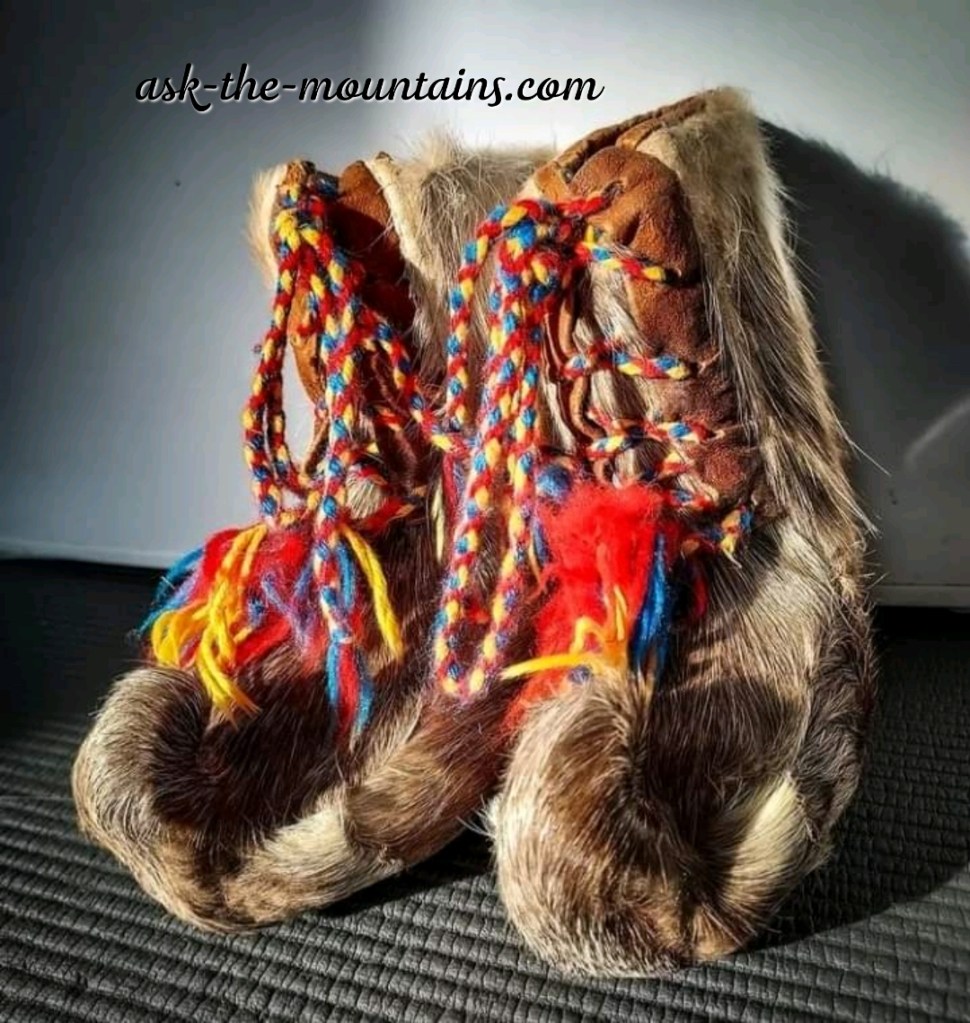
My skaller/nuvttohat sewn by a friend of my grandmother for me when i was little. They are so well used, but taken care of except one small whole i need to fix.. They are made from reindeer hide and leather. Wool insides.. Very warm, only for dry snow use, but too small for me now… Time to pass them on to our son ❤💙💛🧡

Usually, if not always, ethnic European and Eastern/Eurasian (Arctic) clothing has specific designs for women, men, girls and boys. Practical, warm and distinguishable; usually a bit, or vastly, different for each region. Often bright colours and intrinsic details. Made from the immediate surroundings; wool and animals. Sometimes silk. Giving the wearer a place and belonging; need only look at a persons clothes to know where they, or where their parents are from. Sewing patterns are often kept within the family only. Nowadays however, many native outfits are only used a few times a year for special occasions due to many people moving into the city and/or the boarding schools, and designs are evolving with the new creative youth, creating new ideas and identities, which is normal and expected. But traditional sewing skills are sadly not being taught that much from early age.

Clothing is important. No store bought garment sewn by a machine can measure with an outfit that contains your ancestry and history in every stitch. Many nowadays are also lucky to have more than one ancestry and thus more wardrobe options! Many have lost their native language(s) and feel like a “poser” if they use them or sew them, perhaps scared of getting strange looks or be called names, but I will forever argue that we should wear it like our own skin, because it is a birthright of sorts.

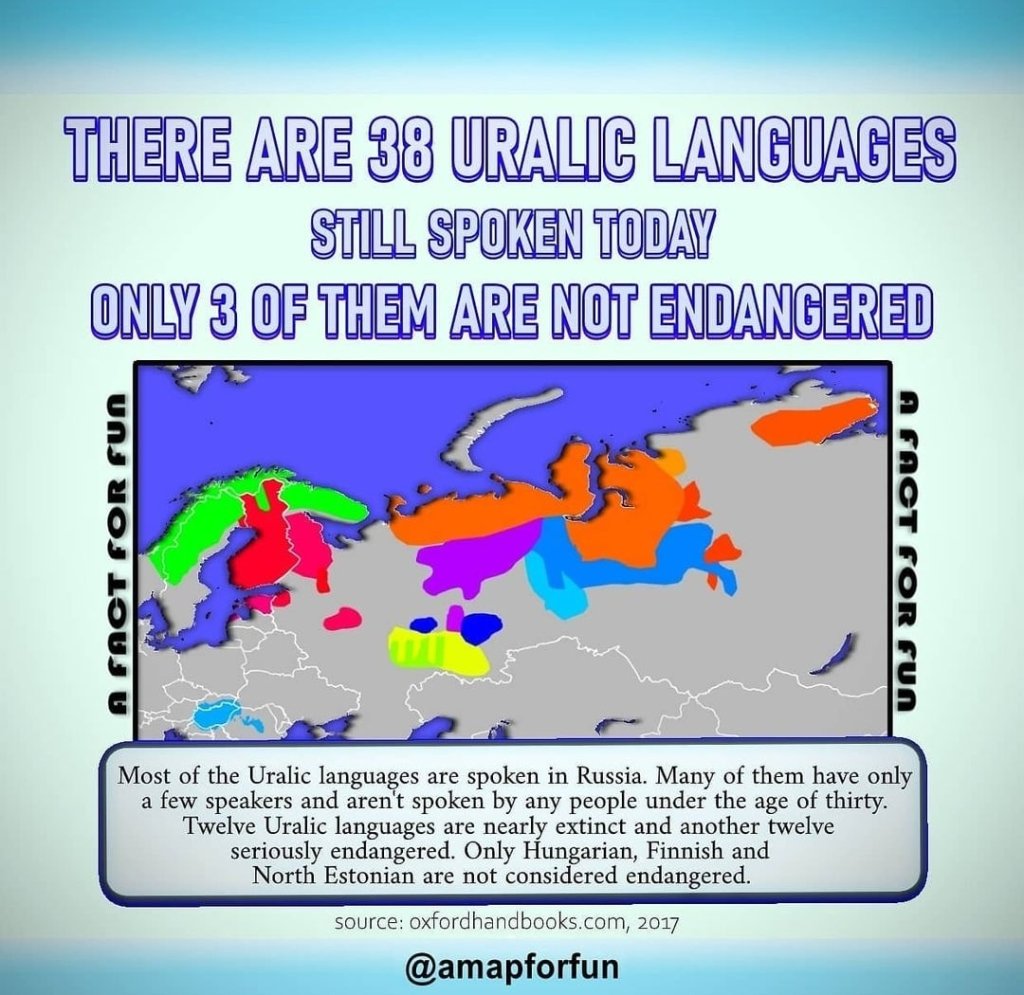
Every two weeks a language dies with its last speaker, 50 to 90 percent of them are predicted to disappear by the next century (source for the statistic: National Geographic). For example; 35 out of 38 Uralic languages are endangered or critically endangered due to assimilation and globalisation. Many Uralics live Arctic lives and livelihood in Europe and Eurasia. Herding, fishing and hunting. Linguistics say there used to be at least (!) 31 000 languages in the human history, now we are down to around 6000, and it is declining every fortnight. This makes sewing and using our traditional dresses even more important.

Keep sewing and keep teaching children traditional skills. They will thank you down the line, I am sure of that.

Thank for reading. I will end this post with a poem by Ingrid Mollenkopf from her book ‘Between Sleeps: Uralic Poetry’:

“Petals do fall on the grass beneath my feet

Do they remember their days among the branches?

Do they remember

All the world’s sweet breezes

Brushing their fibers

Carrying their good scent afloat?

As I remember

My youth

Among my people

Do we remember

The colors and voices

Moving our instincts guiding our every moment?” 🌺

Beauty, Culture, Duodji, Everyday life, Finnmark, Indigenous, Outfit, People, Photography, Photoshoot, Saami, Sámi, Sápmi, Tromsø, Uralic

Lihkku beivviin – Happy National Day

Me, our son and my friend and relative ❤ Láhppigákti. Coastal Sámi.
💙💛❤
Hat and traditional shawl made by me ❤💛
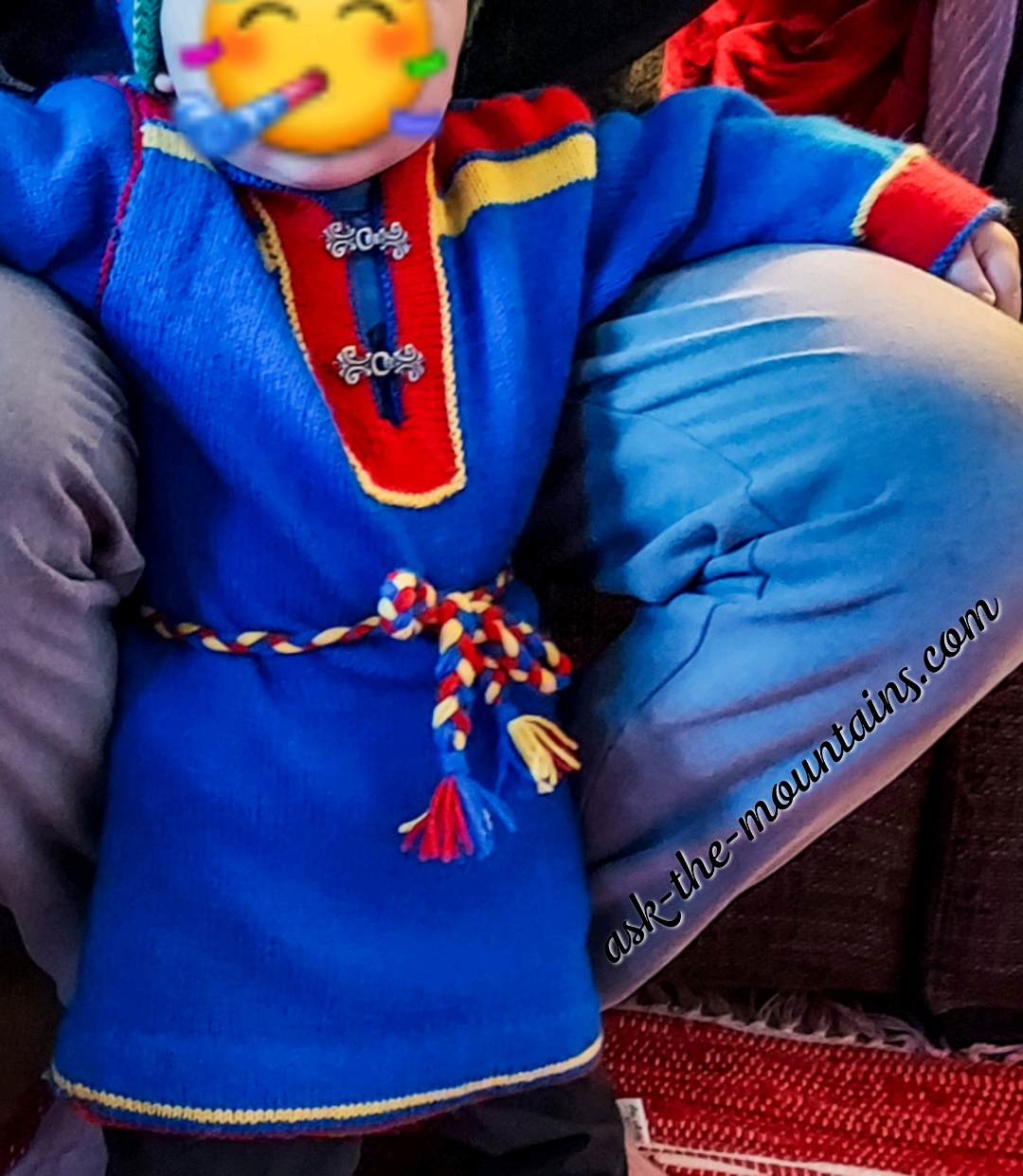
Traditional knit by his father’s mother. Belt is supposed to be on hips, but not easy when he is moving like a little maggot 🪱😄

Today, we celebrated the Sámi National Day, Feb 6th.

I have Kven/Finnish, Norwegian and Sámi heritage, and love to celebrate what I can while I can. I am deeply thankful for my connection to my heritage and my own heart, and wish you all the best 2022 possible.

May all beings be free ✨

Animals, Anthropology, Arctic, Art, Awareness, DIY, Duodji, Finnmark, Heritage, Indigenous, People, Photography, Photoshoot, Saami, Sámi, Sápmi, Uralic

More special?

“People wearing their national dresses symbolise unity. A research conducted on this subject showed that youngsters wearing traditional clothes, irrespective of western pressure, had fewer behavioural and emotional problems. The reason being that they are in touch with their ancestral culture, religion and traditions and thus not confused about their identity or who they are.” Makes sense to me; feeling like you belong and have a community is very important. Nowadays, I think many of us feel a part of many different groups, because we live in a globalised world, and clothing can be changed, thus changing your identity. Maybe that makes our traditional and national dresses even more special? ❤

Here is the link to the study for anyone interested. It also sheds a light on the dangers of not allowing indigenous peoples to use and wear their own clothings, as we have seen happen all over the world.

Sámi man in gákti with reindeer pants and mittens. The shoes are nuvttohat, skaller, nutukas.. many names for same shoe. Different languages and dialects. Photo by Lola A. Akerström
Kautokeino Sámis. Guovdageaidnu in Northern Sámi language. Wearing pesks and gáktis. With traditional shawls, belts, mittens and hats. Northern Lapland/Sápmi.
Khanty woman Kristina Neva and baby in reindeer clothing with decor. Summer on the Arctic tundra. Photo by Bryan and Cherry Alexander.

Both Sámis and Khantys are Uralic peoples.

Arctic, Culture, Everyday life, Finnmark, Heritage, Indigenous, People, Sápmi, Tromsø, Uralic

Missing something I never had

Feeling the Sunday blues today, and felt like sharing some thoughts I have had for some time now. I hope I manage to articulate myself in a good manner, and hoping to hear others’ view on this as well 🙂

I feel it is so important to have a sense of community and identity. A tribe of sorts. In fact, we all did up until very, very recently. You could even tell what area or region people were from by their clothing. The way they proudly wore their identity and sense of community. It is so rare nowadays that tourists will literally pay thousands to witness authentic indigenous way of life.

A wedding photo from my family tree, many generations ago in Finnmark. Kven/Finnish and Sámi marriage.

It sounds silly, but I miss that. I have never had it, but I miss it. I miss traditional everyday dresses and stronger traditions. I miss women being more supported with raising children by their community. Not feeling alone in our experience. We are not supposed to raise kids alone. We are not supposed to not work together and to not rely on each other. When we don’t have that community around us, we get consumed by loneliness and loss of purpose. Just think about how wonderful it feels to have a good friend or a family member who truly cares. We are utterly dependent on our safety net.

The globalisation we see today has come at a great cost. Every month, the world loses indigenous languages. Every week, less natural surroundings and every day people feel more cut off from each other, and Mother Earth. Where will we end up? Even our diets are globalised, getting adviced to eat the same here in the European Arctic as they do in warm climates. That is not sustainable. That is not what have been practiced for thousands of generations, and what our bodies are used to.

I do not wish to naively say that all things were better before, because I do not believe that they were. I do, however, think we have lost something very precious along the way, at least in my part of the world. People who wish to reclaim their sense of community and identity sometimes even feel like a fraud or a fool for ‘taking back’ something they never personally had.

I believe that the trauma experienced by virtually all humans today by having our way of life so dramatically changed in such a short timespan, needs great healing. And only we can do that job ourselves; in our own hearts and minds.

Thank you for reading, may all beings be free and happy ❤ May communities heal and may we take better care of the planet 🌎

Arctic, Beauty, Buddhism, Dharma, Everyday life, Landscape, People, Photography, Saami, Sámi, Sápmi, Self portrait, Tromsø, Uncategorized, Uralic, Vajrayana, Yoga

Namo Isha Ja – Guided meditation

A heart opening guided meditation session led by Kim Rinpoche.

October night sky a few weeks ago 💙🍂

If we know our hearts and our own natural state, we will also simultaneously know how to love and care. Not only for others but for ourselves and our difficult emotions. Life is so full of difficult emotions, as we know. Compassion and forgiveness is always with you, like a silent friend.

Thank you for reading and still following my blog. It is most appreciated. My posts are very sporadic, as time flies by with the new baby. Long days but short weeks. Not enough hours to get it all done, and not enough hours to just enjoy him – this new little person that runs our lives now. Motherhood is equally hard as it is wonderful. I hope to get more painting and other artsy projects into my days again.

Adventure, Arctic, Beauty, Buddhism, Dharma, Everyday life, Indigenous, Landscape, People, Photography, Saami, Sápmi, Self portrait, Tromsø, Yoga

21 photos from my summer

Håja and Hillesøy
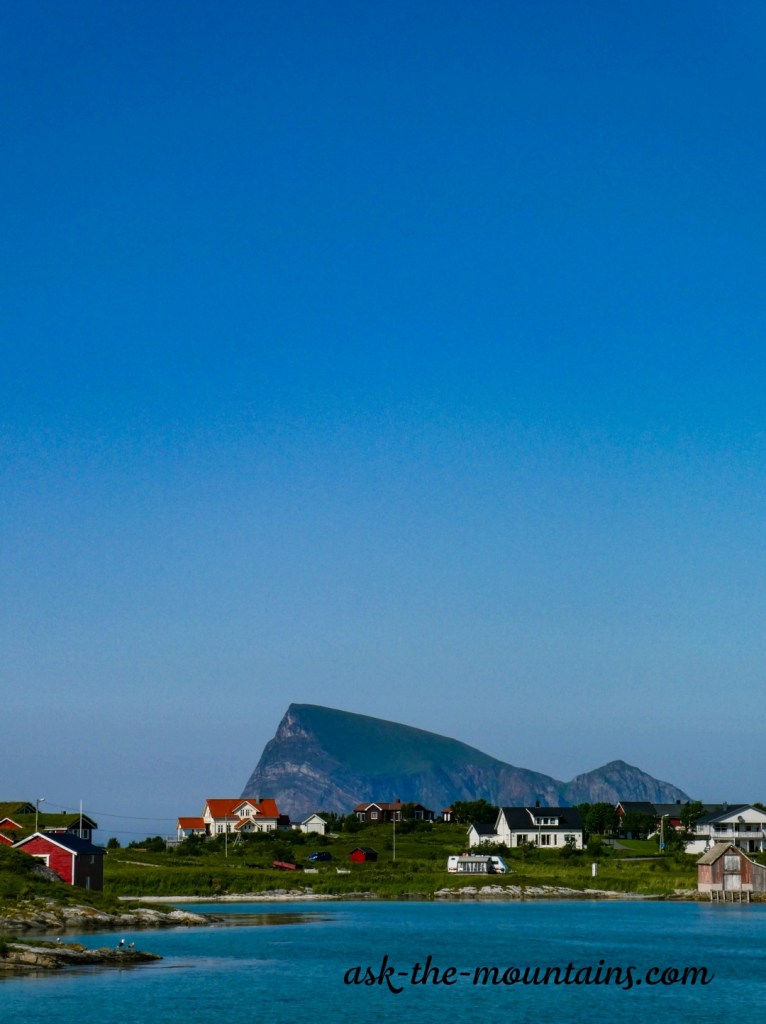
Håja mountain. We drove up and got the best view ever. Very happy with this photo!
Arctic July.
More furry neighbours.
Rainy summer day.
Ilo, a cute little dog we met at Reinøya.

Early morning at Reinøya.
Seal at Reinøya.
Summer swim.. Me and my boyfriend’s mother. 8-9°c!
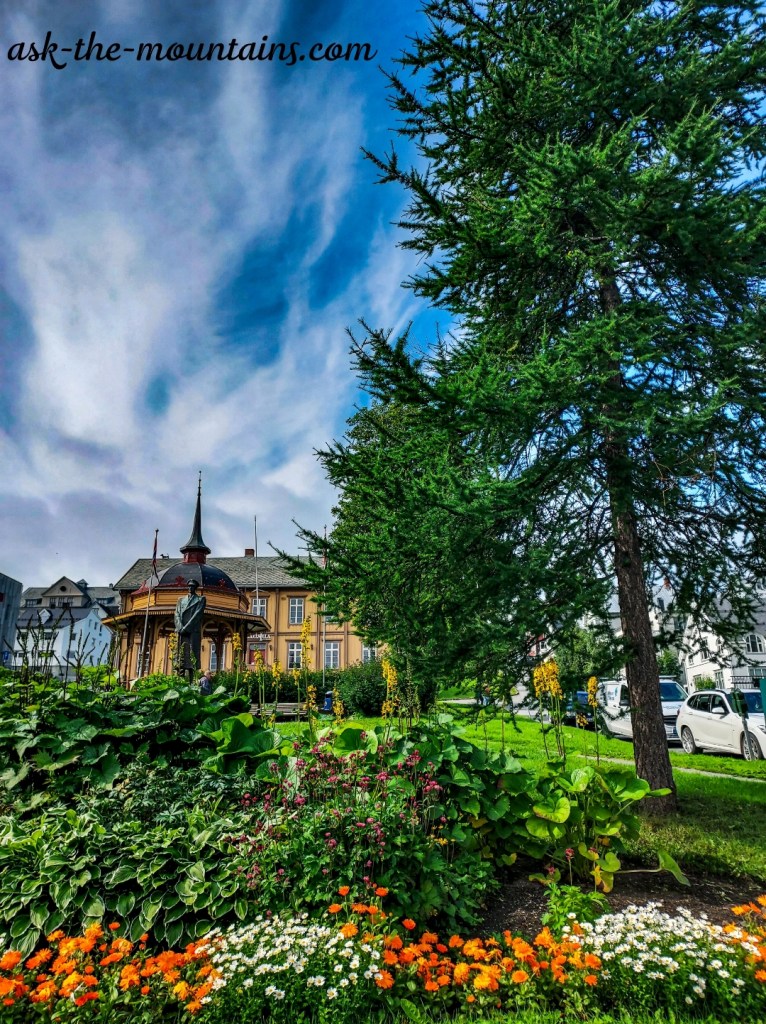
Tromsø centrum, the pavillion.
At the Arctic-Alpine Botanical garden in Tromsø.
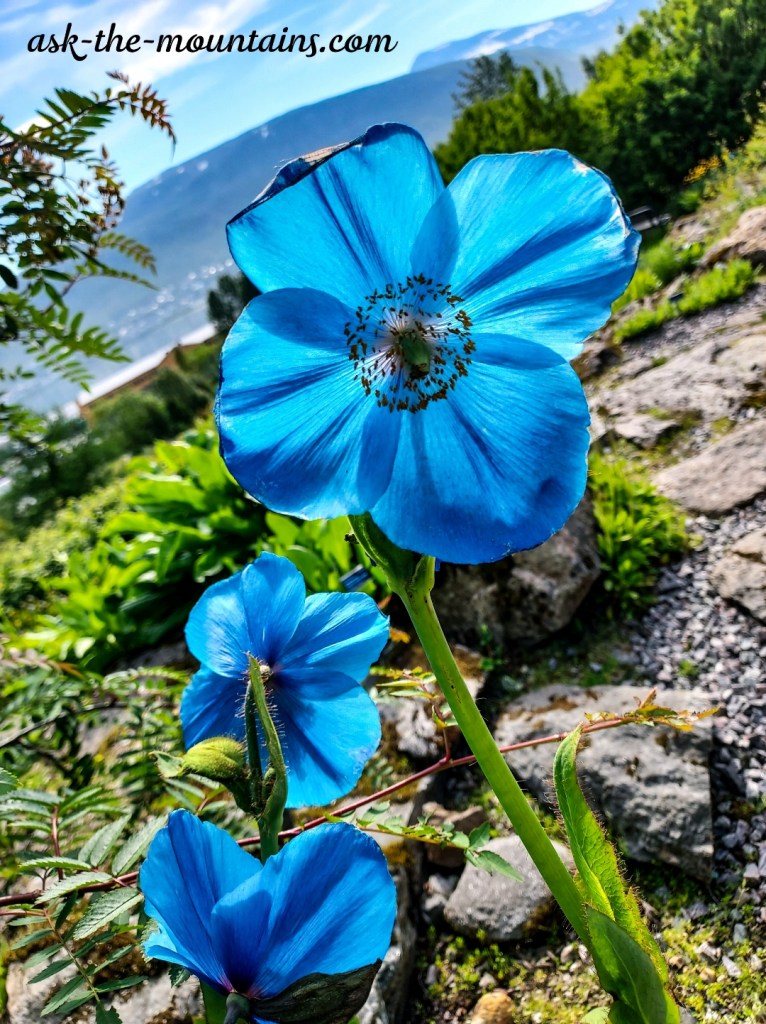
Blue Himalayan poppies. 💙 In the World’s Northernmost botanical garden.
So many beautiful colours and shapes.
Midsummer, 23rd of June.
Tiny Arctic dolphins.
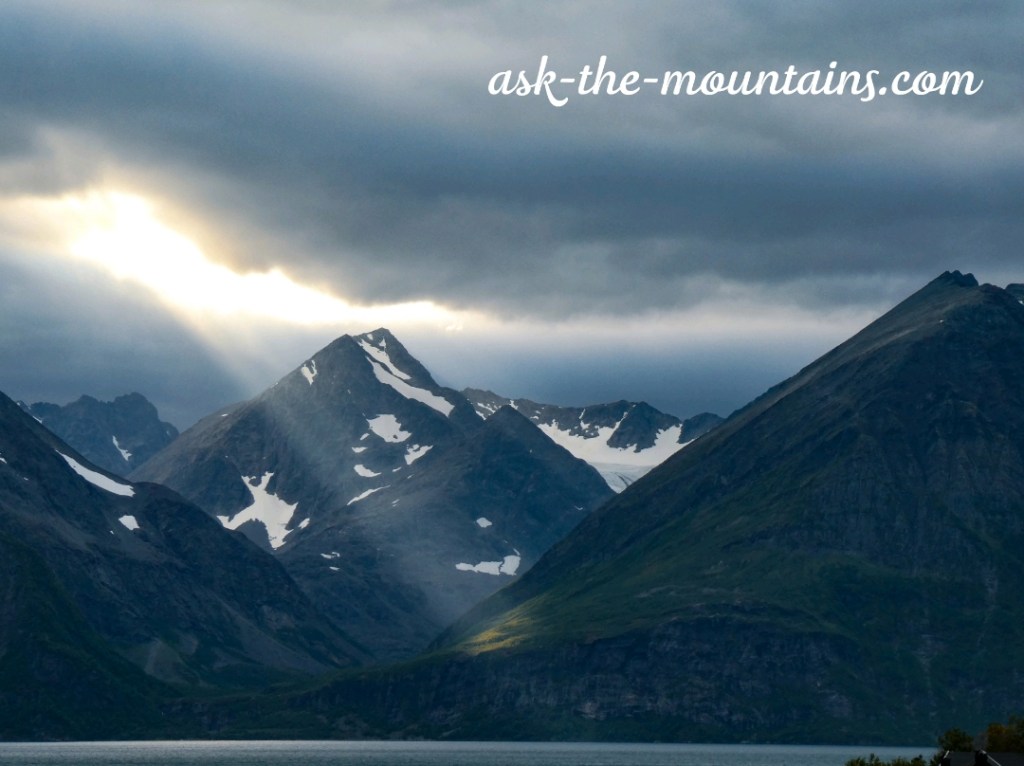
Sunlight over Lyngsalpan.
Rainy evening at Spåkenes.
Kali 💚🖤
Picked a small bouquet.

“I love the Arctic summer, it’s the best day of the year!” Short but sweet. How was your summer?

Anthropology, Arctic, Beauty, Culture, Finnmark, Genealogy, Heritage, Indigenous, People, Photography, Uralic

Happy World’s Indigenous Peoples Day

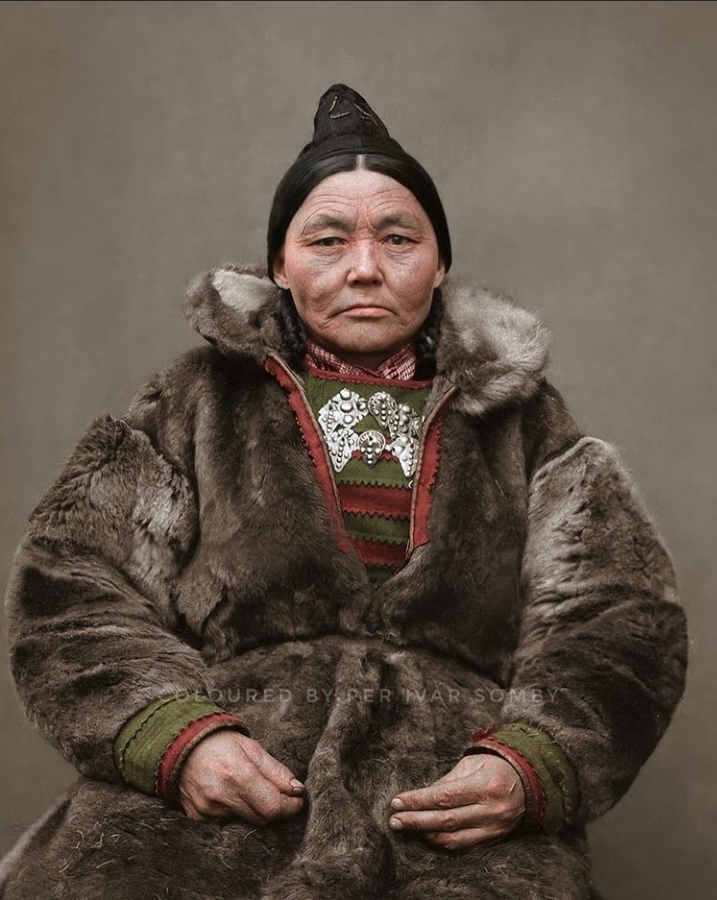
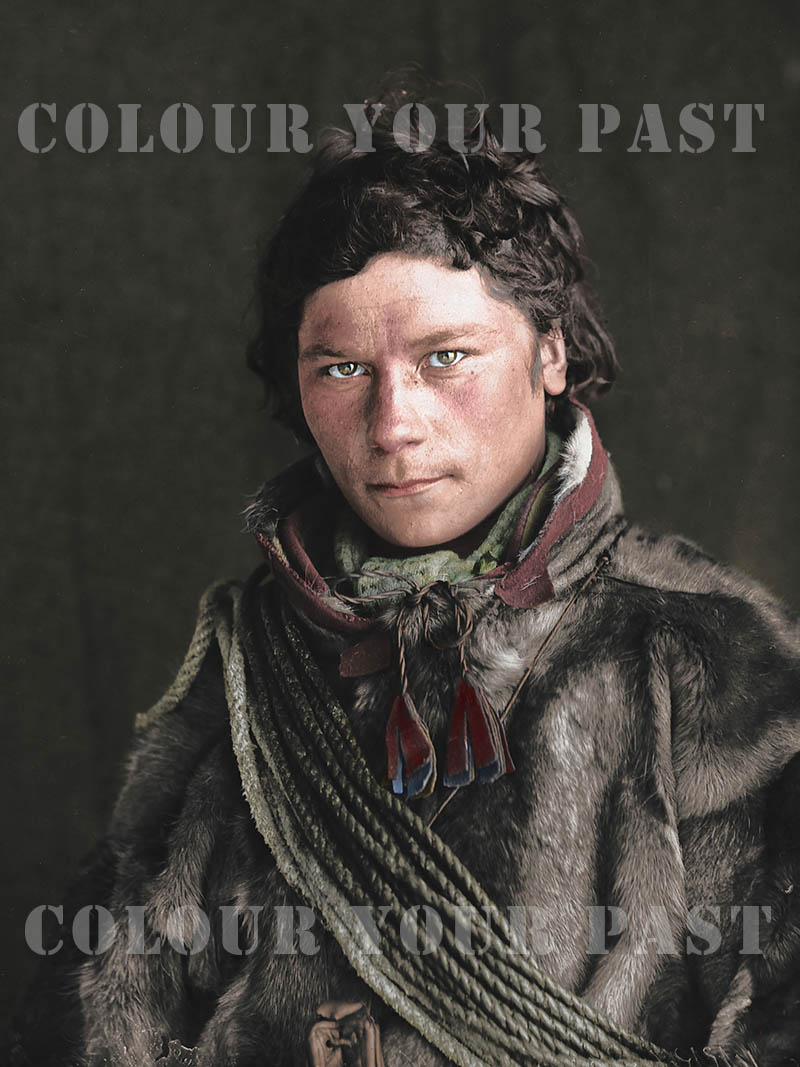
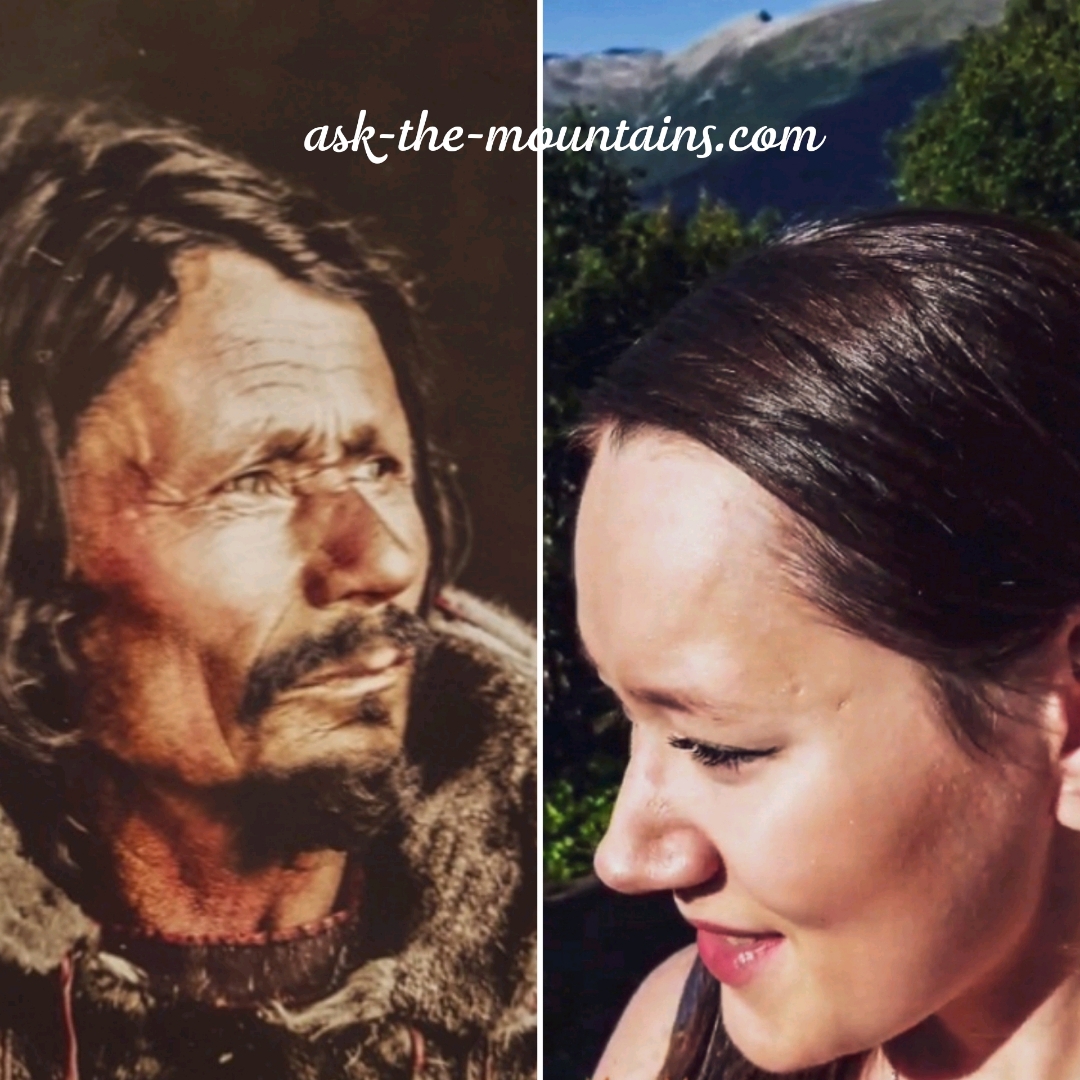
Yesterday was World Indigenous peoples day, so I share this wonderful portrait of my relative Johannes from 6 generations ago. Wearing a pesk/finnmudd. I think we have the same nose, and eyebrows. I look forward to teach our son about his ancestors. It was a black-white photo by S. Trombolt but Per I. Somby colorised it. #ArcticPeople #Uralic

Indigenous means ‘naturally occuring’. Someone or something that ‘belongs’ to a place, and who is living in harmony with the natural surroundings. A part of the local ecosystem. The natural world belongs to us ALL, we need to treat it with respect and appreciation to be able to continue living in it sustainably. Always give more than you take, even if it is “just” gratefulness.

Where was or is your ancestors indigenous to? Do you feel as a part of the natural surroundings?

Small tip on how to feel more connected to the natural world: consciously focus and feel into the knowing of being held and supported by the Earth and gravity. See if you can completely relax into that knowing and if you can trust that you are safe and being held.

Adventure, Animals, Arctic, Dharma, Dzogchen, Everyday life, Finnmark, People, Photography, Quotes, Saami, Sámi, Sápmi, Self portrait, Uralic

An open heart is the best medicine

“Practice being here until ‘now’ disappears. Dwell nowhere. Be beneficial to others, and you will lack nothing. Flash open your heart. Be a child of wonder, playing with generosity. Floating in a sea of billions of universes, whatever that is, “That” is all we are. It is as much out there, as it is in here. How amazing. Trade in all your wrongs, injustices, hurts, and fears for mercy, hope, compassion, and kindness. An open heart is the best medicine, open it a little more with every breath. Be like a little kid, running with Wonder, “What is this?” – words by Tilopa, the mahasiddha.

Photo from way back when. I used to love horses but now I must admit being a bit scared of them 😄🙈

How is your spring going?🌻 Myself, I am very busy with the new mama life. Barely time to write this post 😄🙏🏻 It’s hard, wonderful and all worth it.

Will be back with more photographies and updates soon. xx Monica

Arctic, Art, Beauty, Duodji, Everyday life, Finnmark, Heritage, Indigenous, People, Saami, Sámi, Sápmi, Uralic

Our true nature

Our sweet little boy 🖤 My wool sweater knitted by grandma.

Being a mama has really opened my heart, not just for our child, but for all children. I have always loved the little new humans obviously, but being a parent takes it to another level somehow. Truly an automatic bodhicitta practice; infinite love and boundless compassion – our true nature.

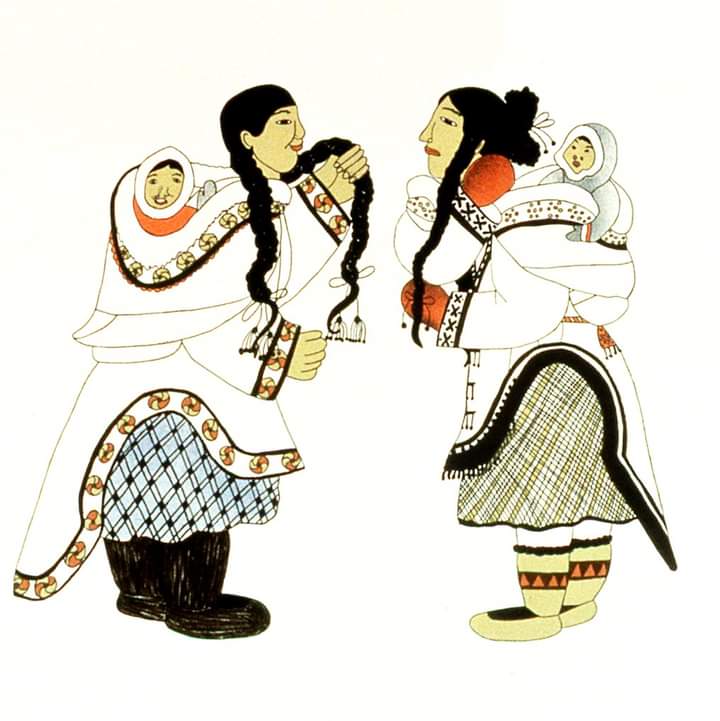
Here are some beautiful motherhood art pieces I really like. Hope you enjoy them as much as I do! 🥰

Art by Germaine Arnaktauyok, “Quiet Time”, 2005
Art by Mayoreak Ashoona, “Matching braids”, 1991
Art by Emily Kewageshig
Art by Alanah Jewell

How has motherhood changed you? Has it opened your heart (more)?

Adventure, Arctic, Beauty, Everyday life, Health, Landscape, People, Photography, Pregnancy, Sámi, Sápmi

An eventful, colourful January

It’s the last day of a very eventful January, and I am spending it curled up on our big sleeping couch with our newborn baby boy who is about 2 weeks old now, in his little baby nest and my partner who is sitting on the other end writing away on the computer. Outside, it’s already dark again. Polar night is officially over here but I have not seen the Sun yet. I am not outside so much, hardly at all as all time and energy is spent adjusting and taking care of this new amazing creation. I did however manage our first little walk with the pram!

Life is new and different and surreal as parents. Giving birth was intense and hard work, and unfortunately not how I envisioned, but nontheless a very powerful experience. A rite of passage of sorts.. At one point during delivery I felt like I connected with all other Mothers giving birth naturally, experiencing the same pain at the exact same time. When he was born, there was an incredible silence and love that I have not experienced before 🤱🏻

January is also my birthday month, and this year I celebrated at home with my little family and my friend Katharina. 29; last year in my twenties, first year as a mama! 🎉✨

How was your January?

Anthropology, Arctic, Awareness, Culture, Dzogchen, Everyday life, Finnmark, Genealogy, Heritage, Indigenous, List, Outfit, People, Photography, Saami, Sámi, Sápmi, Uralic

Endangered and extinct: Sámi languages today

Photo coloured by Per Ivar Somby. In the photo: Brita Somby, wearing traditional dress (gákti) with traditional wool shawl. Reindeer pants and boots.


The eight remaining Sámi languages are spoken here in the north of Europe (see map and gallery below) in a cross-border region which includes Norway, Sweden, Finland and the Kola Peninsula of Russia. This region is generally called Sápmi – mostly by northern Sámis, and is sometimes referred to as Lapland or Samiland. Laponia in Swedish Lapland is the one of the World’s largest unmodified UNESCO nature area still cultured by natives. Sámis are indigenous to Sápmi/Northern Europe and Kola Peninsula, our heritage and ancestry traces back to Ural mountains and Siberia. Sámi is part of the Uralic language family, alongside Khanty, Mansi, Nganasan and Karelian, to mention a few. Lap is considered a deragatory term for Sámi person.

Sámi languages speakers estimate:

Southern Sámi 300 – 500 speakers

Ume Sámi – less than 20 speakers

Lule Sámi 2 000 – 3 000 speakers

Pite Sámi – less than 20 speakers

Northern Sámi – 20-30 000 speakers. There are three main North Sámi dialects.
Northern Sámi is the most accessible language, both in terms of literature, news broadcasts, and other material for those who want to learn a Sámi language as a foreign language.

Kemi Sámi  extinct

Inari Sámi 300 – 500 speakers

Akkala Sámi – considered mostly extinct since 2003

Kildin Sámi 300 – 700 speakers

Skolt Sámi 300 – 500 speakers in Finland, fewer than 20 speakers in Russia

Ter Sámi – less than 5 speakers left, all elderly (update 2023: Ter Sámi is extinct)


Today we are around 90 000 Sámis, but as you can see from the numbers they do not match up to speakers of Sámi languages. Roughly 4/10 Sámis speak and use one of the Sámi languages today.


Why is this so?

To avoid humiliation and to give their children “better chances in life”, indigenous and minority parents often decide to speak a dominant or official language with their children. Sámi parents have not been an exception to this rule, especially in the very near past.

For the sake of how long this post would be in order to include all four countries’ history with the Sámi people, I will mainly focus on Norway.

Title: Samiske barn undervises i norsk / Sámi children learning norwegian
Opphaver: Fotograf Sverre A. Børretzen
Rettighetshaver: Leverandør NTB scanpix


Up to the 17th century, Sámi society lived pretty much its own life, with little interference from the outside. But with the new borders of the Nordic countries, interference was inevitable. Historically, the language situation after interference can be divided into three distinct periods: a missionary phase; a harsh assimilation phase; and the present phase, with potential for integration and revitalisation.

The 17th and 18th centuries characterise the beginning of missionary activities, with some very positive projects for the benefit of the Sámi languages: teaching was conducted through the medium of Sámi and religious texts were translated into Sámi (the Læstadian faith was introduced to Sápmi). From the middle of the 19th century however, a new policy based on national romanticism and ‘vulgar Darwinist ideas’ led to a harsh suppression of Sámi and the languages. The Norwegian Parliament and government pursued overtly a policy aiming at assimilating the whole Sámi population in Norway in the course of one generation. One can only say that this assimilation was very effective.

The “dark century,” 1870 to 1970 ca, had detrimental effects which can still be felt on both the languages themselves and on their status and speakers. In the coastal areas of Norway (and elsewhere), negative attitudes were transmitted by the Sámi themselves as a result of the policies, and inter-generational transfer of the language ceased in only a few generations.

Approx distribution of the languages/dialects today. The biggest blue area is mainly Troms and Finnmark.

New efforts in maintaining the languages were revived in the 1970s and still continues to this day. However, one of the most striking failures of the Sámi strategies is that the smaller Sámi languages (in numbers of speakers as listed above) have not seen success in improving their situation or even in defending their previous position. This failure is partly due to the fact that most speakers live apart from the larger Sámi groups. Dispersed among Norwegians, Swedes, Finns, and Russians, they do not have the demographic concentration that would enable them to use their language in the workplace and in official situations, including schools.

A language’s development, aging, and dying was considered “natural,” out of human reach. Languages were not killed, they “died of old age.” This agentless “model” for the prediction of the future of languages is still found among politicians, and legitimates their way of treating minority languages. The view that a minority is not autonomous and their own people, is devastating to that people’s culture and language.

In Norway, many municipalities with a Sámi population had developed procedures to give the Sámi some local linguistic rights. Yet, when the Sámi language law (in force since 1992) designated certain areas as belonging to the Sámi administrative districts, many of the municipalities left outside these official districts – often municipalities where the speakers of the smaller Sámi languages lived – withdrew services in Sámi, claiming that the law did not require them. Even today, there is strong resilience towards using official Sámi names in for example Norwegian towns and municipalities. This seems to stem from the view that Sámi people somehow belong to Norway, Sweden, Finland or other countries, and not to ourselves as our own people with our own unique language, history and culture.

South Sámi name for Bodø not welcome, 2011.

Currently, education, official documents and the media use Northern Sámi almost exclusively. This variant is used as a de facto “official language” and the most significant efforts have gone into the development of this particular language, to the detriment of other Sámi languages.

Opinions also differ on whether the different versions of Sámi are actual languages or dialects, and how to designate their speakers. Here is a an example what ‘Have a good weekend’ is in 6 Sámi languages:

“Buorre vahkkoloahppa” – North Sami

“Buerie hïelje” – South Sami
«Buorre vahkkogiehtje» – Pite Sami
“Buorre vahkoloahppa” – Lule Sami
“Šiõǥǥ neä’ttel-loopp” – Skolt/East Sami
“Pyeri oholoppâ” – Inare Sami

Eastern Sámi is the most different from the other languages.

Official Sápmi flag by artist Astrid Båhl from Skibotn, Troms. Photo: Ørjan Bertelsen


Most Sámis today speak either Norwegian, Swedish, Finnish, Russian, or even English as their everyday tongue (some migrated to the USA). Many are bilingual as well. Another factor is that some Sámis do not identify as Sámi or even know that they are due to the heavy assimilation of the past. They do not have any relationship with the language(s), and thus have lost their door to that culture.

Unlike the Indo-European languages spoken in most of Europe, the Sámi languages belong to the Uralic language family.
Photo I took at the main square in Tromsø 2019. Demonstration against violence and discrimination towards sámi.

South Sámi women and a man in Sweden. Colourised photo by Per Ivar Somby.
Many young Sámis today use the traditional handwoven wool shawl as an everyday garment in a more urban way in order to still show our Sámi identity, and belonging. (Photo by NatGeo of Jokkmokk Sámi Ella-Li Spik, herder).
Portrait of my relative Johannes from 6 generations ago. Wearing a pesk/finnmudd. Finnmark, Arctic Sápmi. I think we have the same nose, and eyebrows.  It was a black-white photo by S. Trombolt but Per I. Somby colorised it.

Norway, Sweden and Finland was in 2019 urged by the UN to increase public funding of Sámi parliaments as a response to the dire state of the disappearing languages. But even if the situation seems dire for many languages, it is still possible to revitalise them and start using them more often. Which languages survive and which do not ultimately seems to be a question of human will, not of any rules of nature.

I know that languages and cultures come and go, but I do feel it a great loss to lose what has been native for Sápmi for literally thousands of years, in only a few generations, when it can be perserved. I am happy that some schools and institutions are giving sámi language courses to anyone who wishes to learn it (although this is mostly in Northern sámi), and I do also wish that my children will learn it, which I never did due to the Norwegianization process in Finnmark. Language is a huge part of culture and when it’s taken away, people get confused about their own community, identify and sense of belonging, and even turn on each other as a result of feeling alienated.

The languages we learn from our parents shape our brains, literally!, and our worldview, how and who we relate to. The immense loss of language and culture for the Sámi people cannot be described as anything else but traumatic.

Me keeping warm and optimistic about the future of the languages and culture.


Thanks for reading! xx


Sources and texts used in this post:

https://site.uit.no/sagastallamin/

http://www.sorosoro.org/en/sami-languages/#:~:text=Yes.,beginning%20of%20the%2021st%20century.

https://blogs.loc.gov/international-collections/2019/12/will-the-sami-languages-disappear/

https://www.culturalsurvival.org/publications/cultural-survival-quarterly/saami-languages-present-and-future

Adventure, Arctic, Everyday life, Landscape, People, Photography, Poems, Saami, Sámi, Sápmi

Away, away..

Senja island. The pointy peak is Segla. Hiked it once, amazing view. Apologies for grainy mobile shot, it doesn’t do it justice.
I love driving. One of my happy places, for sure.

“Away, away,—to the mountains away,
Where the pine trees murmur and sway,
And the foamy waterfalls sing and spring
Over the boulders gray.

Hills—
Blue and green hills, near and far,
The farther they lie, the better they are.
The near ones I can climb and see
But the beautiful far ones call to me”

Unknown

Arctic, Art, Beauty, DIY, Indigenous, Landscape, Outfit, People, Photography

Complementary colours

Did you know there is a reason why orange+blue and yellow+purple work together so well? 🧡💙💛💜 They are considered complementary colours! “Complementary colours are pairs of colours which, when combined or mixed, cancel each other out by producing a grayscale colour like white or black. When placed next to each other, they create the strongest contrast for those two colors. Complementary colours may also be called ‘opposite colours’.”

Everyday life, Landscape, People, Photography

Spring in Tromsø, part 2

Hair dresser. Norwegian and sámi road signs.
People sitting at Solid café.
Bastard bar and Huken pub.
Taxidermy wolf with the cathedral in the reflection.
Shop window.
Sticker in window for a sámi publishing company.
The candy shop
Running girls statue by Italian artist.
Hampen.
Melting snow.
Skansen.
“One day everyone will die, every other day we will not.”
New restaurant by the bridge.
All the dry shampoo.
Utepils
Rakettkiosken.
“Alt blir bra” – “Everything will be okay”.