Why the absence of autonomous, multi-age playgroups makes parenting suck. (This is a reshare of Elena Bridgers’ article).
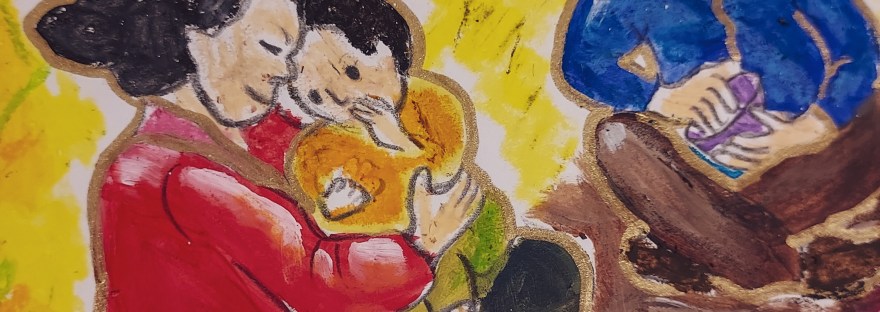
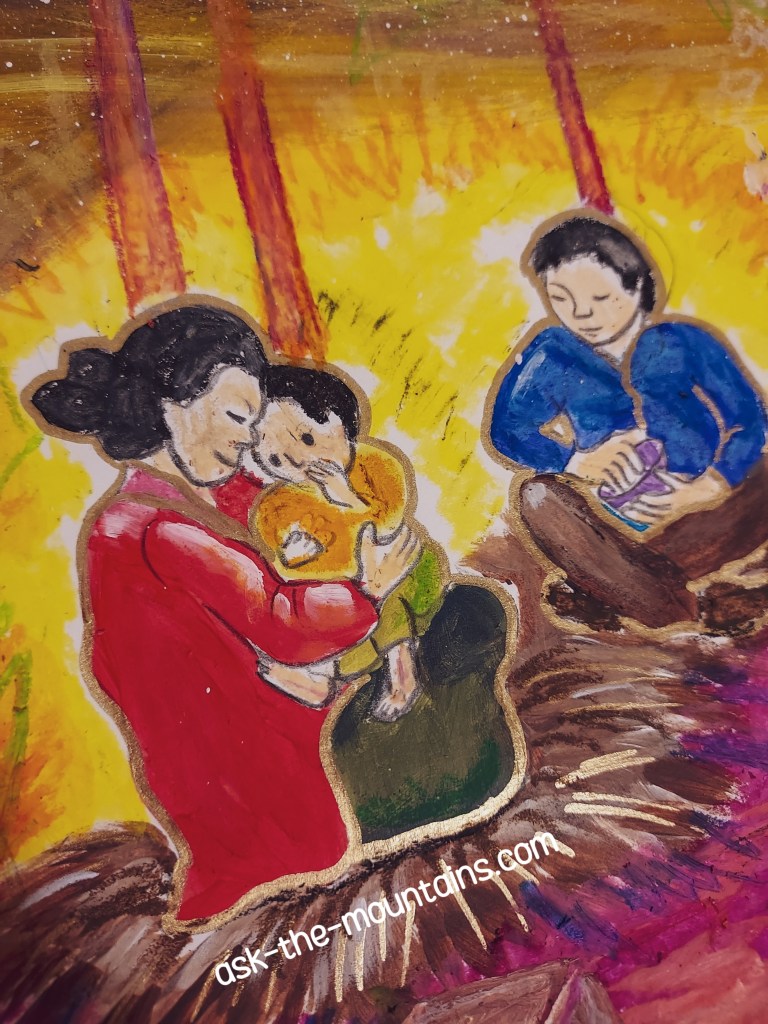
Sámi mommy breastfeeding toddler in Tromsdalen, Tromsø, Arctic Sápmi, while smoking some tobacco.
“Fasten your seatbelts, ladies and (two or three) gentlemen, because we are about to dive into the my absolute favorite topic of all time: the importance of multi-age playgroups in hunter-gatherer societies. Honestly, I get more excited about this stuff than a dog whose owner just said the word “walk.” Back when I first started reading about motherhood in hunter-gatherer societies there were two things that made me go, “ohhhhhhhh, now I get it.” One is the longer interbirth intervals that probably characterized most of human history (as I wrote about here) and the other is the critical important of multi-age playgroups as a source of substitute childcare for mothers. It was a total epiphany for me, and I suspect you may have the same reaction, because once you see how this used to work, how human childhood evolved to work, it just makes so much sense. Over millions of years, we basically evolved a perfect system involving care of children by children, in a way that was wholly compatible with their own need for play, and that we have entirely abandoned in the modern context, to the detriment of all.
But in order for you to understand why this still matters for mothers in the modern context, I need to tell you my own story about just how much I hate playing with my children (even though I love them deeply) and how misguided I was about the role of a “good mom” and what she owes her kids…
I’d rather stick a fork in my eyeball than play pirates.
Only after I had begun doing deep research on hunter-gatherer societies did I realize that this is exactly how things were supposed to work. Children are supposed to play with other children. It was never meant to be the mother’s job. But trapped as we are in single-family homes where playmates can be hard to come by, parents often end up filling this tedious and time-consuming role…[..]”
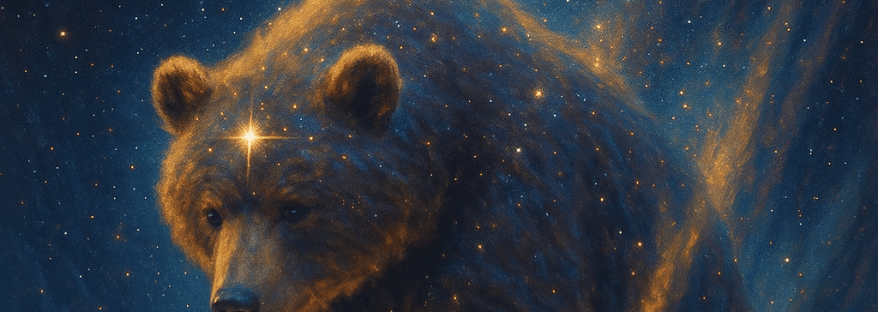
The Sacred Bear and “the Origin of the Sámi People”
In Sámi mythology, the bear is a divine ancestor, not just an animal.
One myth tells of a heavenly bear who descended to earth and married a human woman. Their children became the first Sámi people.
Because of this, bears were/are honored as ancestor spirits, and when a bear was killed (very rare and ritualised), its bones were carefully placed in a tree to allow its soul to return to the sky.
A ceremony called the Bear Feast included songs, dances, and apologizing to the bear spirit for the killing, inviting it to be reborn.
The Bear Who Fell From the Stars:
A Sámi Creation Song of the First Bear
In the hush before dawn, where no footprints fall, Where the wind hums secrets to the pine, A star broke loose from the roof of night And tumbled down through time.
He fell with a roar through clouds of gold, Bathed in *Beaivi’s light. He landed not dead, but dreaming still In the heart of the forest’s white.
The reindeer bowed their crowned heads low, The lynx stood still in her track. For this was the First of Bears, The Sky-Child, fallen back.
He walked like thunder on ancient snow, His breath, a wind of flame. Yet gentle were his dreaming eyes, And wise, and without shame.
A woman came from a northern vale, A weaver of skins and song. She found him sleeping in a ring of birch And stayed with him all night long.
They spoke without words by fire and frost, By the rhythm of blood and bone. She taught him the names of the winds and streams; He gave her dreams of home.
And so their children, wild and wise, Were neither beast nor man. They sang to trees, they hunted clean, They walked where few else can.
But then the bear, when spring had sung, Felt longing rise like steam: His fur grew light, his eyes grew wide He vanished into dream.
And so today, when the bear is seen, The Sámi bow and sing “Child of stars, our ancient kin, Return again in spring.”
If ever a bear is taken in hunt, The people weep and pray. They dress his skull in flowers and moss And lift his bones away.
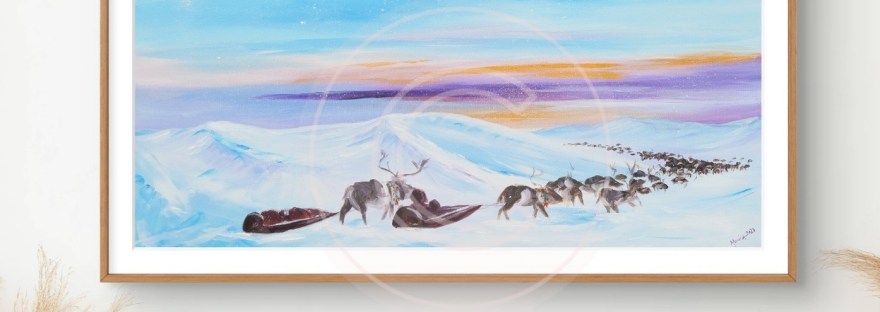
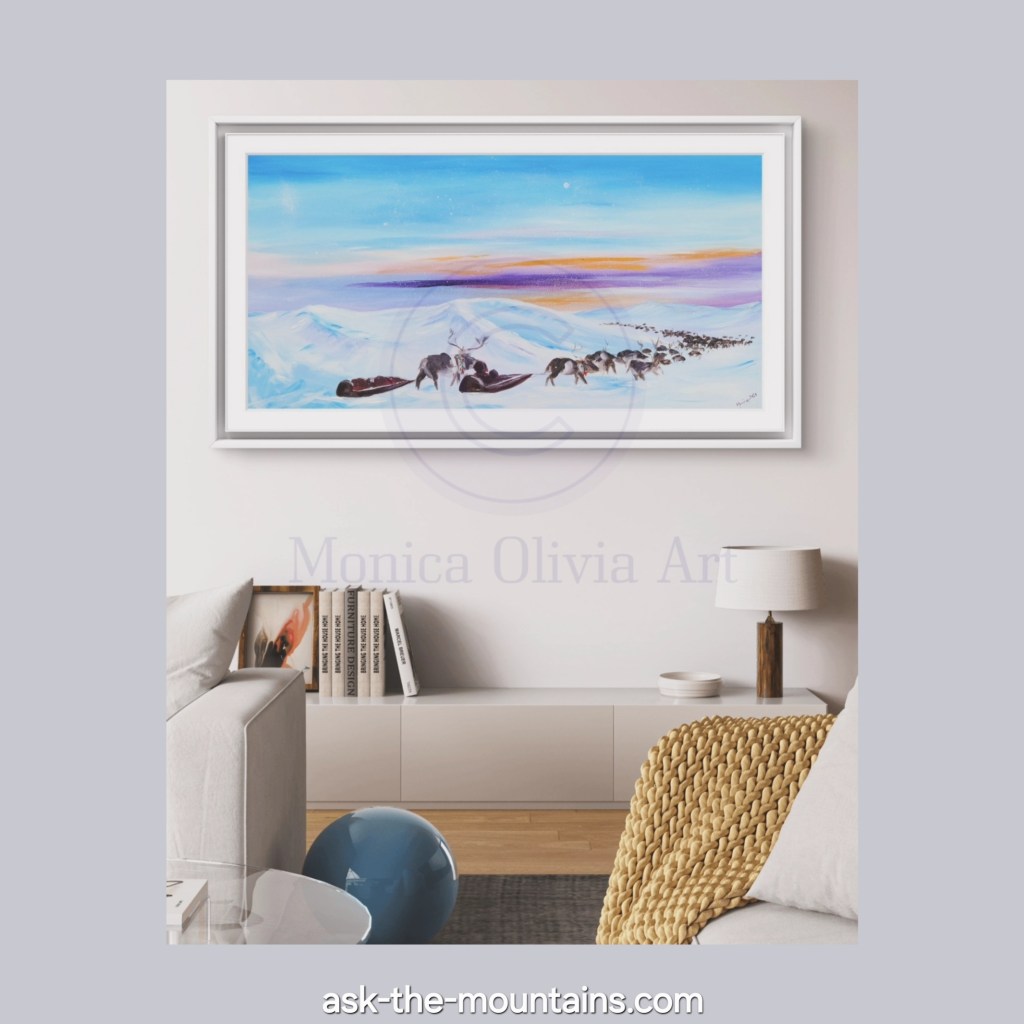
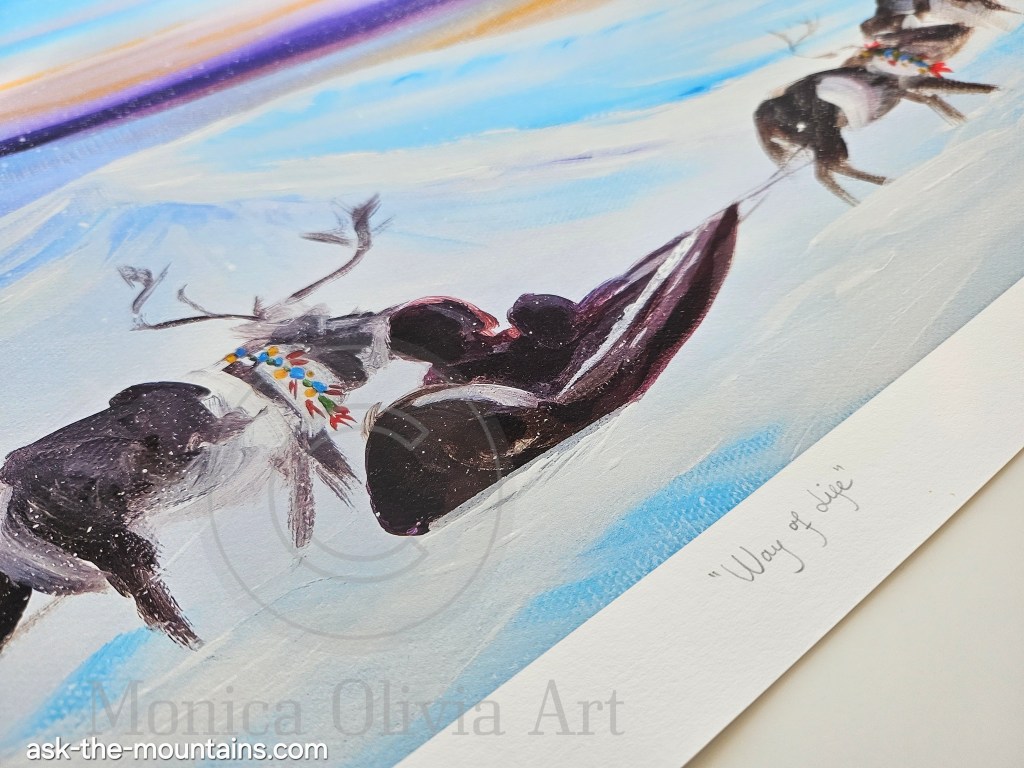
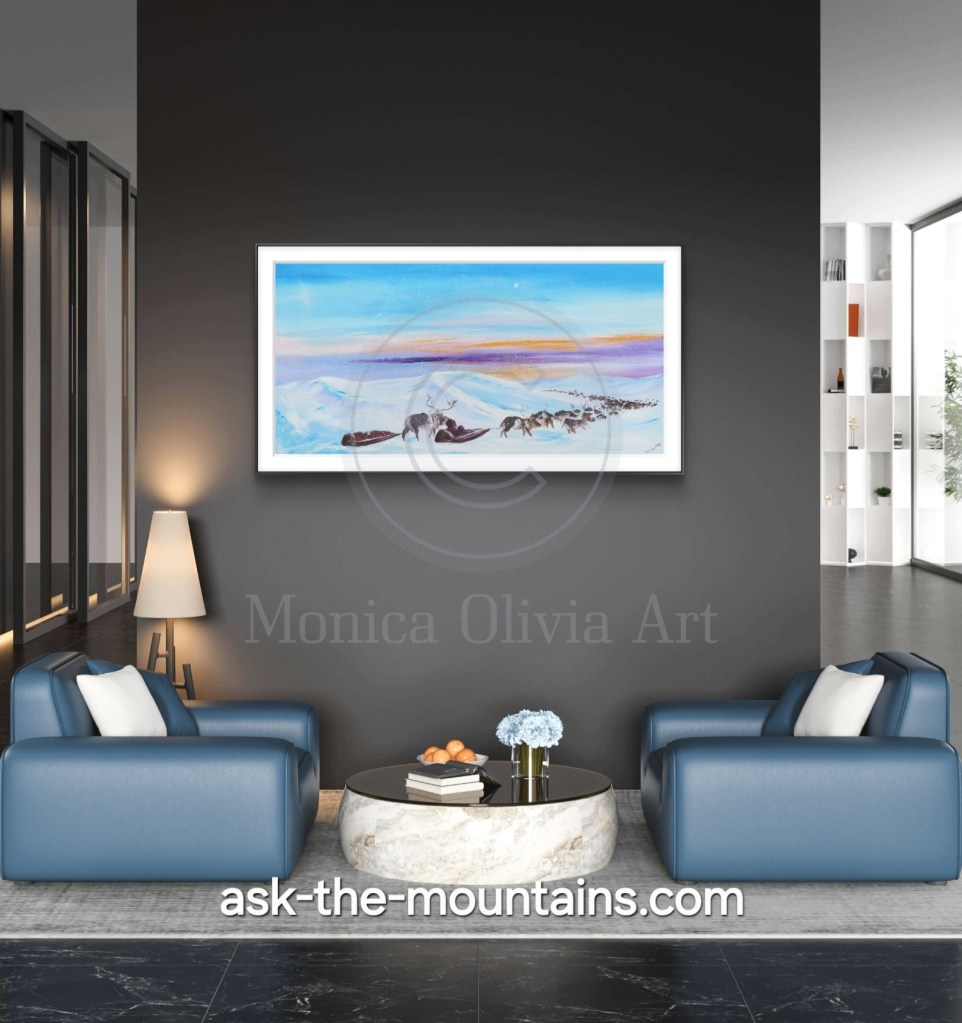
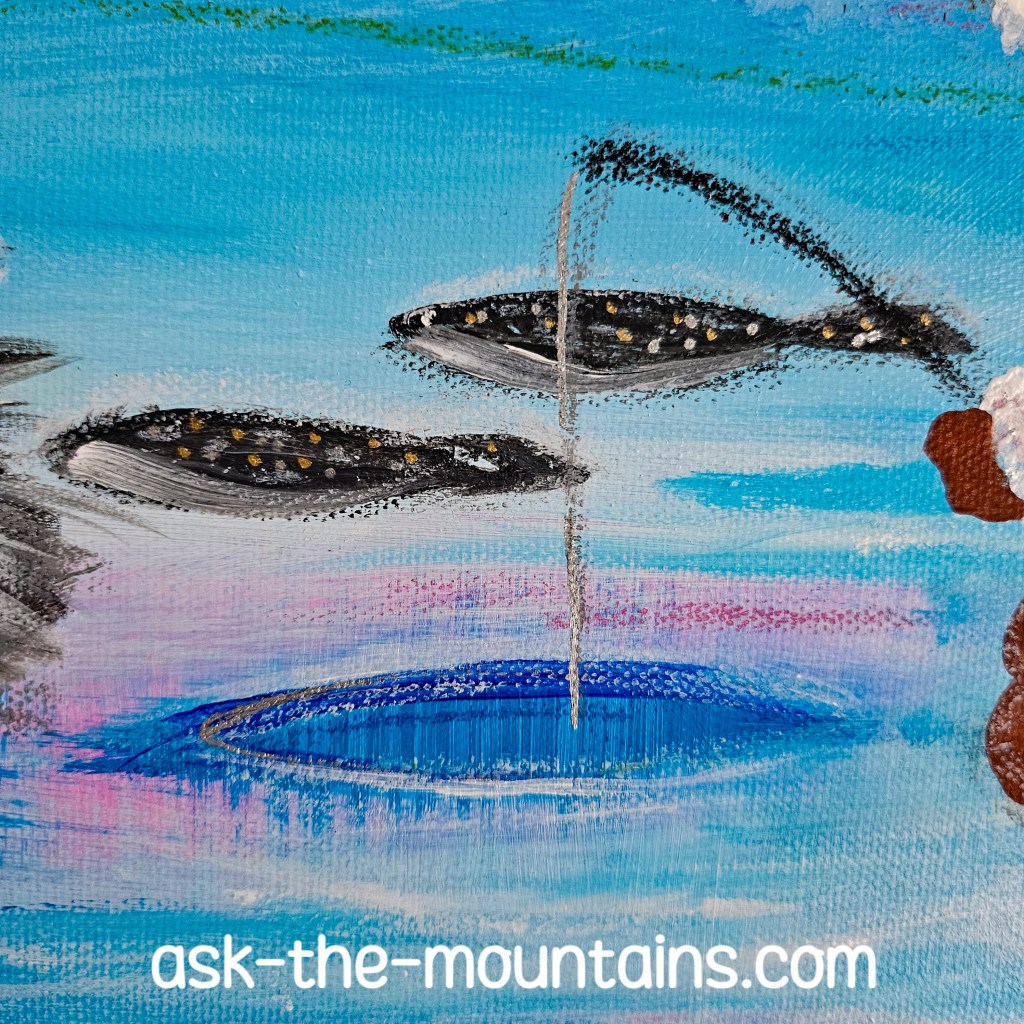
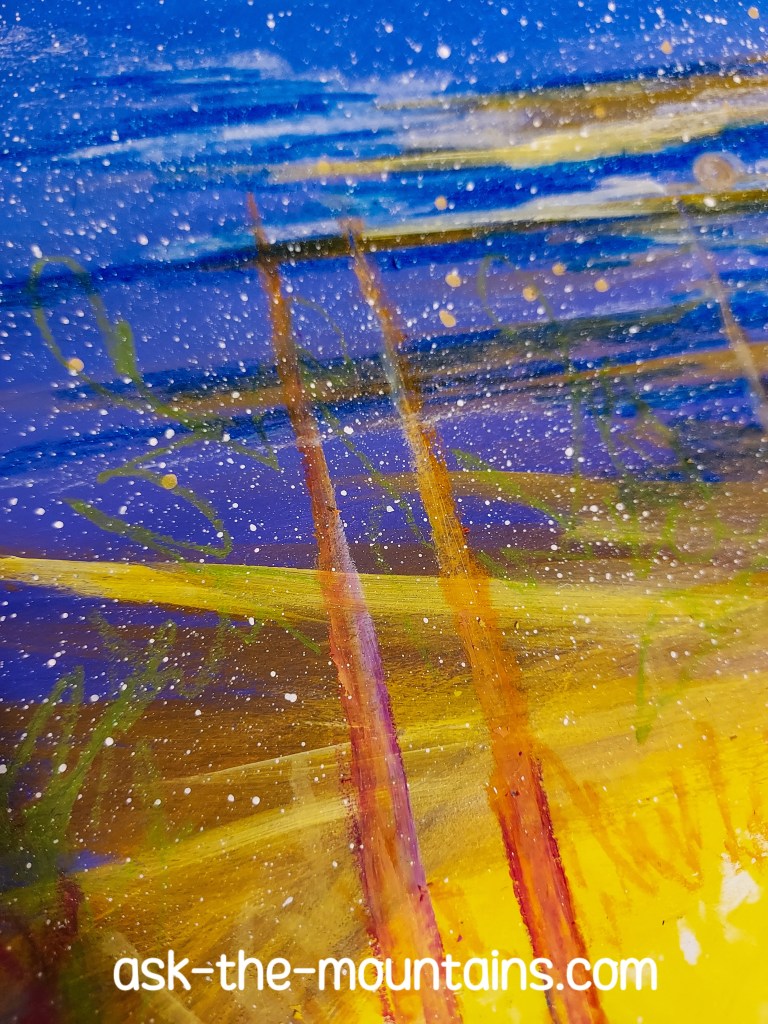
This is the landscape nomadic peoples of the Arctic have travelled for decades and generations. Moving their herds and homes and children safely tucked onto sleds, across the tundra. This is still the case in some areas. If you’ve witnessed the ever-changing play of colours and atmosphere during the Arctic winter and Polar night, it looks something like this; pastel skies, crisp clear air, moon in daytime and the sun hiding behind the horizon, blessing us with a few rays here and there before leaving for a few months. I am in awe at how my ancestors have survived and even thrived here for so long; I feel moved to my core by their know-how of the elements, seasons and animals. “Way of Life” art print, 2400 NOK 🩵💜🤍🧡 89 x 46,5 cm including white edges. The prints have the title written on the white part in front, and signature on the back.
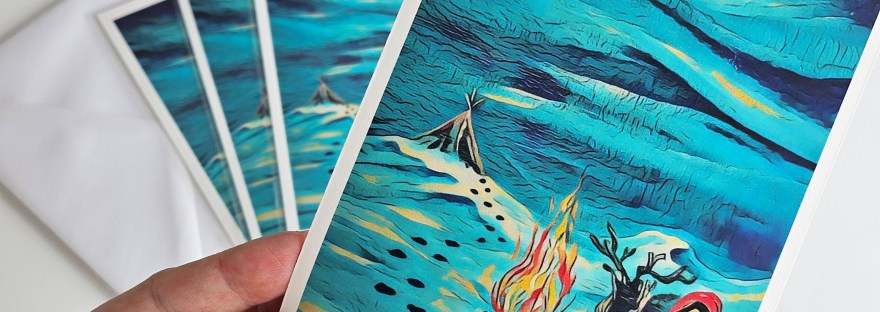
Art card with envolope ✉️ 17 x 12 cm including white edges. 75 NOK (norwegian kroner) Can be shipped anywhere 🤍🌍
The prints are made from a painting I did back in 2021 when I first became a mother. Afterwards, I slightly edited it digitally, and thought it looked wonderful as printed art cards 😊 I have 3 cards available currently.
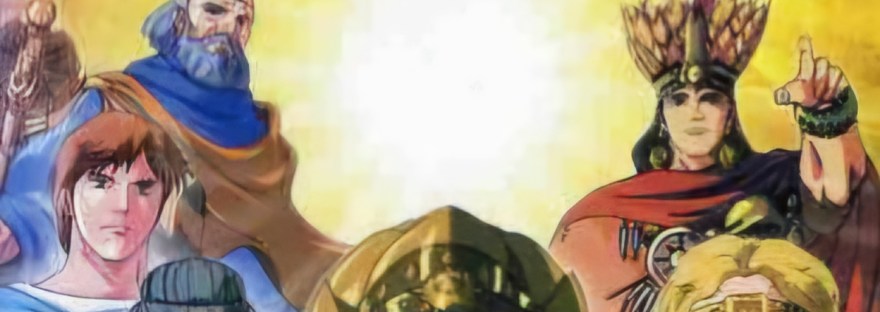
Have to share this absolute gem of a film 🙏🏼 Found it very well made and entertaining to watch, and a good Dharma film to show kids. I don’t usually watch a lot of animé but I liked it!
Really enjoyed this 2 hour interview with “the smarteste man in the world”. Of course IQ isn’t everything, as he says himself, but I guess what I liked about this interview is how he early on in life decided to look for truth and meaning rather than using his brains to make money. They got into all sorts of topics, like beauty, reality, globalism, God, even aliens, cancel culture, etc. Very relevant atuff. Also, I found it funny how he said most buddhists nowadays don’t understand emptiness/sunyata, I think that is true.
This short video really highlights something that is close to my heart; right nutrition in pregnancy. Am currently pregnant with our second baby, and since going keto, the difference before and after is like night and day. Especially if I compare to my first pregnancy 4 years ago when I was not in ketosis. I was binging carbs all day and gaining a lot of weight, and barely had any energy. At the end of that pregnancy, I had to use crutches and/or wheelchair. The really shitty thing about using glucose as main energy source is that the more carbs you eat, the more you crave. I’ve noticed that when switching to (animal) fat as the main fuel, I don’t have cravings, mood and energy level is quite stable and I can function a lot better as a mum and basically as a human being 😅 I can write a longer more in detail post about what exactly I eat to maintain ketosis and how it makes sense for me to do that both from a health perspective but also from an ancestral point of view.
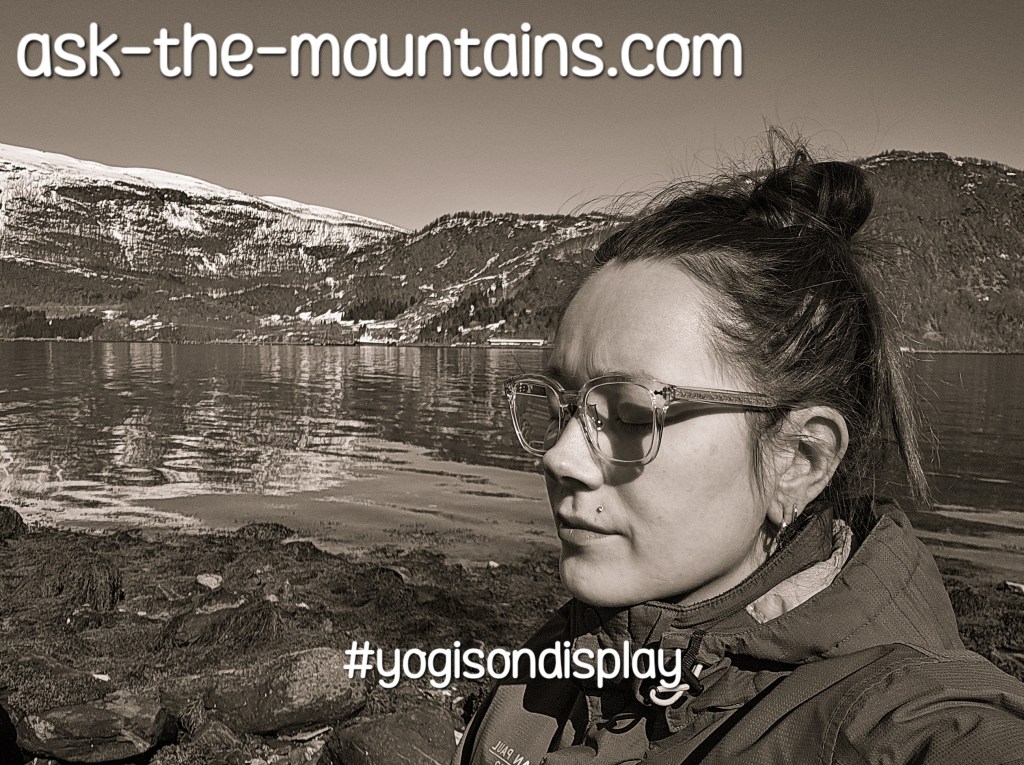
Yogi on display in nature for the birds, foxes and rabbits to see 😄 also i found a long-ish animal bone that was perfect to use for hitting on a rock to keep the rhythm while chanting and singing prayers. 🐰🐦🦊🦴
What is #YogisOnDisplay?
“Unlike in cultures long established in the dharma, spiritual practice is not visible in the everyday life of Western society. While many Westerners practice some form of spiritual practice, the actual practice is often kept private. This is a great pity. Not only does it speak volumes about the level of spiritual maturity of the West, but it also means that many people never encounter dharma in the first place. If spirituality is not publically displayed, the fact that there is an alternative to existential confusion and suffering does not reach the masses.
In an attempt to counter this, Amrita Baba has initiated the Yogis on Display project. The idea behind Yogis on Display is to encourage spiritual practitioners of the West to become living examples for others. Instead of hiding away in our modern city caves, we need to bring meditation, mantra singing, yoga practice, and so on, directly to where it matters; straight to the middle of the hamster wheel. Displaying the solution to existential confusion and suffering is a hands-on, time-tested way of practicing care and compassion for all beings.
To spread the message of Yogis on Display the hashtag #yogisondisplay has been created. Practitioners who chose to take part are encouraged to take a picture of themselves and share it on social media using this hashtag. This way more people can learn about the initiative and become inspired to light the torch of dharma in our public spheres.” (AmritaMandala.com)
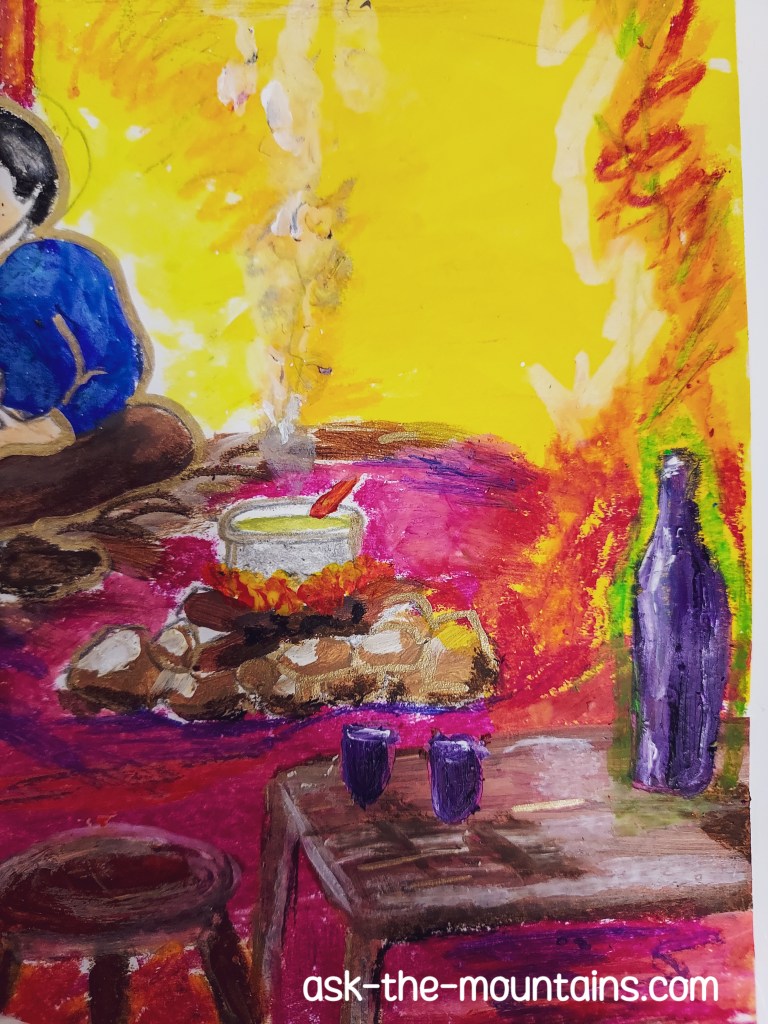
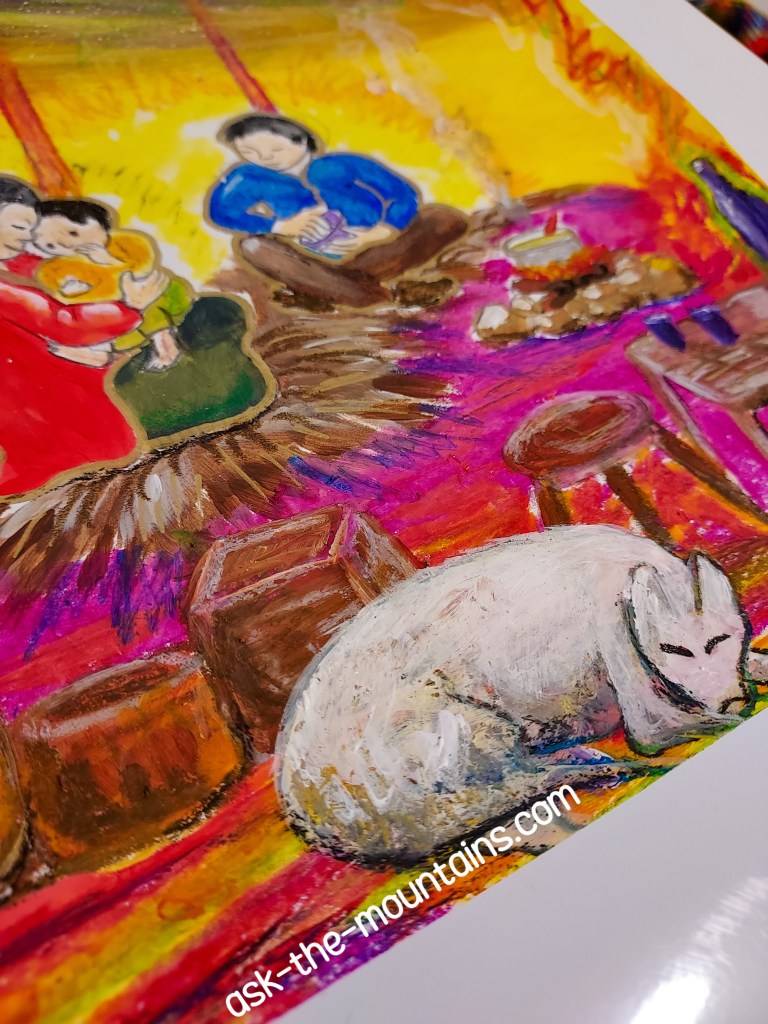
Food and how to get that food is a huge part of any culture. In the Arctic, that food culture has been mainly catching, hunting, fishing and herding, making the foundation of our food for thousands of years an animal based one. We don’t have a lot of local edible plants here, with a few exceptions like berries for example. With the influx of trading and new borders, new foods were introduced, but if you are like me, I don’t tolerate them well at all, especially grains, and a lot of carbs . So I stick to an ancestral Arctic diet that my stomach and body loves, and I feel extremely passionately about food culture, so I guess that is what I made this painting about. I also added 3 samoyed sled/herding dogs, as a little head nod to another Uralic Arctic people neighbouring Sápmi; the Nenets. (An obsolete name for them used to be the Samoyed people, a name not used by themselves). Acrylic on 80 x 80 cm canvas, details in silver and gold pen, oil pastel crayons. 🩷🩵💜🤍💚
I often think about how the two genders are put up against each other in todays’ society, and we forget how to cooperate. We forget that men and women are dependant on each others’ strengths and that we complement each others’ weaknesses. We tend to focus on “who has it worse and who does what is most important”, instead of focusing on “what can we accomplish together, and how can we best raise the next generation, and be there for one another in life’s traumas, challenges and victories”. We hear absurd statements like “what is a woman”, and “do we need men”. The feminine and the masculine are two wings of the same bird, we need both to soar. The feminine power represents creation and wisdom, while the masculine represents stability and action. The whole Universe – and thus you and me – are made of these, and we should not forget that.
(Acrylic and oil pastel drawing/painting size A4, on mixed media paper)
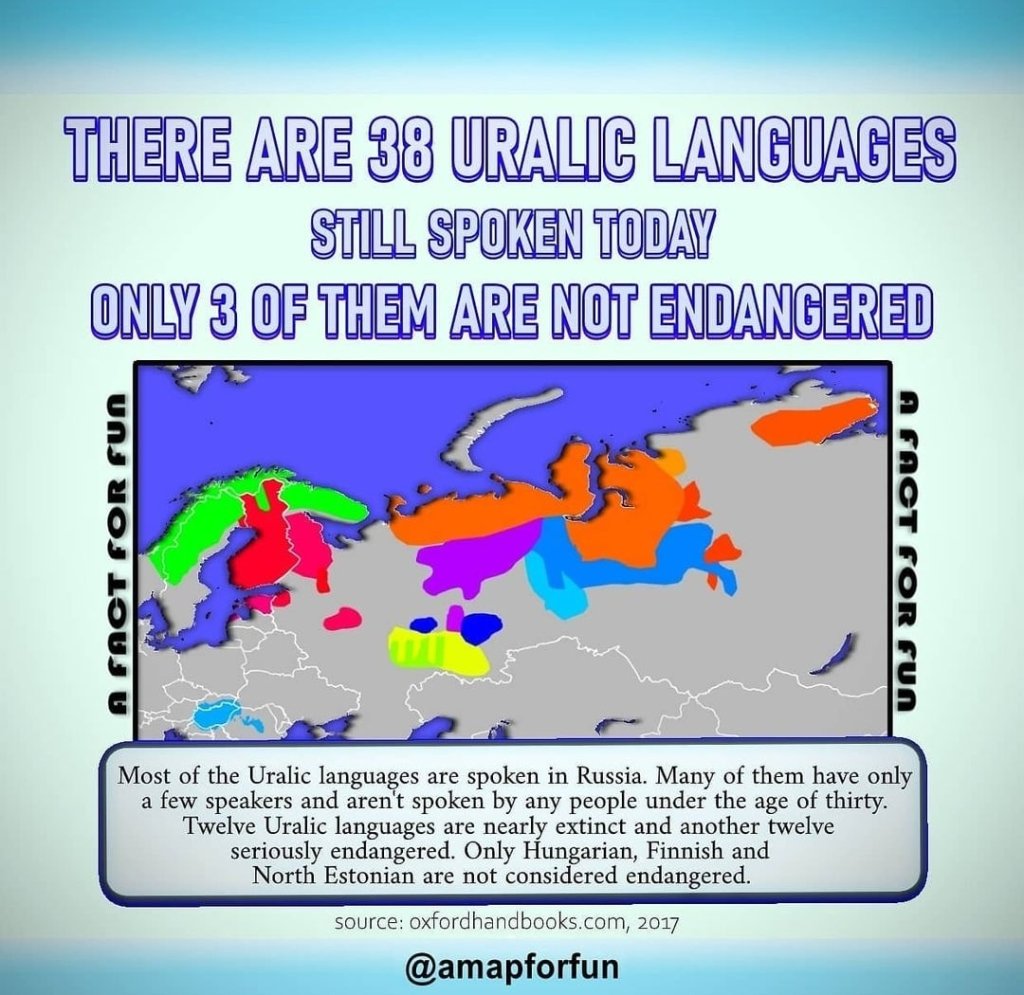
Who are Uralians and Ugrians? We are different peoples with unique cultures and common linguistic roots, stretching from Russia, over Siberia and the Ural mountains, into Scandinavia. Some have moved further south, like the Hungarians. Many of us live Arctic and sub-Arctic lives and livelihoods. Many of us also have lost our traditional cultures and language.
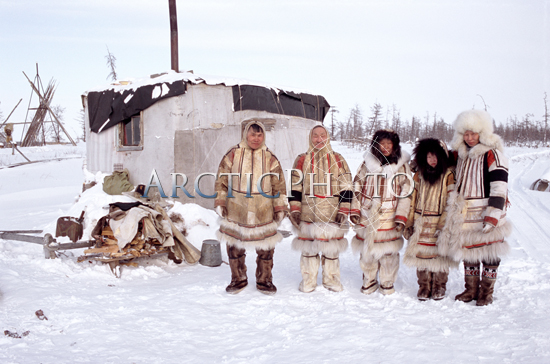
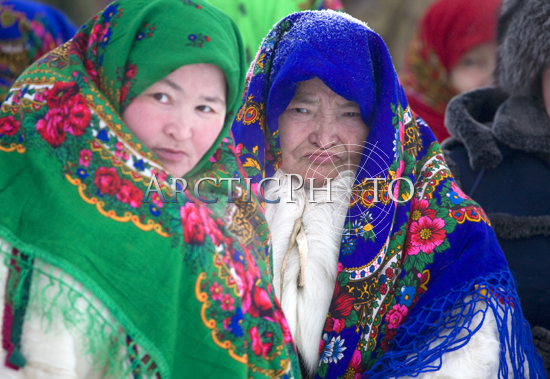
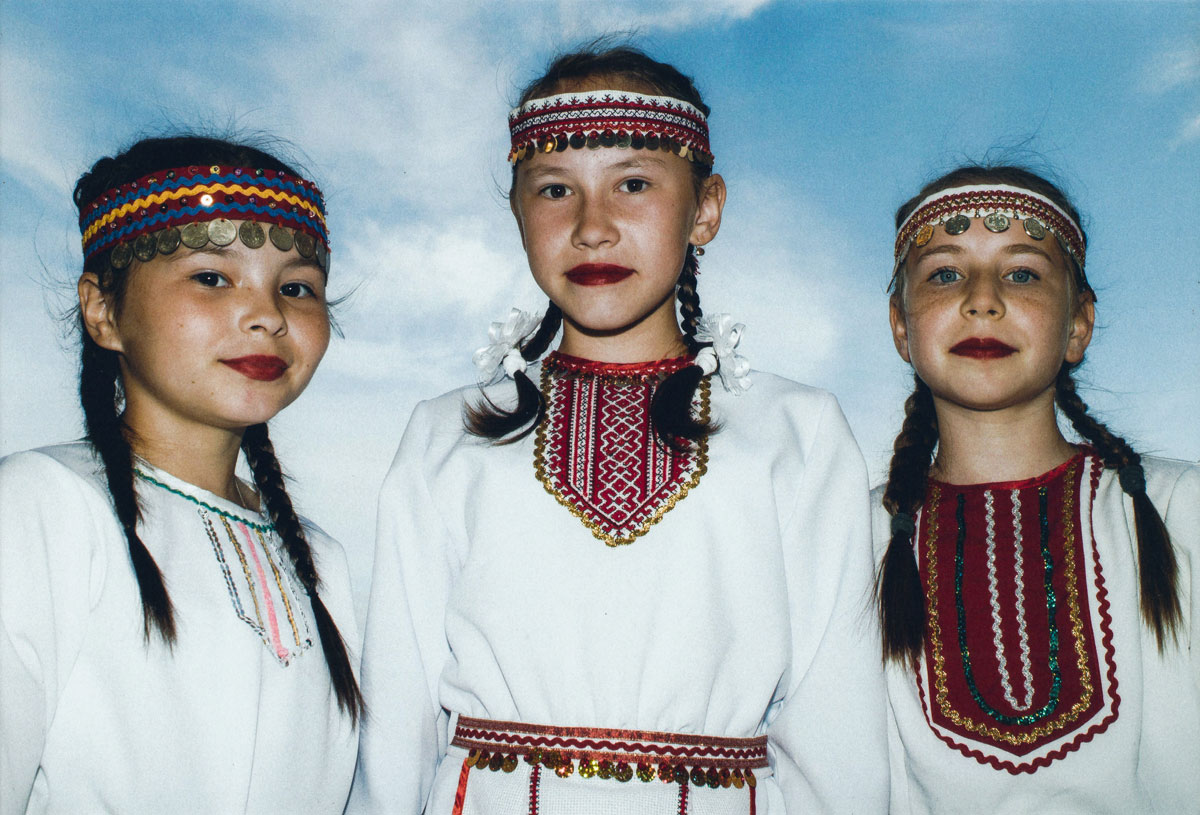
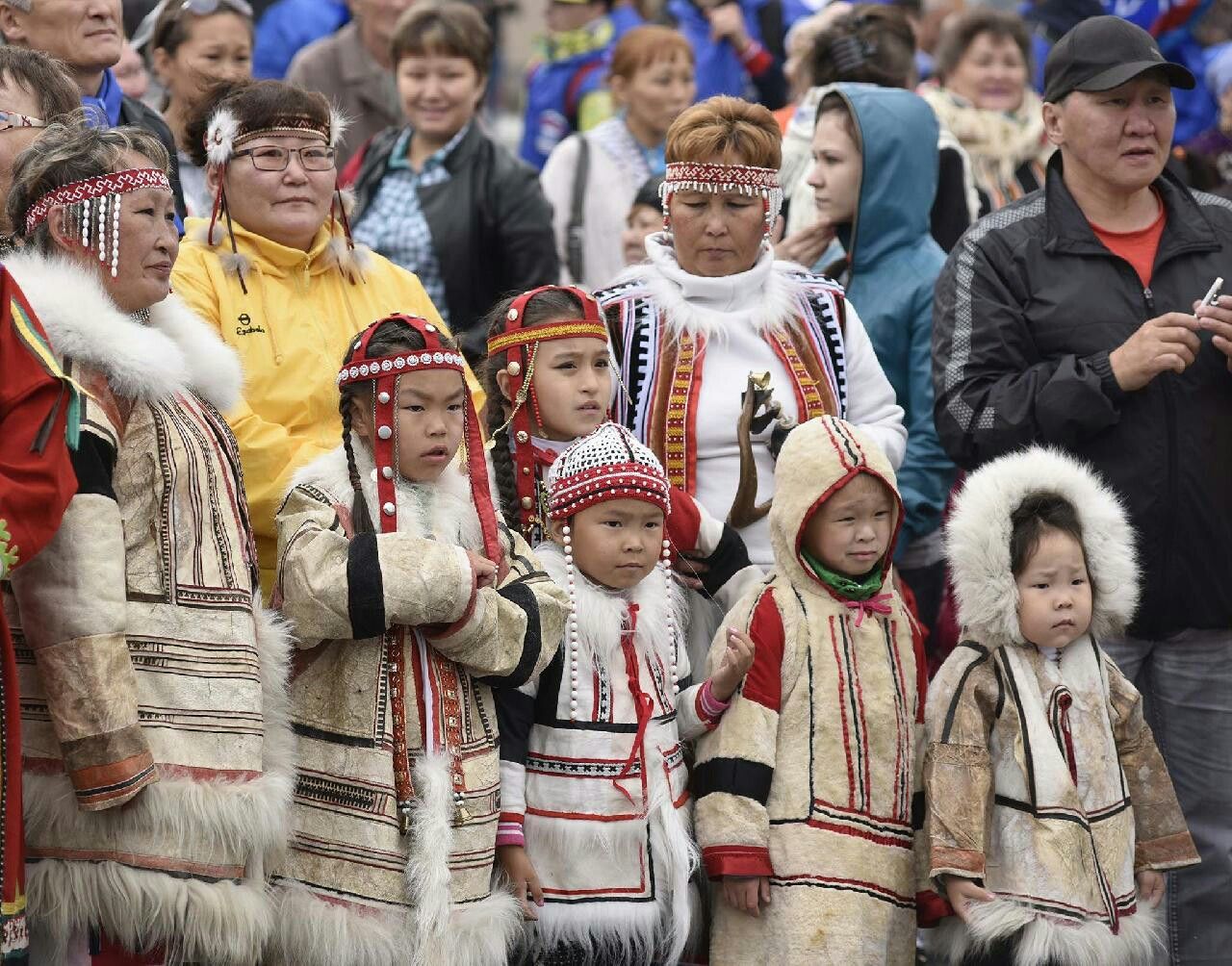
We are Sámis, Kvens, Finns, Karelians, Khantys, Maris, Mansis, Nganasans, Nenets, Komis, Tornedalians, Selkups, and many more. I added a small variety of photos from our community below.
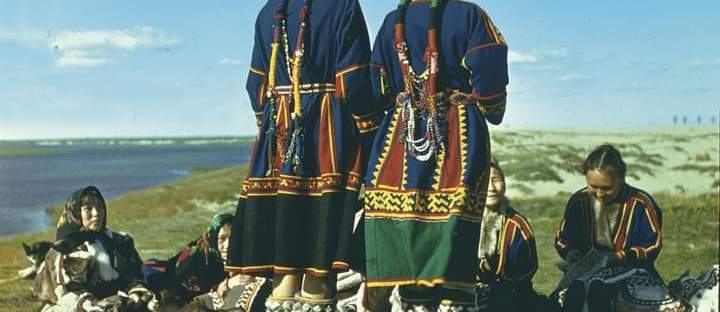
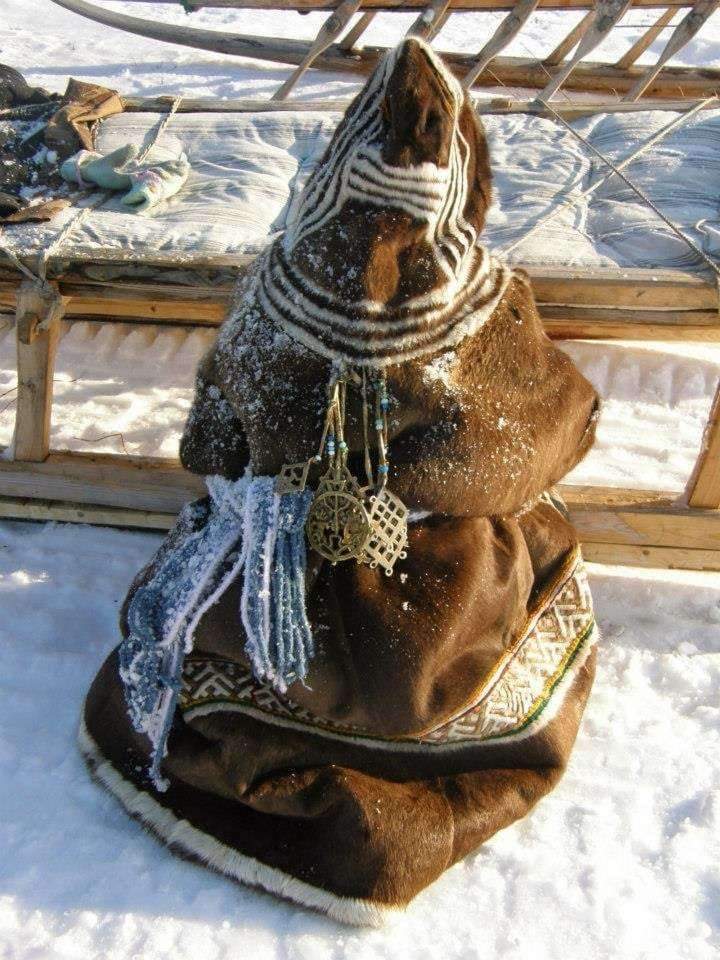
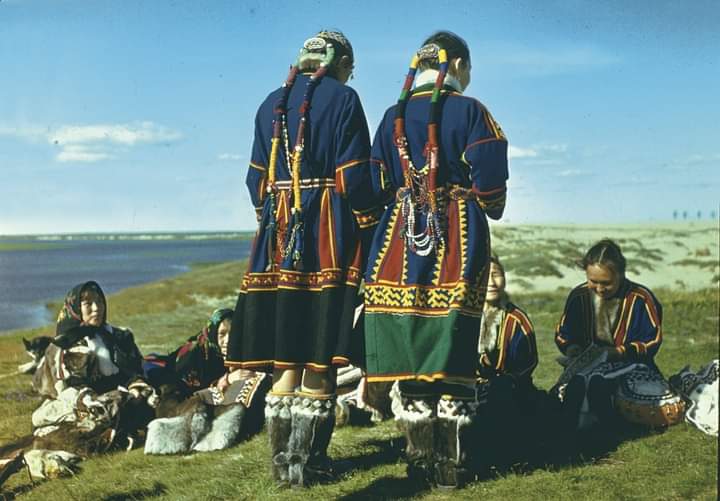
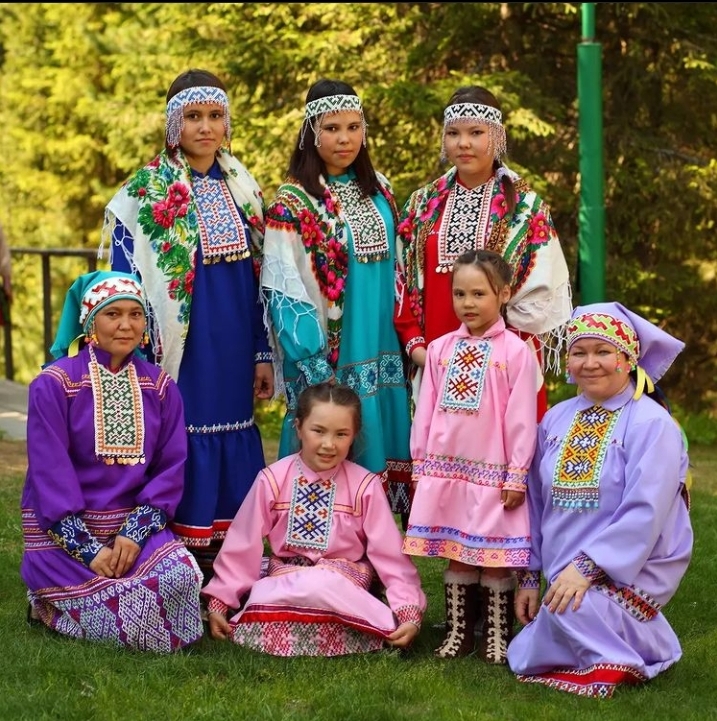
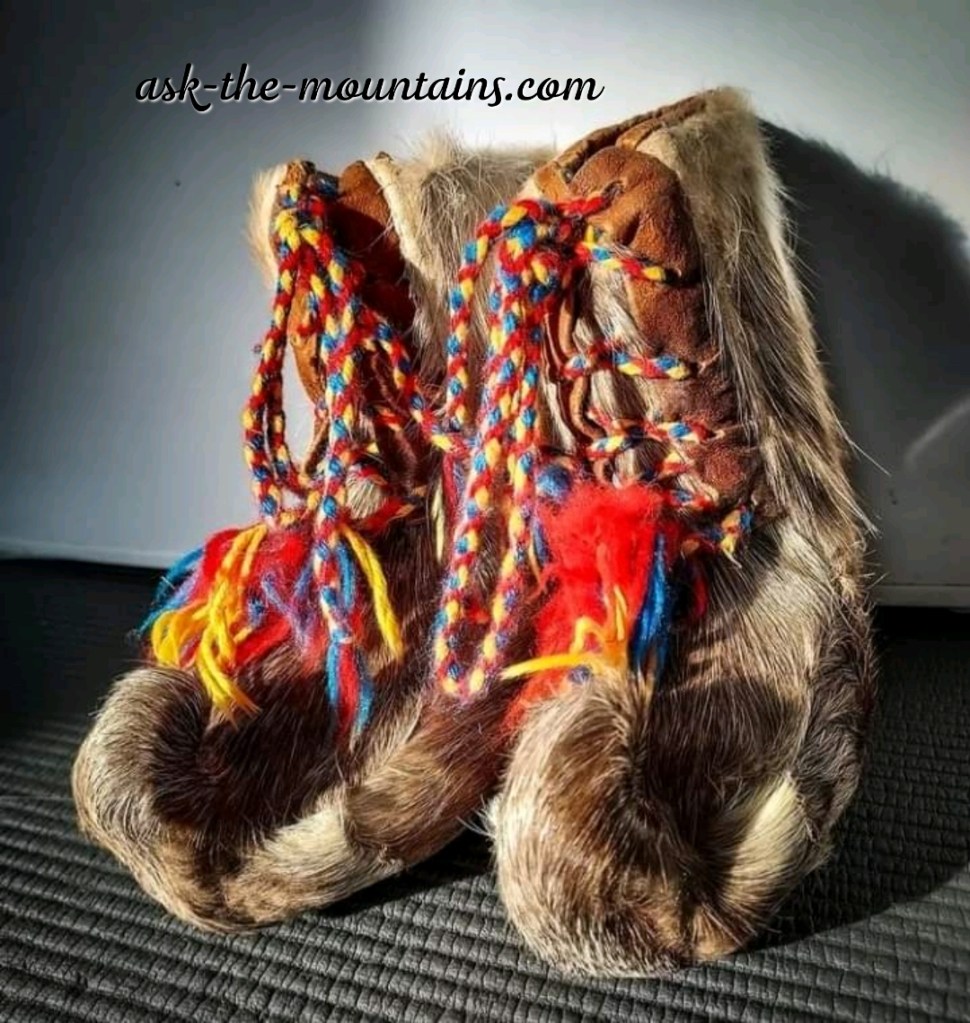
Uralic clothing vary from boys and girls/men and women, and is usually made just to fit the climate. Sewing patterns are often kept within the family and only used by the ethnic group and not outsiders. Summers can get pretty warm, and winters of course get extremely cold, so there are different garments for the seasons. More text and a poem below 😊
Usually, if not always, ethnic European and Eastern/Eurasian (Arctic) clothing has specific designs for women, men, girls and boys. Practical, warm and distinguishable; usually a bit, or vastly, different for each region. Often bright colours and intrinsic details. Made from the immediate surroundings; wool and animals. Sometimes silk. Giving the wearer a place and belonging; need only look at a persons clothes to know where they, or where their parents are from. Sewing patterns are often kept within the family only. Nowadays however, many native outfits are only used a few times a year for special occasions due to many people moving into the city and/or the boarding schools, and designs are evolving with the new creative youth, creating new ideas and identities, which is normal and expected. But traditional sewing skills are sadly not being taught that much from early age.
Clothing is important. No store bought garment sewn by a machine can measure with an outfit that contains your ancestry and history in every stitch. Many nowadays are also lucky to have more than one ancestry and thus more wardrobe options! Many have lost their native language(s) and feel like a “poser” if they use them or sew them, perhaps scared of getting strange looks or be called names, but I will forever argue that we should wear it like our own skin, because it is a birthright of sorts.
Every two weeks a language dies with its last speaker, 50 to 90 percent of them are predicted to disappear by the next century (source for the statistic: National Geographic). For example; 35 out of 38 Uralic languages are endangered or critically endangered due to assimilation and globalisation. Many Uralics live Arctic lives and livelihood in Europe and Eurasia. Herding, fishing and hunting. Linguistics say there used to be at least (!) 31 000 languages in the human history, now we are down to around 6000, and it is declining every fortnight. This makes sewing and using our traditional dresses even more important.
Keep sewing and keep teaching children traditional skills. They will thank you down the line, I am sure of that.
Thank for reading. I will end this post with a poem by Ingrid Mollenkopf from her book ‘Between Sleeps: Uralic Poetry’:
“People wearing their national dresses symbolise unity. A research conducted on this subject showed that youngsters wearing traditional clothes, irrespective of western pressure, had fewer behavioural and emotional problems. The reason being that they are in touch with their ancestral culture, religion and traditions and thus not confused about their identity or who they are.” Makes sense to me; feeling like you belong and have a community is very important. Nowadays, I think many of us feel a part of many different groups, because we live in a globalised world, and clothing can be changed, thus changing your identity. Maybe that makes our traditional and national dresses even more special? ❤
Here is the link to the study for anyone interested. It also sheds a light on the dangers of not allowing indigenous peoples to use and wear their own clothings, as we have seen happen all over the world.
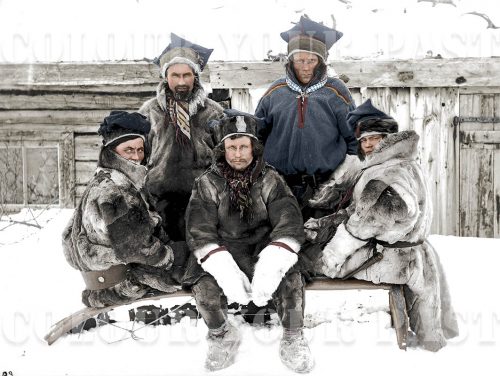
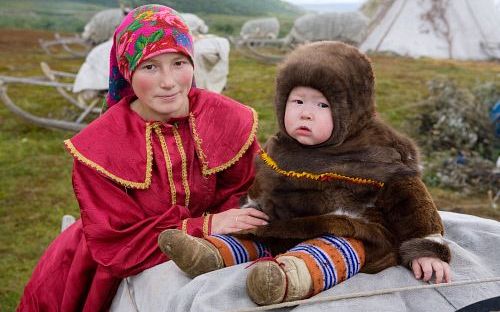
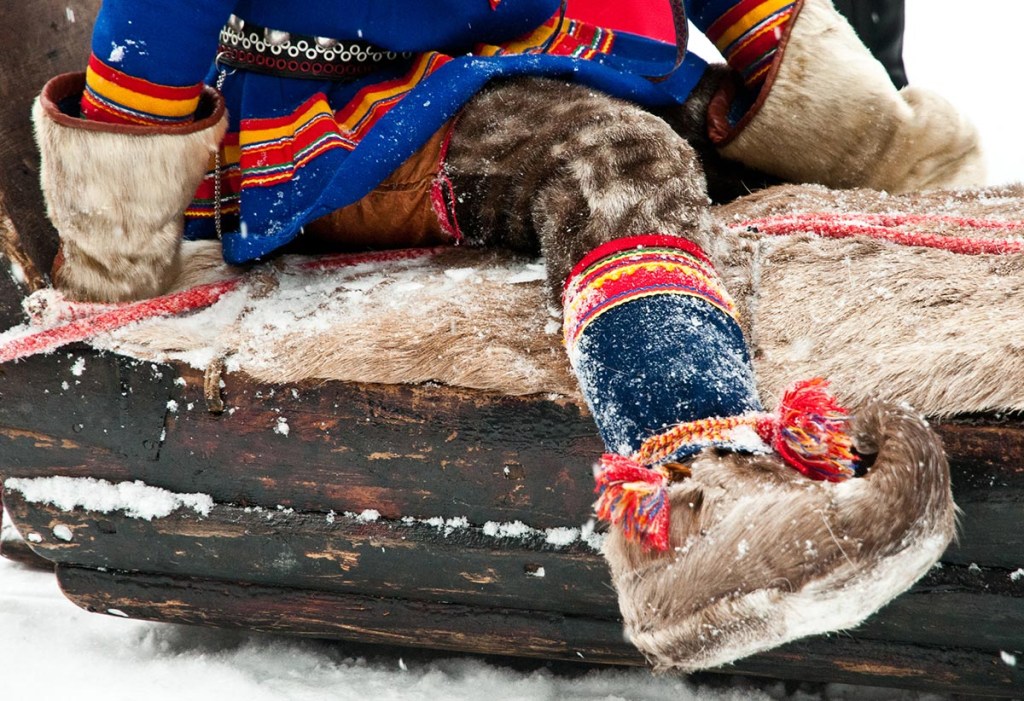
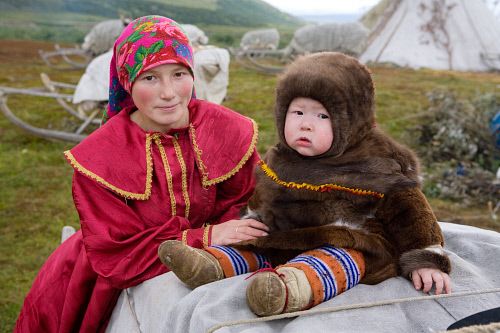
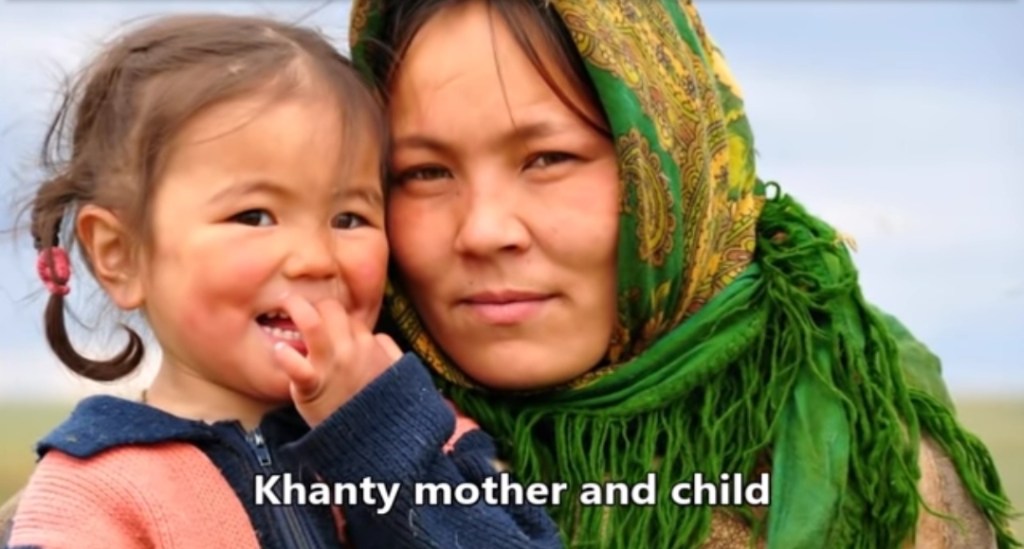
Sámi man in gákti with reindeer pants and mittens. The shoes are nuvttohat, skaller, nutukas.. many names for same shoe. Different languages and dialects. Photo by Lola A. AkerströmKautokeino Sámis. Guovdageaidnu in Northern Sámi language. Wearing pesks and gáktis. With traditional shawls, belts, mittens and hats. Northern Lapland/Sápmi. Khanty woman Kristina Neva and baby in reindeer clothing with decor. Summer on the Arctic tundra. Photo by Bryan and Cherry Alexander.
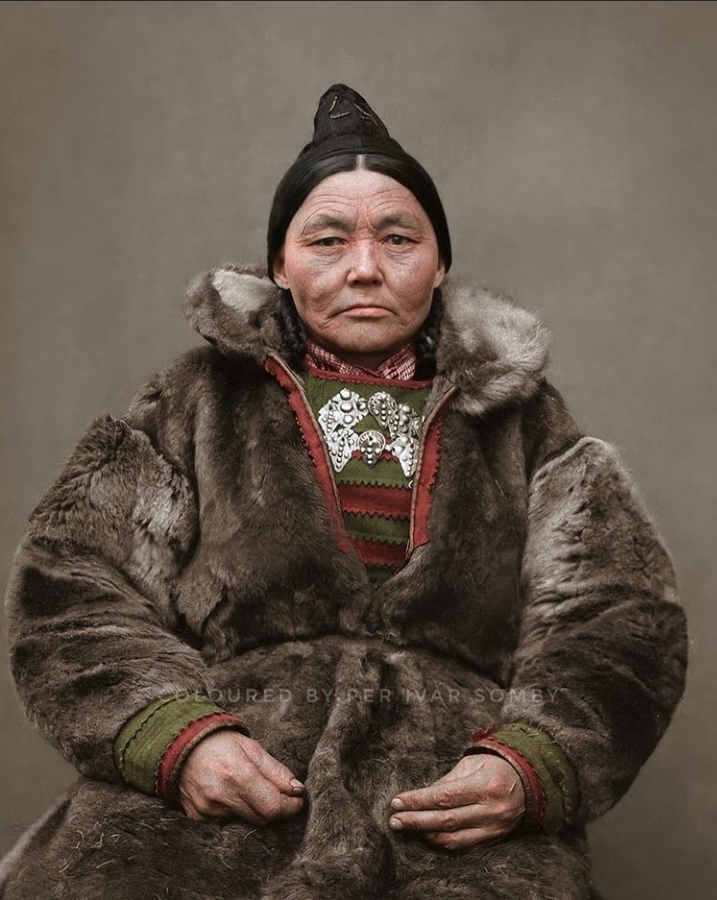
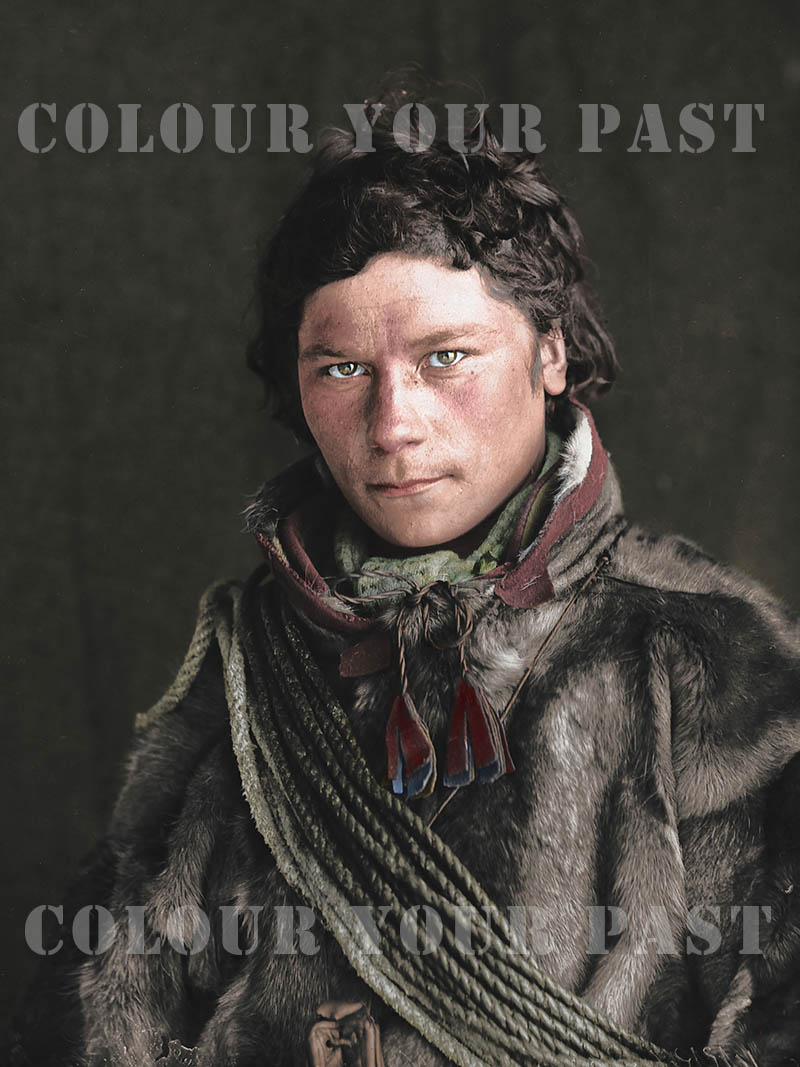
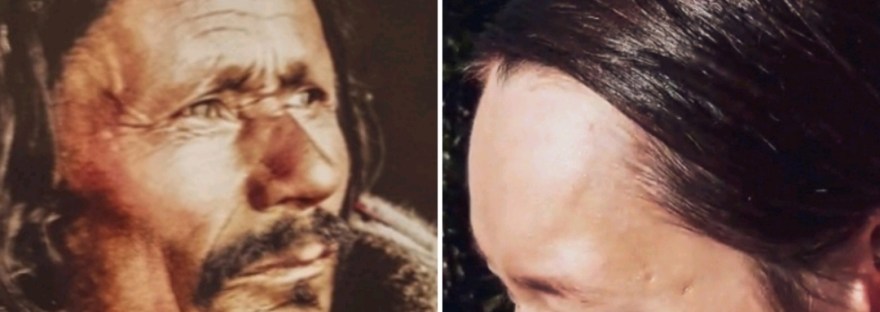
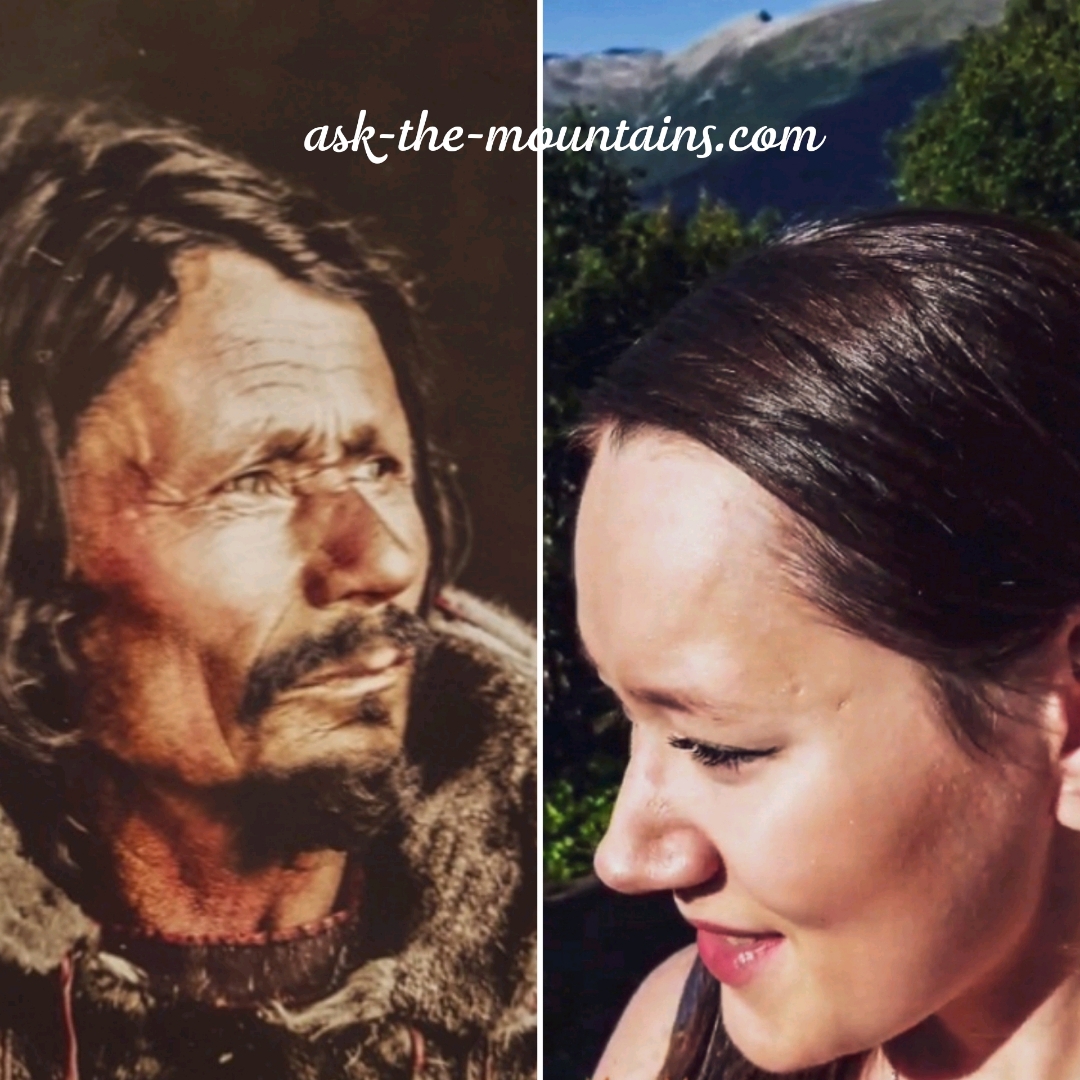
Yesterday was World Indigenous peoples day, so I share this wonderful portrait of my relative Johannes from 6 generations ago. Wearing a pesk/finnmudd. I think we have the same nose, and eyebrows. I look forward to teach our son about his ancestors. It was a black-white photo by S. Trombolt but Per I. Somby colorised it. #ArcticPeople #Uralic
Indigenous means ‘naturally occuring’. Someone or something that ‘belongs’ to a place, and who is living in harmony with the natural surroundings. A part of the local ecosystem. The natural world belongs to us ALL, we need to treat it with respect and appreciation to be able to continue living in it sustainably. Always give more than you take, even if it is “just” gratefulness.
Where was or is your ancestors indigenous to? Do you feel as a part of the natural surroundings?
Small tip on how to feel more connected to the natural world: consciously focus and feel into the knowing of being held and supported by the Earth and gravity. See if you can completely relax intothat knowing and if you can trust that you are safe and being held.
Photo coloured by Per Ivar Somby. In the photo: Brita Somby, wearing traditional dress (gákti) with traditional wool shawl. Reindeer pants and boots.
The eight remaining Sámi languages are spoken here in the north of Europe (see map and gallery below) in a cross-border region which includes Norway, Sweden, Finland and the Kola Peninsula of Russia. This region is generally called Sápmi – mostly by northern Sámis, and is sometimes referred to as Lapland or Samiland. Laponia in Swedish Lapland is the one of the World’s largest unmodified UNESCO nature area still cultured by natives. Sámis are indigenous to Sápmi/Northern Europe and Kola Peninsula, our heritage and ancestry traces back to Ural mountains and Siberia. Sámi is part of the Uralic language family, alongside Khanty, Mansi, Nganasan and Karelian, to mention a few. Lap is considered a deragatory term for Sámi person.
Sámi languages speakers estimate:
Southern Sámi 300 – 500 speakers
Ume Sámi – less than 20 speakers
Lule Sámi 2 000 – 3 000 speakers
Pite Sámi – less than 20 speakers
Northern Sámi – 20-30 000 speakers. There are three main North Sámi dialects. Northern Sámi is the most accessible language, both in terms of literature, news broadcasts, and other material for those who want to learn a Sámi language as a foreign language.
Kemi Sámi – extinct
Inari Sámi 300 – 500 speakers
Akkala Sámi – considered mostly extinct since 2003
Kildin Sámi 300 – 700 speakers
Skolt Sámi 300 – 500 speakers in Finland, fewer than 20 speakers in Russia
Ter Sámi – less than 5 speakers left, all elderly (update 2023: Ter Sámi is extinct)
Today we are around 90 000 Sámis, but as you can see from the numbers they do not match up to speakers of Sámi languages. Roughly 4/10 Sámis speak and use one of the Sámi languages today.
Why is this so?
To avoid humiliation and to give their children “better chances in life”, indigenous and minority parents often decide to speak a dominant or official language with their children. Sámi parents have not been an exception to this rule, especially in the very near past.
For the sake of how long this post would be in order to include all four countries’ history with the Sámi people, I will mainly focus on Norway.
Title: Samiske barn undervises i norsk / Sámi children learning norwegian Opphaver: Fotograf Sverre A. Børretzen Rettighetshaver: Leverandør NTB scanpix
Up to the 17th century, Sámi society lived pretty much its own life, with little interference from the outside. But with the new borders of the Nordic countries, interference was inevitable. Historically, the language situation after interference can be divided into three distinct periods: a missionary phase; a harsh assimilation phase; and the present phase, with potential for integration and revitalisation.
The 17th and 18th centuries characterise the beginning of missionary activities, with some very positive projects for the benefit of the Sámi languages: teaching was conducted through the medium of Sámi and religious texts were translated into Sámi (the Læstadian faith was introduced to Sápmi). From the middle of the 19th century however, a new policy based on national romanticism and ‘vulgar Darwinist ideas’ led to a harsh suppression of Sámi and the languages. The Norwegian Parliament and government pursued overtly a policy aiming at assimilating the whole Sámi population in Norway in the course of one generation. One can only say that this assimilation was very effective.
The “dark century,” 1870 to 1970 ca, had detrimental effects which can still be felt on both the languages themselves and on their status and speakers. In the coastal areas of Norway (and elsewhere), negative attitudes were transmitted by the Sámi themselves as a result of the policies, and inter-generational transfer of the language ceased in only a few generations.
Approx distribution of the languages/dialects today. The biggest blue area is mainly Troms and Finnmark.
New efforts in maintaining the languages were revived in the 1970s and still continues to this day. However, one of the most striking failures of the Sámi strategies is that the smaller Sámi languages (in numbers of speakers as listed above) have not seen success in improving their situation or even in defending their previous position. This failure is partly due to the fact that most speakers live apart from the larger Sámi groups. Dispersed among Norwegians, Swedes, Finns, and Russians, they do not have the demographic concentration that would enable them to use their language in the workplace and in official situations, including schools.
A language’s development, aging, and dying was considered “natural,” out of human reach. Languages were not killed, they “died of old age.” This agentless “model” for the prediction of the future of languages is still found among politicians, and legitimates their way of treating minority languages. The view that a minority is not autonomous and their own people, is devastating to that people’s culture and language.
In Norway, many municipalities with a Sámi population had developed procedures to give the Sámi some local linguistic rights. Yet, when the Sámi language law (in force since 1992) designated certain areas as belonging to the Sámi administrative districts, many of the municipalities left outside these official districts – often municipalities where the speakers of the smaller Sámi languages lived – withdrew services in Sámi, claiming that the law did not require them. Even today, there is strong resilience towards using official Sámi names in for example Norwegian towns and municipalities. This seems to stem from the view that Sámi people somehow belong to Norway, Sweden, Finland or other countries, and not to ourselves as our own people with our own unique language, history and culture.
South Sámi name for Bodø not welcome, 2011.
Currently, education, official documents and the media use Northern Sámi almost exclusively. This variant is used as a de facto “official language” and the most significant efforts have gone into the development of this particular language, to the detriment of other Sámi languages.
Opinions also differ on whether the different versions of Sámi are actual languages or dialects, and how to designate their speakers. Here is a an example what ‘Have a good weekend’ is in 6 Sámi languages:
“Buorre vahkkoloahppa” – North Sami
“Buerie hïelje” – South Sami «Buorre vahkkogiehtje» – Pite Sami “Buorre vahkoloahppa” – Lule Sami “Šiõǥǥ neä’ttel-loopp” – Skolt/East Sami “Pyeri oholoppâ” – Inare Sami
Eastern Sámi is the most different from the other languages.
Official Sápmi flag by artist Astrid Båhl from Skibotn, Troms. Photo: Ørjan Bertelsen
Most Sámis today speak either Norwegian, Swedish, Finnish, Russian, or even English as their everyday tongue (some migrated to the USA). Many are bilingual as well. Another factor is that some Sámis do not identify as Sámi or even know that they are due to the heavy assimilation of the past. They do not have any relationship with the language(s), and thus have lost their door to that culture.
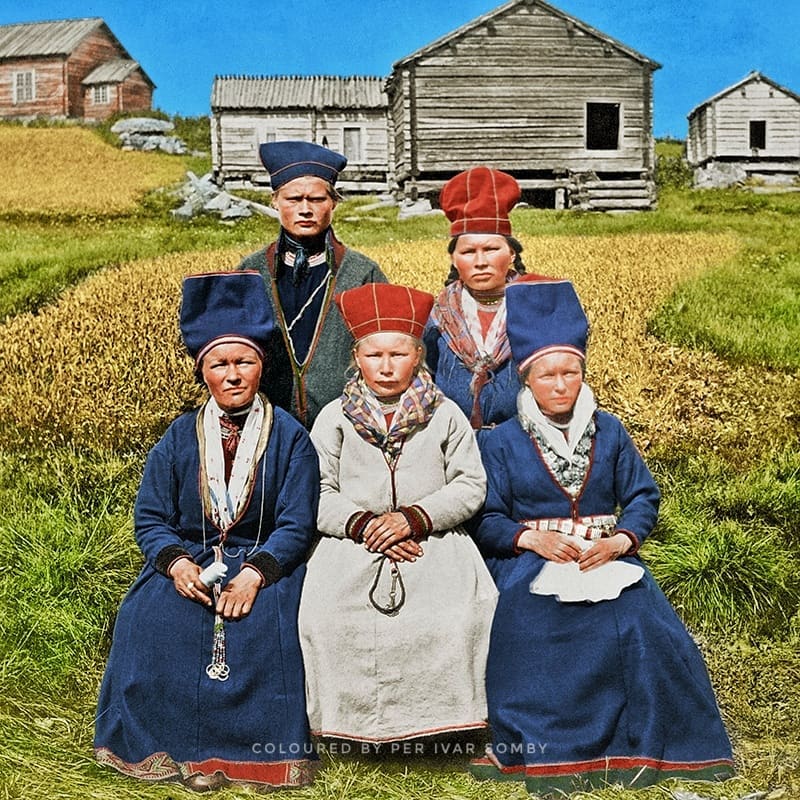
Unlike the Indo-European languages spoken in most of Europe, the Sámi languages belong to the Uralic language family.Photo I took at the main square in Tromsø 2019. Demonstration against violence and discrimination towards sámi.South Sámi women and a man in Sweden. Colourised photo by Per Ivar Somby. Many young Sámis today use the traditional handwoven wool shawl as an everyday garment in a more urban way in order to still show our Sámi identity, and belonging. (Photo by NatGeo of Jokkmokk Sámi Ella-Li Spik, herder).Portrait of my relative Johannes from 6 generations ago. Wearing a pesk/finnmudd. Finnmark, Arctic Sápmi. I think we have the same nose, and eyebrows. It was a black-white photo by S. Trombolt but Per I. Somby colorised it.
Norway, Sweden and Finland was in 2019 urged by the UN to increase public funding of Sámi parliaments as a response to the dire state of the disappearing languages. But even if the situation seems dire for many languages, it is still possible to revitalise them and start using them more often. Which languages survive and which do not ultimately seems to be a question of human will, not of any rules of nature.
I know that languages and cultures come and go, but I do feel it a great loss to lose what has been native for Sápmi for literally thousands of years, in only a few generations, when it can be perserved. I am happy that some schools and institutions are giving sámi language courses to anyone who wishes to learn it (although this is mostly in Northern sámi), and I do also wish that my children will learn it, which I never did due to the Norwegianization process in Finnmark. Language is a huge part of culture and when it’s taken away, people get confused about their own community, identify and sense of belonging, and even turn on each other as a result of feeling alienated.
The languages we learn from our parents shape our brains, literally!, and our worldview, how and who we relate to. The immense loss of language and culture for the Sámi people cannot be described as anything else but traumatic.
Me keeping warm and optimistic about the future of the languages and culture.
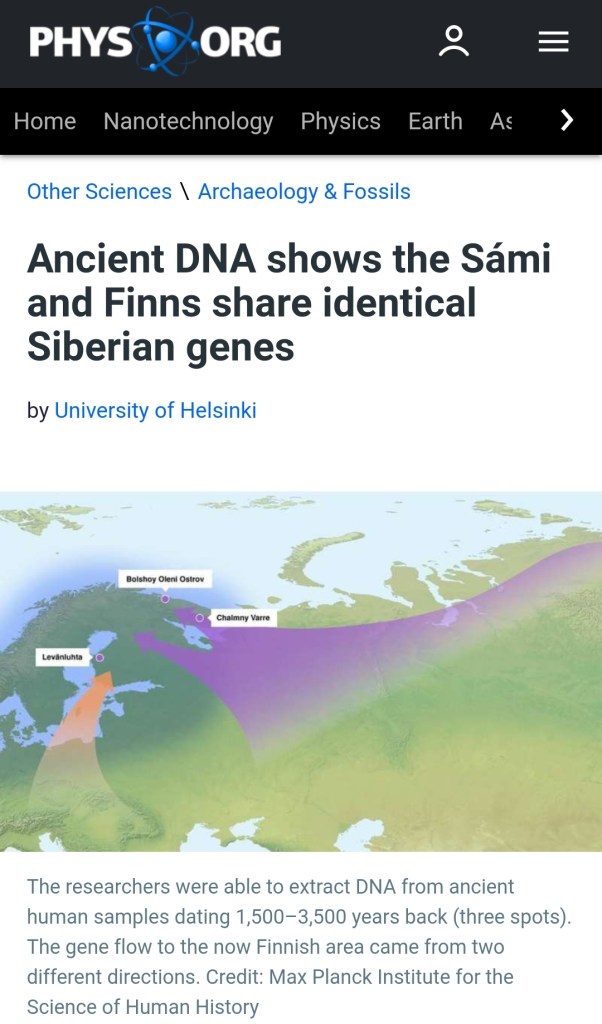
“The first study on the DNA of the ancient inhabitants of Finland has been published, with results indicating that an abundance of genes reached Finland all the way from Siberia.
This article I am sharing is from phys.org
The genetic samples compared in the study were collected from human bones found in a 3,500-year-old burial place in the Kola Peninsula and the 1,500-year-old lake burial site at Levänluhta in South Ostrobothnia, Finland. All of the samples contained identical Siberian genes.
Siberian origin remains perceptible
The ancient DNA has also been compared to modern populations. Siberian origins are still visible in the Sámi, Finns and other populations of the Finno-Ugric language family.
“However, it has been mixed up with the European genome. Of all European populations, modern Sámi are the most evident representatives of the Siberian genome. As for the title of the modern people with the largest Siberian genetic component, that privilege goes to the Nganasan people living in northern Siberia,” says Päivi Onkamo, head of the SUGRIGE project at the Universities of Helsinki and Turku.
The project succeeded in mapping out the entire genome from the bones of eleven individuals. From the Kola Peninsula, the bones of six individuals were collected from a 3,500-year-old burial place, while those of two individuals were found from another location dating back to the 18th and 19th century. In the case of the bones found in the Levänluhta site in South Ostrobothnia, the entire genome was mapped for three individuals.”
Some other Uralic/Finno-ugric peoples with roots from Ural mountains, Siberia are the Nenets (previously called the Samoyeds), the Khanty, the Mansi, the Selkup and the Mari people. We also have very similar traditional costumes and of course traditionally being nomadic, following the reindeers, and sharing same langauge family. Maybe I will write a post on our traditional dresses.
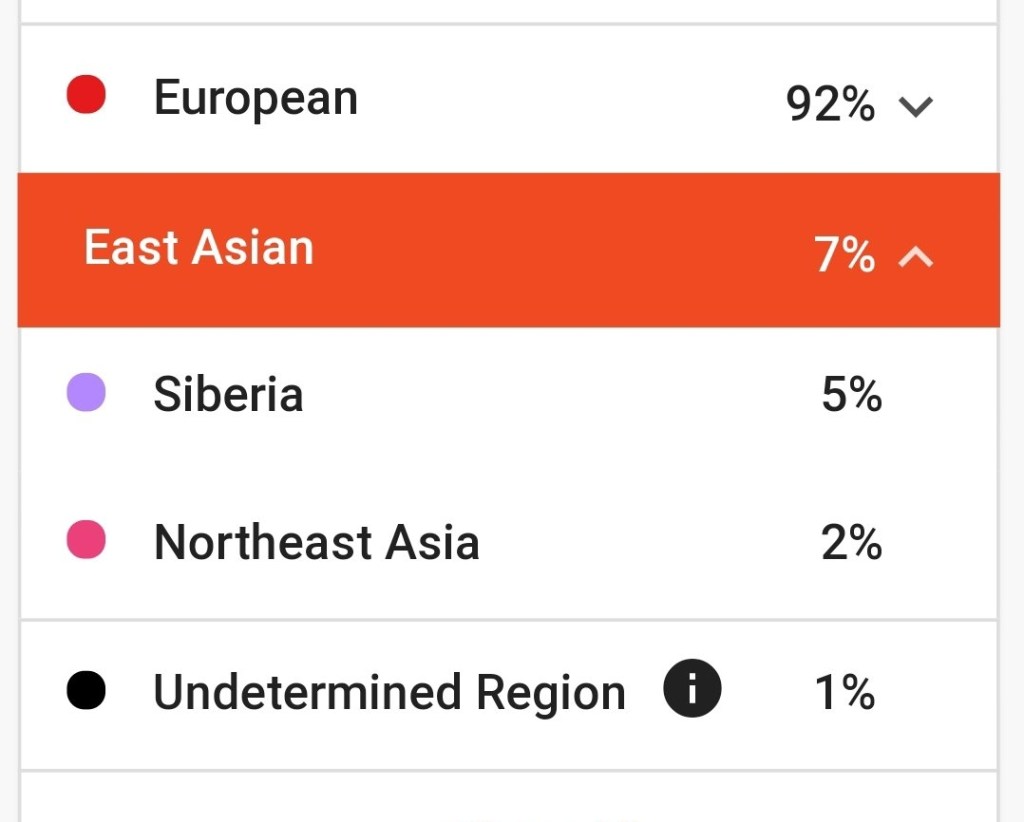
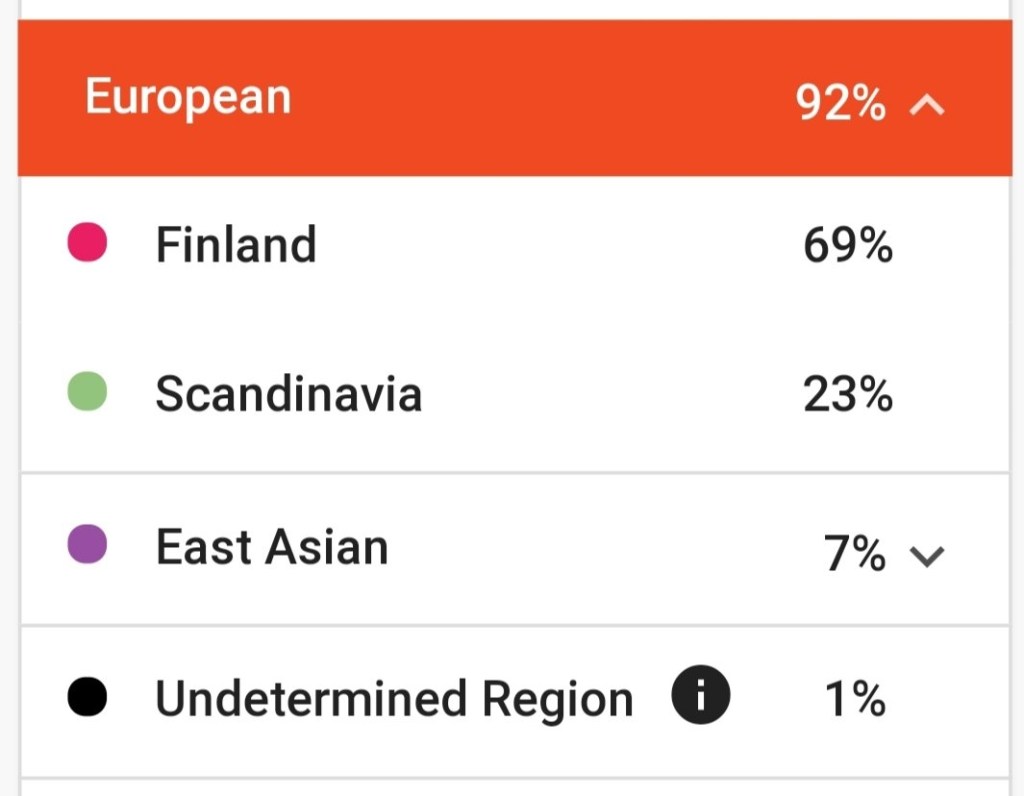
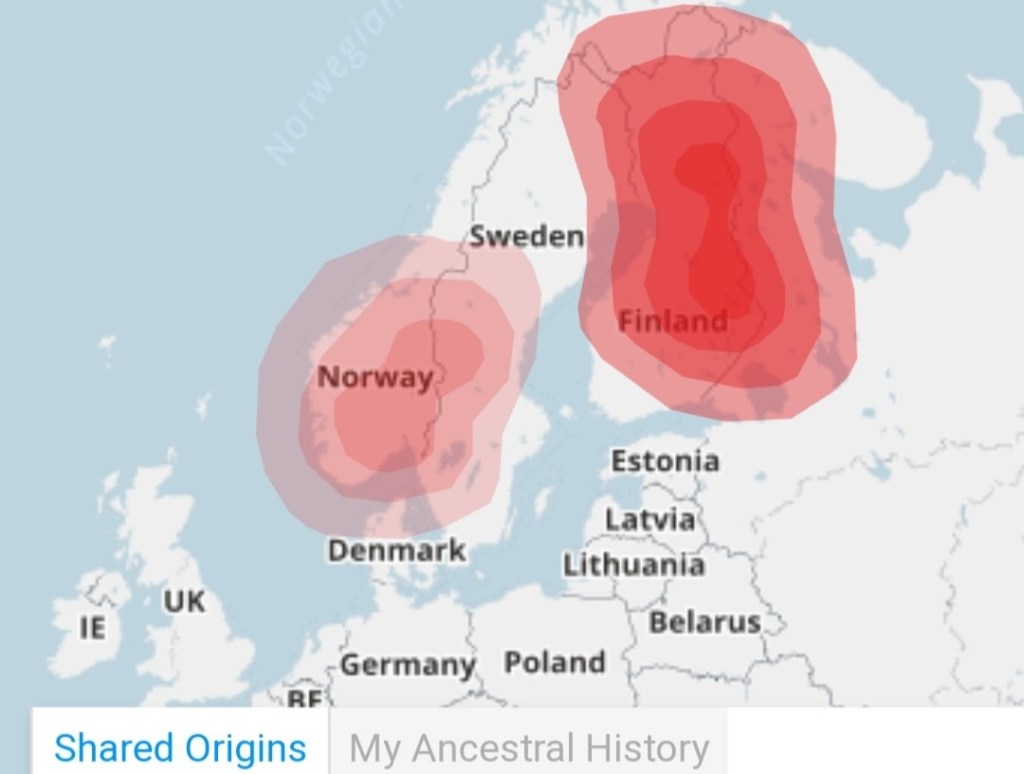
These findings also makes sense with my own FamilyTreeDNA results, although commercial DNA test kits are not super accurate:
Before even starting this list, I know this is going to be a long post. I will not be able to choose just one artwork by each artist, and I want to write what exactly it is about their work which speaks to me and inspires me. Just googling and looking through their work and studying their techniques instantly sparks motivation and awe in me. I do have more than 10 favourites by the way, but let’s not go too crazy!
Here are the artists:
Nicholas Roerich Thomas Cole K. Hokusai John Savio Eva Harr Robert Gonsalves Theodor Kittelsen The Brothers Hildebrandt Phil Couture
Let’s begin!
Nicholas Roerich
The list is sort of random, except for the one on top. Nicholas Roerich’s artworks are truly some of the best I’ve seen, not only in style and composition but also in the message they convey: often spiritual, mystical and religious themes combined with amazing landscapes and colour combinations.
Short trivia: Roerich (1874-1947) was a Russian painter, philospher and archeaologist. Founder of Agni Yoga or Living Ethics/Teaching of Life with his wife, Helena. He did a five year long ‘expedition’ to Asia, which in his own words were: “from Sikkim through Punjab, Kashmir, Ladakh, the Karakoram Mountains, Khotan, Kashgar, Qara Shar, Urumchi, Irtysh, the Altai Mountains, the Oyrot region of Mongolia, the Central Gobi, Kansu, Tsaidam, and Tibet”, which immensely influenced his works.
During his life, he lived both in Russia, Finland, England, India and USA.
Besides the recognition as one of the greatest Russian painters, Roerich’s most notable achievement during his lifetime was the Roerich Pact (the Treaty on the Protection of Artistic and Scientific Institutions and Historic Monuments) signed April 1935 by the representatives of American states in the Oval Office of the White House. It was the first international treaty signed in the Oval Office.
There is a museum in New York displaying 150 of his works- which I would love to visit 🙂
Fun fact: The minor planet 4426 Roerich in the Solar System was named in honor of Nicholas Roerich.
Here are some of his best works, in my opinion (Sources: Google and the Roerich museum website)
“On the heights, (Tummo)”, 1936 – As a breathing exercise, tummo (Candali in Sanskrit) is a part of tantric practice. Tummo literally means “brave female” or “inner fire” in Tibetan.
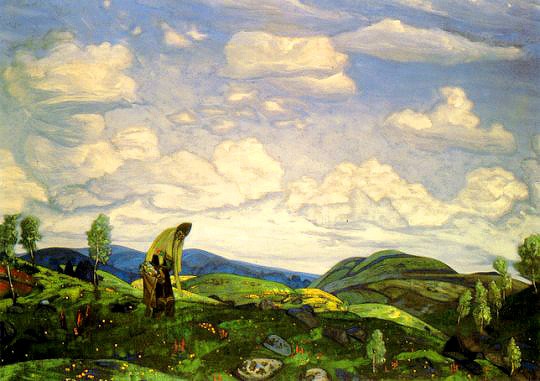
(Could not find the title for these, but I find them lovely)
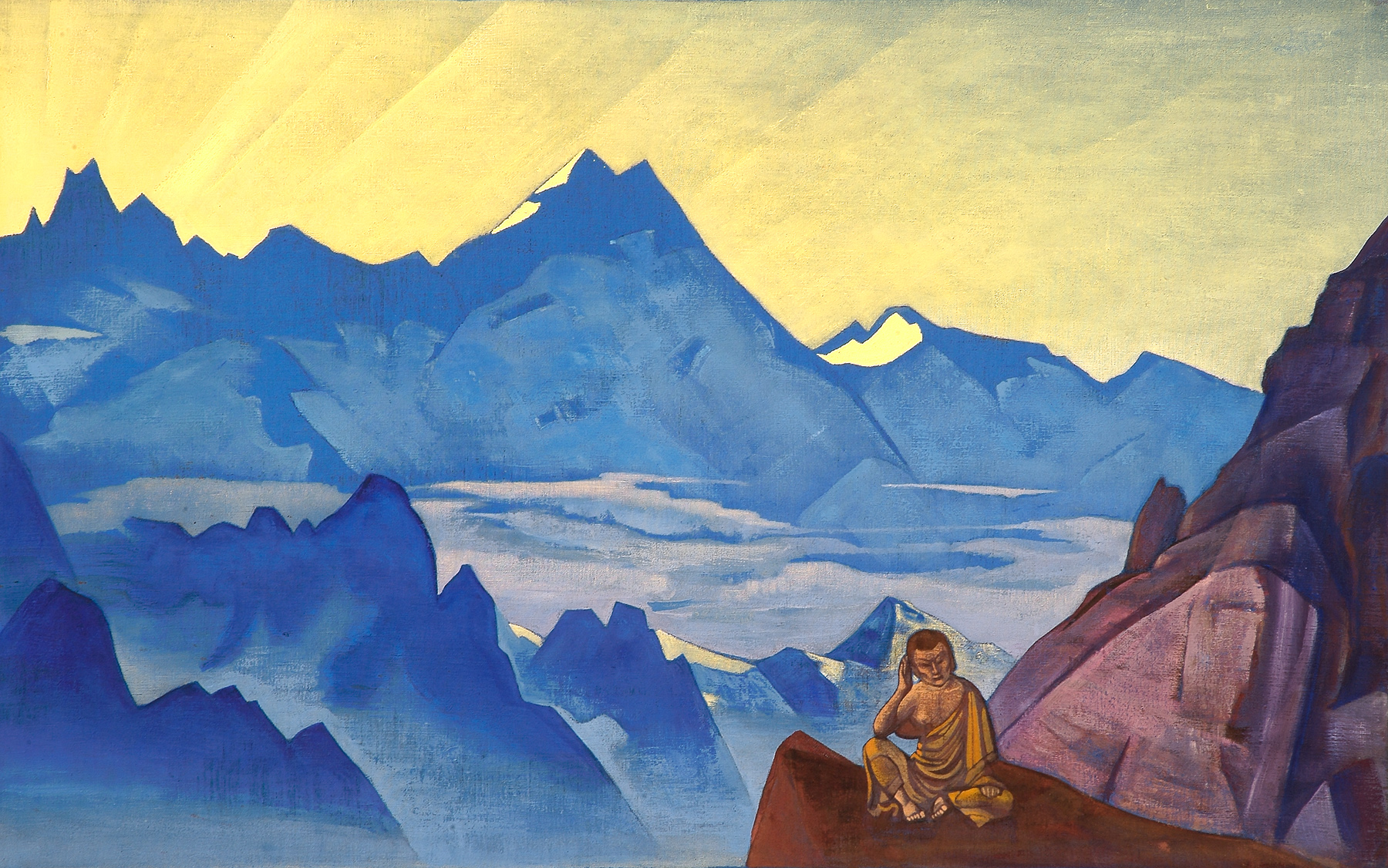
“Milarepa – the one who harkened”, 1925 – the first painting I saw of Roerich and fell in love with.
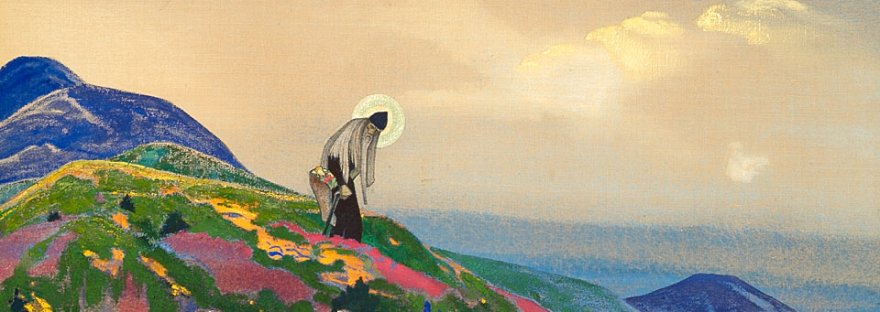
“St. Panteleimon the Healer”, 1916
(Could not find the title for this one either)
“Padmasambhava”, 1924 – I particularly like this one because of the colours, but also how Padmasambhava (aka The Lotus Born, Guru Rinpoche) sort of sits leaning over a little mountain top looking over the meditating monk in a caring way, probably giving him some blessing, transmission or terma (secret teaching). I would love to have this on my wall.
Thomas Cole
As you can probably guess, my favourite kind of art is landscapes; mountains and rivers, skies and horizons. Thomas Cole’s work is very realistic and typical for the romantic era, but also carries a sort of spiritual vibe to them as he often implemented celestial beings, such as angels. He is exceptionally good at perspective and composition, as you can see in the works below – and the details are amazing.
Short trivia: Thomas Cole (1801-1811) was born in England, but moved to the United states when he was 17 with his family. He is known for his amazing landscape paintings of the American wilderness, and was mostly self taught, studying other artists’ work and reading books.
In 1842, Cole embarked on a grand tour of Europe in an effort to study in the style of the Old Masters and to paint its scenery. Most striking to Cole was Europe’s tallest active volcano, Mount Etna. Cole was so moved by the volcano’s beauty that he produced several sketches and at least six paintings of it.
Fun fact: The fourth highest peak in the Catskills (where he and his wife lived) is named Thomas Cole Mountain in his honor.
I struggled choosing a limited amount of Cole’s paintings because he has so many good ones. I chose four of the absolute best ones, in my opinion, where the two first ones are part of a four series of paintings called The Ages of Life.
(Sources: google and Wikipedia)
“Childhood”
“Youth”
“Prometheus Bound” – 1847. One of Cole’s largest oil paintings. In the painting, Prometheus is chained to a rock on Mount Caucasus in Scythia. Zeus has punished him for endowing humans with life, knowledge, and specifically for giving humans fire.
Could not find the title for this, but I like it because it looks like a scene from the Tolkien universe.
Amid those scenes of solitude… the mind is cast into the contemplation of eternal things.
Thomas cole
Katsushika Hokusai
I love Japanese art. Although kind of typical Japanese in style, Hokusai still has his own expression, and I like the use of so many colours. He also has a lot of movement in his works, making them come alive. Just look at that wave 🙂
Short trivia: Hokusai (approx. 1760-1849), was a Japanese painter and woodblock print maker.
Hokusai had a long career, but he produced most of his important work after age 60 (!) His most popular work is the ukiyo-e series Thirty-six Views of Mount Fuji, which was created between 1826 and 1833. It consists of 46 prints.
Hokusai was never in one place for long. He found cleaning distasteful, and instead, he allowed dirt and grime to build up in his studio until the place became unbearable and then simply moved out. The artist changed residences over 90 times throughout his life.
During a Tokyo festival in 1804, he created a portrait of the Buddhist priest Daruma said to be 600 feet (180 m) long using a broom and buckets full of ink. Another story places him in the court of the Shogun Iyenari, invited there to compete with another artist who practiced more traditional brush stroke painting. Hokusai’s painting, created in front of the Shogun, consisted of painting a blue curve on paper, then chasing a chicken across it whose feet had been dipped in red paint. He described the painting to the Shogun as a landscape showing the Tatsuta River with red maple leaves floating in it, winning the competition.
The artist also had difficulty settling on a single moniker. Although changing one’s name was customary among Japanese artists at this time, Hokusai took the practice even further with a new artist name roughly each decade. Together with his numerous informal pseudonyms, the printmaker claimed more than 30 names in total (!)
His tombstone bears his final name, Gakyo Rojin Manji, which translates to “Old Man Mad about Painting.”
Fun fact: Claude Monet acquired 23 of the Japanese artist’s prints.
(Sources: katsushikahokusai.org, artsy.net, google and wikipedia)
“Great wave off Kanawaga” – 1832
“Hokusai” For anyone who likes Hayao Miyazaki‘s movies, I think maybe some of his creatures were inspired by this woodblock print.
“Sarumaru daiyu” – 1835
“Shore of Tago Bay, Ejiri at Tokaido” – 1842
“Inume pass in Kai Province” In Japanese woodblock printing, the use of Prussian blue – a synthetic pigment imported from Europe – is very common. My favourite shade of blue 🙂
John Savio
The only Sámi artist on my list, and the best one 🙂 I snuck him on there despite him not mainly being a painter, but also doing lithography. This summer, I went to see his original artworks at the Savio museum in Kirkenes, my mother’s hometown – half of my roots. Most of his art has Arctic inspired themes; reindeers, the Sámi peoples way of life, and the tundra (vidda). He has captured a life frozen in time that no longer exists, but is still somehow in me.
Short trivia: John Andreas Savio (1902-1938) from Bugøyfjord, was the first sámi artist to get his own exhibition at the National Gallery (Norway). He also exhibited some of his works in Paris in 1937.
Savio grew up as an orphan and died at age 36. He was poor most of his life and used to go door to door, trying to sell his art.
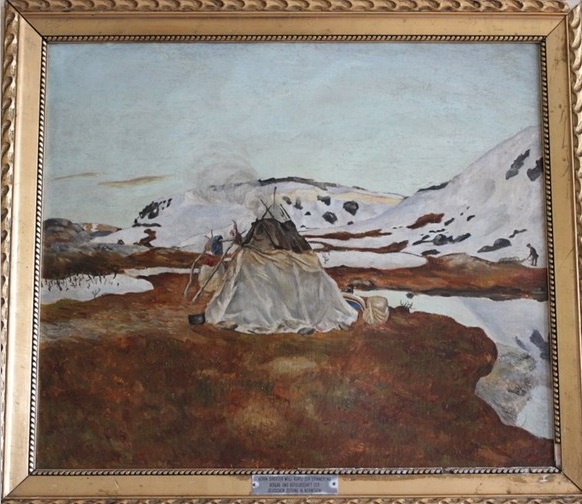
Picture I took of one of his paintings at the Savio museum in Kirkenes.
“Summer” – Lithography of a Sámi man in lotus posture
“Boy and girl” – One of his most famous works, at the Saviomuseum
“Man with reindeer ox”
A painting by Savio. The inscriptioin on the frame is in German, and is thought to have been owned by the Nazis during the war. In 2005, this painting was donated in the mail to the Savio museum from a woman in Germany. Savio rarely put dates on his art.
“Kjærlighet på pinne”
Eva Harr
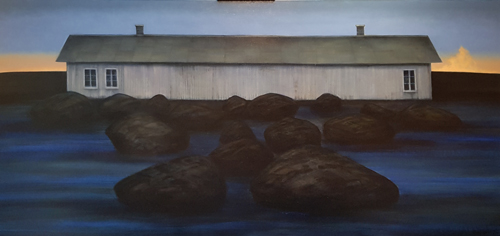
I was lucky enough to visit Eva Harr’s gallery in Reine, Lofoten this autumn, and got to see her original works up close. Her style is realistic combined with a fiction-like feeling; it could be a real place she has painted, but it could also be a made-up dreamy landscape. She’s good at combining elements, such as rocks, and I like how she is able to make many of her paintings look hazy.
Short trivia: Harr (1951) is a Norwegian painter, born in Harstad. She has her own gallery as mentioned, and many of her works are displayed in other museums around Norway. Her own words about her art:
“Jeg har en meditativ holdning til mitt arbeide, der naturens syklus alltid står i fokus. Døgnets ulike stemninger, lyset og mørket, nattens begynnelse og slutt – og ikke minst månen med sin mektige symbolikk og innvirkning på våre liv. Symbolene jeg finner i naturen er ofte universelle og sterkt ladet. Dette velger jeg å utforske og fordype meg i. Mitt landskap er et indre landskap, og er metafor på mine indre reiser. Jeg vil speile naturen, og dens viktige plass i våre liv. Jeg blir berørt av dette uforutsigbare som preger vår tid, uro og støy som truer vår natur. Dette preger mitt blikk, og er underliggende i mitt valg av motiv. Samtidig ser jeg klart at lysets skiftninger og landskapet i nord, er en veldig viktig inspirasjonskilde.”
from her own website, evaharr.no
Some of her amazing works (Sources: google and her website)
“Erindring” (Recollection)
“Brev hjem” (Letter home)
“Mot blått” (Towards blue)
“Over jorden” (Above the earth)
Rob Gonsalves
Four years ago, I came across one of Gonsalves’ paintings (the first one below) and it reminded me of a meditation experience I had had. So I checked out more of his works, and found so many more that I liked. Style: surrealism (or magic realism) and optical illusions.
Short trivia: Rob Gonsalves (1959-2017), also known as The Master of illusion, was a architect and painter from Ontario, Canada. His works were very much influenced by other surrealist artists, such as Dalí and Escher. He also published several books containing his works. Sadly, Gonsalves took his own life last year. Check out this webpage if you want to see more of his mindbending artworks.
(Sources: wikipedia and google)
“The phenomenon of floating”
“White blanket”. I think there is something very cozy and safe about this painting. I love the snow, and have many times thought what it would be like if the snow was warm – like a bed.
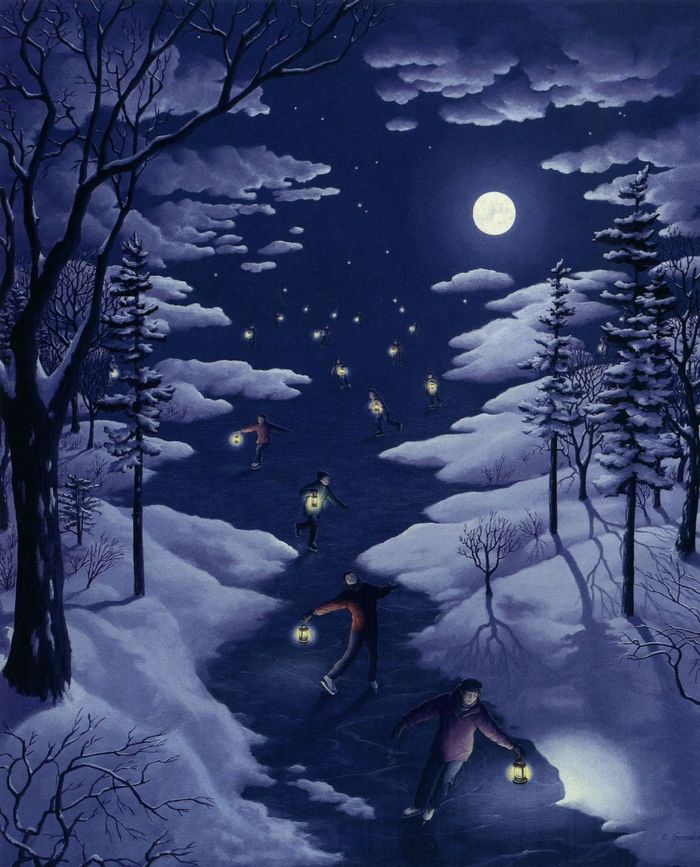
“Nocturnal skating”
“Union of Sea and Sky” – Acrylic on Canvas. This painting reminds me of a poster I had in my room growing up, of dolphins and other sea animals underwater.
Theodor Kittelsen
One of the most famous and beloved artists in Norway. You have probably seen his works even if you don’t know it. His art reminds me of childhood, as he made illustrations to many of the big Norwegian fairytales, lores and legends. I wish I had more of Kittelsen’s art, but I have been so fortunate to get my hands on five vintage porcelain plates (for hanging on the wall) with his drawings on them, and one giclée print of “White Bear King Valemon”.
Short trivia: Theodor Severin Kittelsen (1857-1914) was a Norwegian illustrator and painter born in Kragerø. He has also written and published several poems. He came from a poor family with seven siblings, and his father died when Theodor was only 11 years old. This forced him to get out and get a job as an apprentice, which inevitably lead him to meet art historian Diderich Aall, who saw how gifted the boy was. Aall decided to pay for his art education.
In 1874, 17 years old, Kittelsen attended Wilhelm von Hannos drawing school in Christiania (now Oslo). In 1876, he travelled to München, to study at the royal art academy there.
Kittelsen’s depiction of trolls have largely shaped how people see these beloved fictional creatures.
His family’s home at Lauvlia is today a museum. Some of his most popular works were made here. His wife Inga was a stay-at-home teacher for their nine children and she organised his exhibitions.
Th. Kittelsen also composed an eerie book with illustrations about the Black Death.
Despite being very talented, Kittelsen never achieved financial security through his works.
(Sources: wikipedia, google and theodorkittelsen.no)
“Far, far away, Soria Moria Palace shimmered in Gold”
“Self portrait” – 1887. I think this might be the best self portrait I’ve seen 😀
“Nøkken as a white horse”. In legends and fairytales, Nøkken is a personalisation of what lives in the eerie unknown waters in forests. He lives in rivers, fresh water lakes and bogs, and often lures people in to drown them. One of Kittelsen’s most famous works is “Nøkken”.
“The troll who wonders how old he is”. I remember seeing this painting is school books, and absolutely falling in love with it.
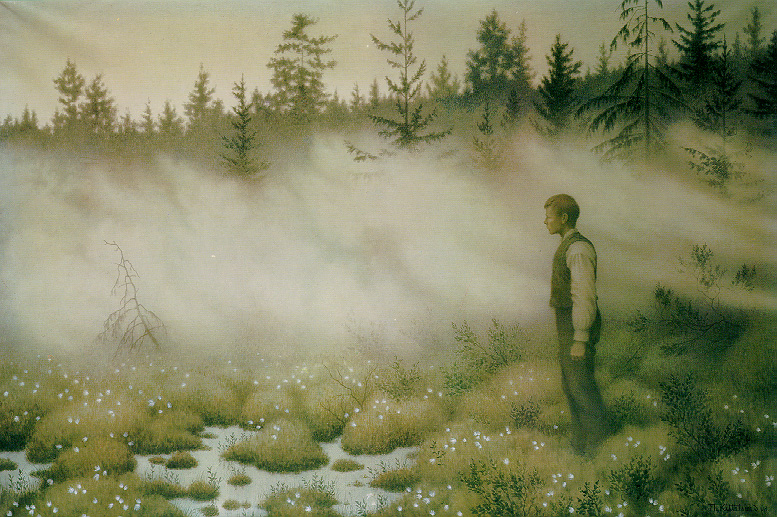
“Huldra disappeared”. In legends, Huldra is a beautiful female creature who lures men into the woods, kind of like Nøkken. I love the misty feeling in this one.
“Echo” – 1888, oil on canvas. I absolutely adore this painting, inspired by Lofoten. Kittelsen regarded this as his best work.
The Brothers Hildebrandt
When I was a kid, I used to flick through my dad’s art books and magazines, and I specifically remember seeing fantasy paintings. Fantasy is a very unique genre, and I love how skillful you have to be with your brush to make good fantasy art. Tim and Greg Hildebrandt are two of these.
Short trivia: Greg and Tim Hildebrandt, known as the Brothers Hildebrandt (born January 23, 1939), are American twin brothers who worked collaboratively as fantasy and science fiction artists for many years. They produced illustrations for comic books, movie posters, children’s books, posters, novels, calendars, advertisements, and trading cards. Tim Hildebrandt died on June 11, 2006.
They began painting professionally in 1959 as the Brothers Hildebrandt. The brothers both held an ambition to work as animators for Walt Disney, and although they never realized this dream, their work was heavily influenced by illustration style of Disney feature films such as Snow White, Pinnochio and Fantasia.
The brothers are best known for their popular The Lord of the Rings calendar illustrations, illustrating comics for Marvel Comics and DC Comics, original oil paintings for a limited edition of Terry Brooks’s The Sword of Shannara, and their Magic: The Gathering and Harry Potter illustrations for Wizards of the Coast.
(Sources: timhildebrandt.com and Wikipedia)
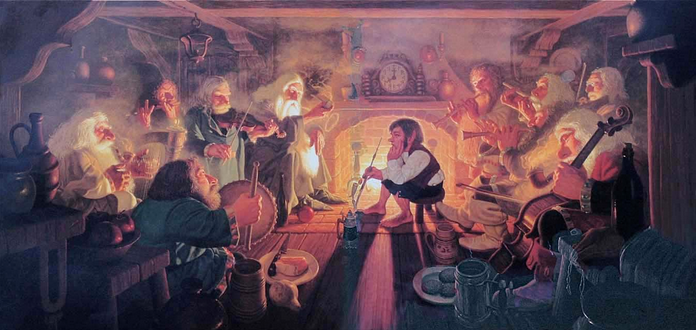
“An unexpected party” – Greg and Tim Hildebrandt. A scene from Tolkien’s children’s book The Hobbit.
“Mushroom village of the elves” – Tim Hildebrandt
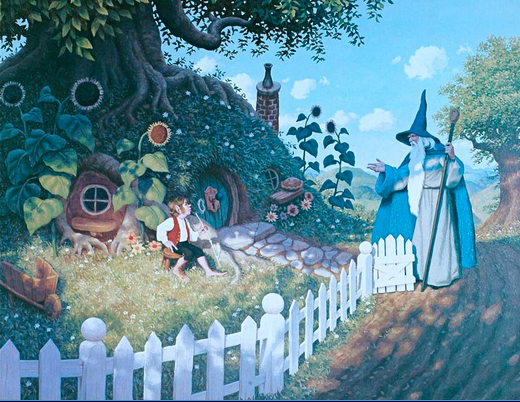
“Gandalf visits Bilbo” – Greg and Tim Hildebrandt
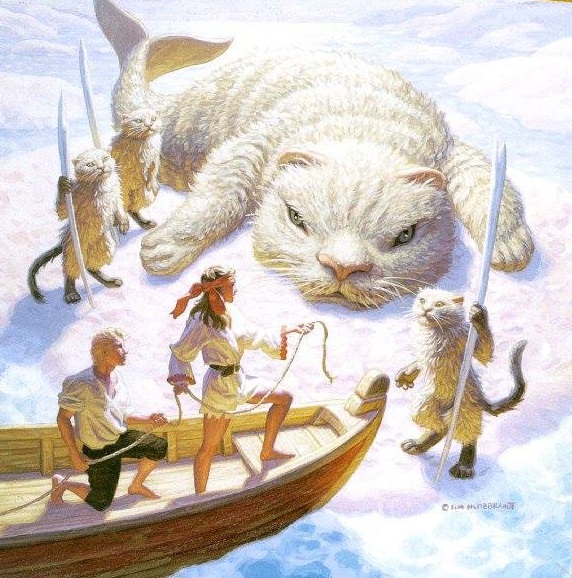
Weird looking cat-fish-creature by Tim Hildebrandt.
Tim Hildebrandt’s painting of J.R.R. Tolkien sitting under a tree with one of his own imaginary creatures.
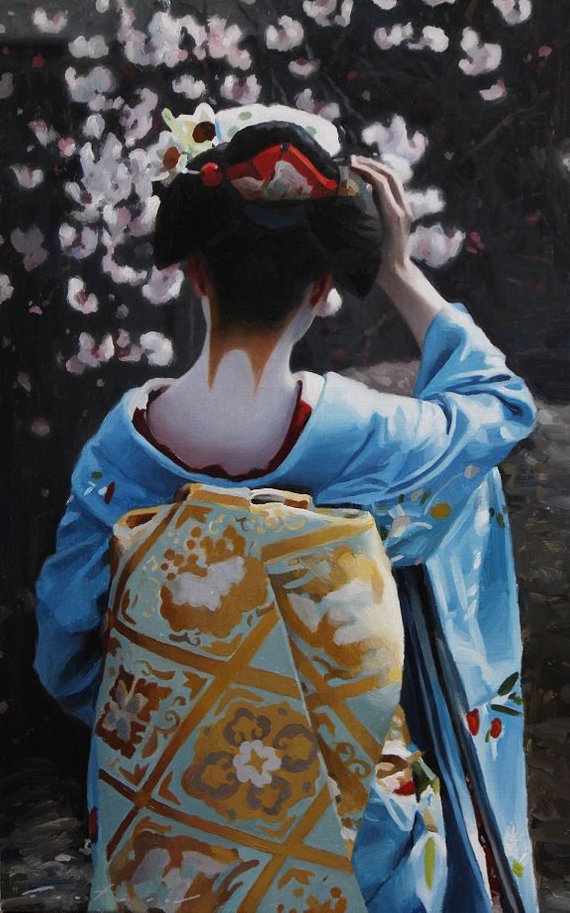
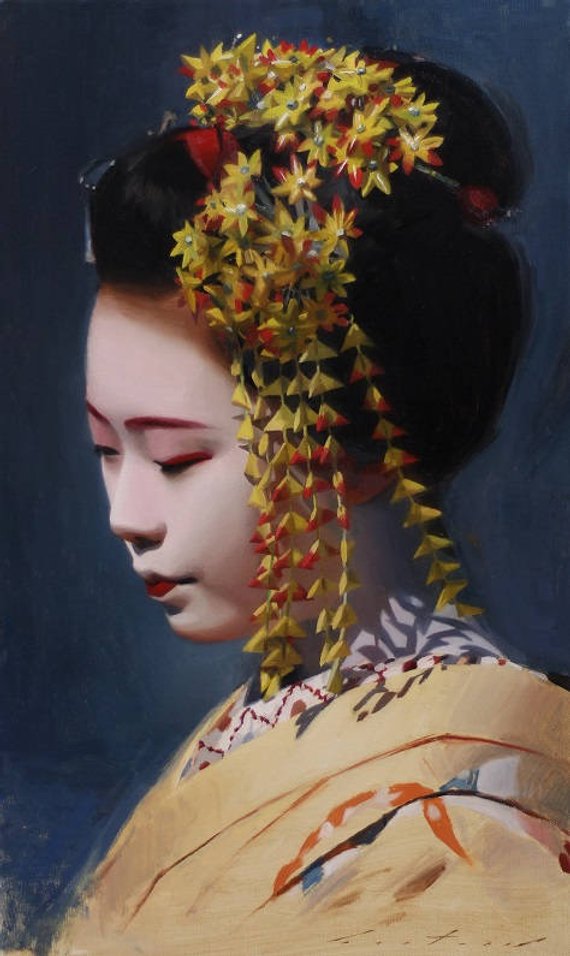
Phil Couture
An oil painting artist I discovered last year on Etsy. As mentioned above, I like Asian art, and also fine art, so Phil Couture’s oil portraits of geishas really deserved a place on my list. I ordered one of his prints not long ago. Style: realism.
Short trivia: Philippe Couture was born in Drummondville, Canada in 1984, raised in Lakeland, Florida, and currently resides in Kyoto, Japan. He has been drawing and painting his entire life and Phil’s art education was primarily self-taught. His training consisted of drawing and painting from life, studying masterpieces in museums around the world, and employing exercises taught by classical ateliers. – from his own website.



















































 Ask The Mountains