Amrita Mandala, Awareness, Beauty, Bodhidharma, Buddhism, Culture, Dharma, Dzogchen, Everyday life, Family, Health, Heritage, Hinduism, History, Indigenous, Japan, Jesus, Landscape, Mahayana, Meditation, Motherhood, Neurodiversity, Nordic, Outfit, People, Photography, Photoshoot, Pregnancy, Quotes, Saami, Sámi, Sápmi, Self portrait, Shamanism, Spirituality, Tantric, Taoism, Vajrayana, Yoga, Zen

Transformation

This january marked the 10 year anniversary of starting my tantric path, although I started my journey in hatha yoga in 2011.

What is tantra to me?
It is easy to go into a textbook definition of it, and I will add one further down, but first I want to share what it means to me personally.

Tantra is transformation. It is working with energy in energy systems (of our mind and body).

Tantrics are usually laypeople – men and women with children, jobs, etc. We do not renounce the material and relative world but rather the opposite – using everyday life and challenges as fuel for the path, transforming impure energies into their pure state through specific yogic practices*.

Being a tantric means training and trusting one’s own path and experiences, rather than just doing what is being told – to have disernment and critical thinking, yet stay open and humble.

Tantra can turn ignorance into wisdom, selfishness into compassion. Illuminating the dark corners of our minds, interrupting the cyclical habits, and learning how to read and work with energies; masculine and feminine, peaceful and wrathful alike. To find the center between extremes; letting hope and fear, aversion and attachment collaps into each other. With practice I believe it is possible to return ones mind and body from the samsaric state into its natural pristine state – which is the difference between ourselves and fully realised practitioners/masters of yoga/tantra. It only makes sense to me, for example, that if you can heal 10% of your traumas, you can heal 100%.

There is no tantric lineage without a head teacher (‘guru’ in sanskrit language, although I hesitate to use the word guru because it has been so misused and thus misleading). Tantra is based on passing empowerments from the teacher to the student. All empowerments I have received has been from Finnish tantric teacher Amrita Baba, and I am part of his sangha (community of practitioners), called AmritaMandala. I feel fortunate to have found what I deem to be an authentic Teacher of Dharma, who is able to transmit high teachings to his students, so that we actually feel the shifts and benefits. In this pragmatic lineage we work closely with non-physical tantric masters (mahasiddhas), mainly Padmasambhava, Yeshe Tsogyal, Ishanath (aka Jesus Christ), Babaji, Mataji, Krishna, Radha, Lao Tzu, Bodhidharma, among many others. See full list here.

Personally, I feel a very close relationship with Ishanath, he has for instance healed some of my serious physical ailments spontaneously on more than one occasion since 2021 in meditation, and he is – in my eyes – a true tantric yogi beyond of any religious establishment – pure Christ consciousness.

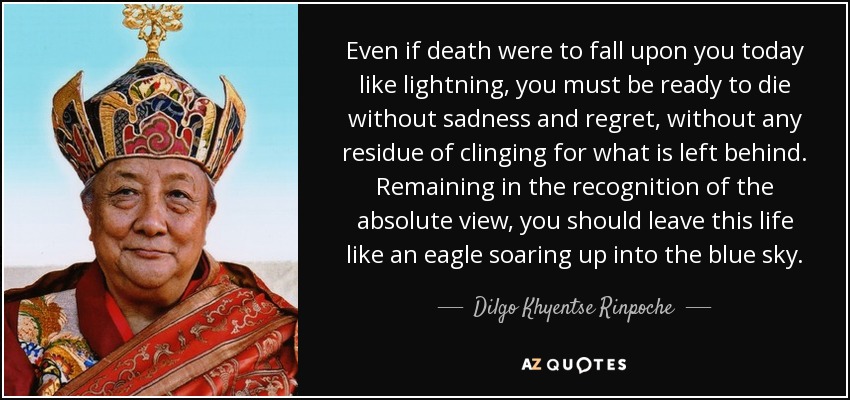
Impermanence is also a central topic in tantra. It is well believed that a practitioner (tantric yogi/ni) should be able to know what happens at the time of death (our two subtle bodies leaving the physical body), and there are practices for this specifically. Meditation and contemplation on illness, death and the impermanent nature of the relative world is essential.

I vaguely remember a few past lives, and that my soul chose this incarnation; I chose being a girl/woman, my parents, my place of birth, and the immense health challenges to fuel my practice. The deeper the suffering, the wider the perspectives, the greater the lessons and the brighter the light at the end of the tunnel.

I am also a Mother, and both of our boys’ souls came to ‘visit’ me before they decided to be born through me. I feel very honored that they chose us as parents, and I cannot wait to see what their plans are for their lives.

Another important cornerstone of tantra is bodhicitta; the genuine wish to attain enlightenment for the sake of all sentient beings. This wish can carry you through some of the darkest moments – it really has for me.

Do you have a spiritual practice? 😊


*Main practices of Amrita Mandala is:
Rainbow Body Yoga (free download)


Amrita Kriya Yoga (free download)


Amrita Asana Yoga


Trauma specials guided practice(youtube playlist)


Mending the Broken Human guided practice (youtube playlist)

Talk on Dzogchen, trekcho, thogal and atiyoga (the highest yoga)

Click here to read about Amrita Mandala’s 13 bhumi model

Free e-book on awakening (opening of the first bhumi center inside the head)

The Two-Part Formula for Awakening
Vajrayana is the tantric interpretation of mahayana. The goal is the same in mahayana but the methods are different.

The biggest practical different, as they’re doctrinally the same, are empowerments and transmissions given by a tantric preceptor who traditionally are called gurus (tib. lit. lama). In tantric empowerments the guru transmits the experience of buddhanature that all beings inherently possess that can be afterwards returned and cultivated by the student. This cultivation is done through the repetition of mantras, visualizations and mudras or physical gestures that are direct expressions of the enlightened speech, mind and body. Mantras are specific verbal formulas of various deities or enlightened archetypes of buddhas and bodhisattvas that embody different aspects of our inherent enlightened nature. Manjushri is an archetype of wisdom and discrimination, Avalokiteshvara that of compassion and Vajrasattva that of selfless clarity. The tantric system is an esoteric method of healing and awakening which under certain circumstances leads to buddhahood ie supreme enlightenment (skt. anuttara samyak sambodhi) in a single lifetime.

It is good to mention that the mentioned enlightenment is not something of the distant past and cultures. Vajrayana which is a yogic training system for normal laypeople, enables full enlightenment for anyone who dedicates to pursue the path to enlightenment for the purpose of helping others, is willing to keep bringing accepting awareness to one’s most painful and unpleasant thoughts, emotions and memories and who is willing to continue to the end of the process regardless.

In terms of doctrines vajrayana, like mahayana, is based on the so called Second and Third Turnings of the wheel of Dharma by Buddha Shakyamuni. Interpretations of these doctrines, especially the buddhanature (skt. tathagatagarbha) teaching of the Third Turning vary slightly. However, all vajrayana, also called tantrayana or mantrayana, is based on the doctrine of emptiness or better, selflessness of all things of the mind (skt. shunyata) and bodhicitta which means revealing the natural loving, compassionate and kind nature of ours towards all beings.

Amrita Baba
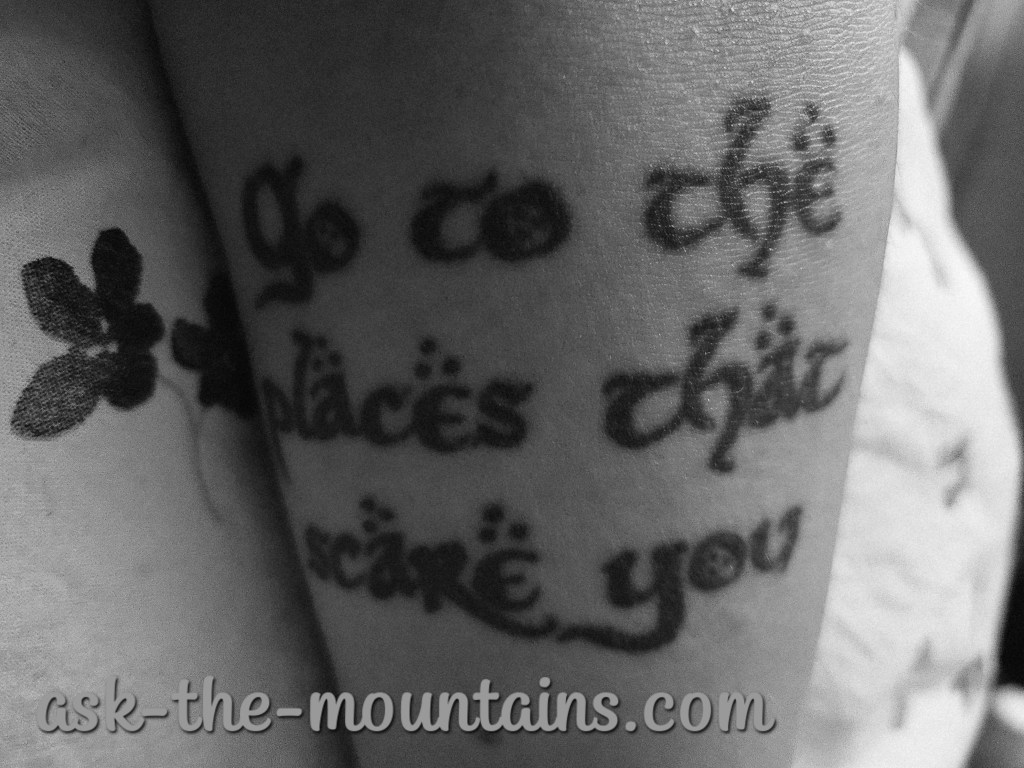
My tantric tattoo.
A portrait from May 2024, with second baby 🧡
😹🙏🏼
Ishanath
Anthropology, Arctic, Awareness, Culture, Everyday life, Family, Genealogy, Health, Heritage, Homeschooling, Kids, Mental health, Motherhood, Neurodiversity, Neurological, Outfit, People, Photography, Pregnancy, Quotes, Saami, Sámi, Sápmi, Spirituality, Tromsø, Uralic, Womanhood

Mothers Did Not Play With Their Children For 99% of Human History

Why the absence of autonomous, multi-age playgroups makes parenting suck. (This is a reshare of Elena Bridgers’ article).

Sámi mommy breastfeeding toddler in Tromsdalen, Tromsø, Arctic Sápmi, while smoking some tobacco.

“Fasten your seatbelts, ladies and (two or three) gentlemen, because we are about to dive into the my absolute favorite topic of all time: the importance of multi-age playgroups in hunter-gatherer societies. Honestly, I get more excited about this stuff than a dog whose owner just said the word “walk.” Back when I first started reading about motherhood in hunter-gatherer societies there were two things that made me go, “ohhhhhhhh, now I get it.” One is the longer interbirth intervals that probably characterized most of human history (as I wrote about here) and the other is the critical important of multi-age playgroups as a source of substitute childcare for mothers. It was a total epiphany for me, and I suspect you may have the same reaction, because once you see how this used to work, how human childhood evolved to work, it just makes so much sense. Over millions of years, we basically evolved a perfect system involving care of children by children, in a way that was wholly compatible with their own need for play, and that we have entirely abandoned in the modern context, to the detriment of all.

But in order for you to understand why this still matters for mothers in the modern context, I need to tell you my own story about just how much I hate playing with my children (even though I love them deeply) and how misguided I was about the role of a “good mom” and what she owes her kids…

I’d rather stick a fork in my eyeball than play pirates.

Only after I had begun doing deep research on hunter-gatherer societies did I realize that this is exactly how things were supposed to work. Children are supposed to play with other children. It was never meant to be the mother’s job. But trapped as we are in single-family homes where playmates can be hard to come by, parents often end up filling this tedious and time-consuming role…[..]”

Read the full article here.

Amrita Mandala, Art, Awareness, Beauty, Bodhidharma, Buddhism, Chronic illness, Culture, Dharma, Dzogchen, Everyday life, Japan, Jesus, Mahayana, Meditation, Mental health, Migraine, Motherhood, Neurodiversity, Neurological, Sápmi, Soto zen, Spirituality, Tantric, Taoism, Vajrayana, Yoga, Zen, Zen buddhism

How to Pray | Poem + video

In a world that teaches
me first, me only, me always,
prayer is a quiet rebellion.
It begins with a bow,
a loosening of the fist
that clutches at control.

It dares to whisper:
I am not the center.
I am not the crown of all things.
I am a thread in the tapestry,
a note in the chorus,
a servant of something vast.
Something holy.

Prayer is an act of defiance
against the tyranny of ego,
against the hunger that never fills.
It topples the empire of the small self
and builds, stone by stone,
a sanctuary for all beings.

In prayer, we betray the myth of isolation.
We kneel not in defeat,
but in devotion and love.

Prayer is rebellion,
the most radical kind,
for it wages war not on others,
but on the walls within,
until only openness remains.

Through the power of prayer,
we can align ourselves with life and light itself. What a miracle.

We can call for the aid
of both ancient and recent Masters,
Beyond space and time.
Their luminous wisdom and boundless
compassion can touch our hearts as intimately as the Sun’s warmth opens flowers in the morning mist.

Prayer is not just mere words.
It is the trembling of the soul reaching for our wholeness, a candle lit in the dark, a river bending toward the ocean.
Prayer is tantra and transformation.

-M

Amrita Mandala, Awareness, Bodhidharma, Buddhism, Chronic illness, Dharma, Everyday life, Mahayana, Meditation, Mental health, Migraine, Motherhood, People, Rinzai zen, Shamanism, Soto zen, Spirituality, Tantric, Taoism, Vajrayana, Yoga, Zen, Zen buddhism

Trauma healing specials – try it now 🙏🏼

Wanted to share this free online playlist on Youtube in six parts, focused on the healing of traumas in the psyche. It can be done sitting in a comfortable posture, or laying down if you prefer. It has been extremely helpful for me, so I share it in hopes someone else will benefit 🫶🏻

Adventure, Animals, Anthropology, Arctic, Art, Aurora borealis, Beauty, Culture, Duodji, Everyday life, Finnmark, Genealogy, Health, Heritage, History, Indigenous, Landscape, Motherhood, Mythology, Nordic, Outfit, People, Pets, Poems, Quotes, Reindeer, Saami, Sámi, Sápmi, Siberian, Spirituality, Uralic, Womanhood

The Sacred Bear in Sámi mythology

The Sacred Bear and “the Origin of the Sámi People”

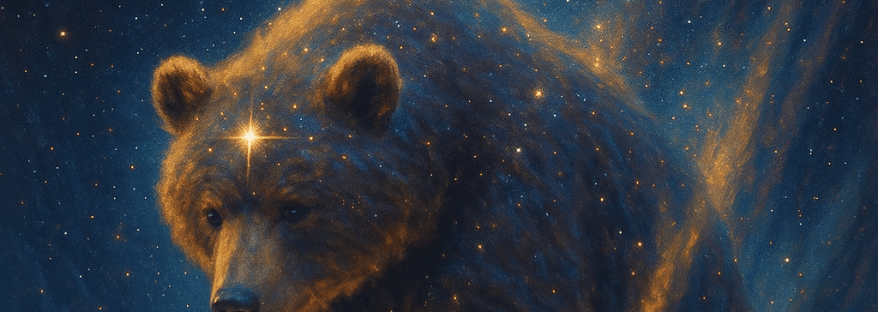
In Sámi mythology, the bear is a divine ancestor, not just an animal.

One myth tells of a heavenly bear who descended to earth and married a human woman. Their children became the first Sámi people.

Because of this, bears were/are honored as ancestor spirits, and when a bear was killed (very rare and ritualised), its bones were carefully placed in a tree to allow its soul to return to the sky.

A ceremony called the Bear Feast included songs, dances, and apologizing to the bear spirit for the killing, inviting it to be reborn.

The Bear Who Fell From the Stars:

A Sámi Creation Song of the First Bear

In the hush before dawn, where no footprints fall,
Where the wind hums secrets to the pine,
A star broke loose from the roof of night
And tumbled down through time.

He fell with a roar through clouds of gold,
Bathed in *Beaivi’s light.
He landed not dead, but dreaming still
In the heart of the forest’s white.

The reindeer bowed their crowned heads low,
The lynx stood still in her track.
For this was the First of Bears,
The Sky-Child, fallen back.

He walked like thunder on ancient snow,
His breath, a wind of flame.
Yet gentle were his dreaming eyes,
And wise, and without shame.

A woman came from a northern vale,
A weaver of skins and song.
She found him sleeping in a ring of birch
And stayed with him all night long.

They spoke without words by fire and frost,
By the rhythm of blood and bone.
She taught him the names of the winds and streams;
He gave her dreams of home.

And so their children, wild and wise,
Were neither beast nor man.
They sang to trees, they hunted clean,
They walked where few else can.

But then the bear, when spring had sung,
Felt longing rise like steam:
His fur grew light, his eyes grew wide
He vanished into dream.

And so today, when the bear is seen,
The Sámi bow and sing
“Child of stars, our ancient kin,
Return again in spring.”

If ever a bear is taken in hunt,
The people weep and pray.
They dress his skull in flowers and moss
And lift his bones away.

*Beaivi is the Sun (as a deity)

Acrylic painting, Animals, Anthropology, Arctic, Art, Artist, Aurora borealis, Beauty, Culture, DIY, Duodji, Everyday life, Family, Finnmark, Genealogy, Heritage, Indigenous, Landscape, Motherhood, Nordic, Outfit, Painters, People, Photography, Reindeer, Saami, Sámi, Sápmi, Uralic, Womanhood

I will keep you safe and warm 2.0 / Art for sale

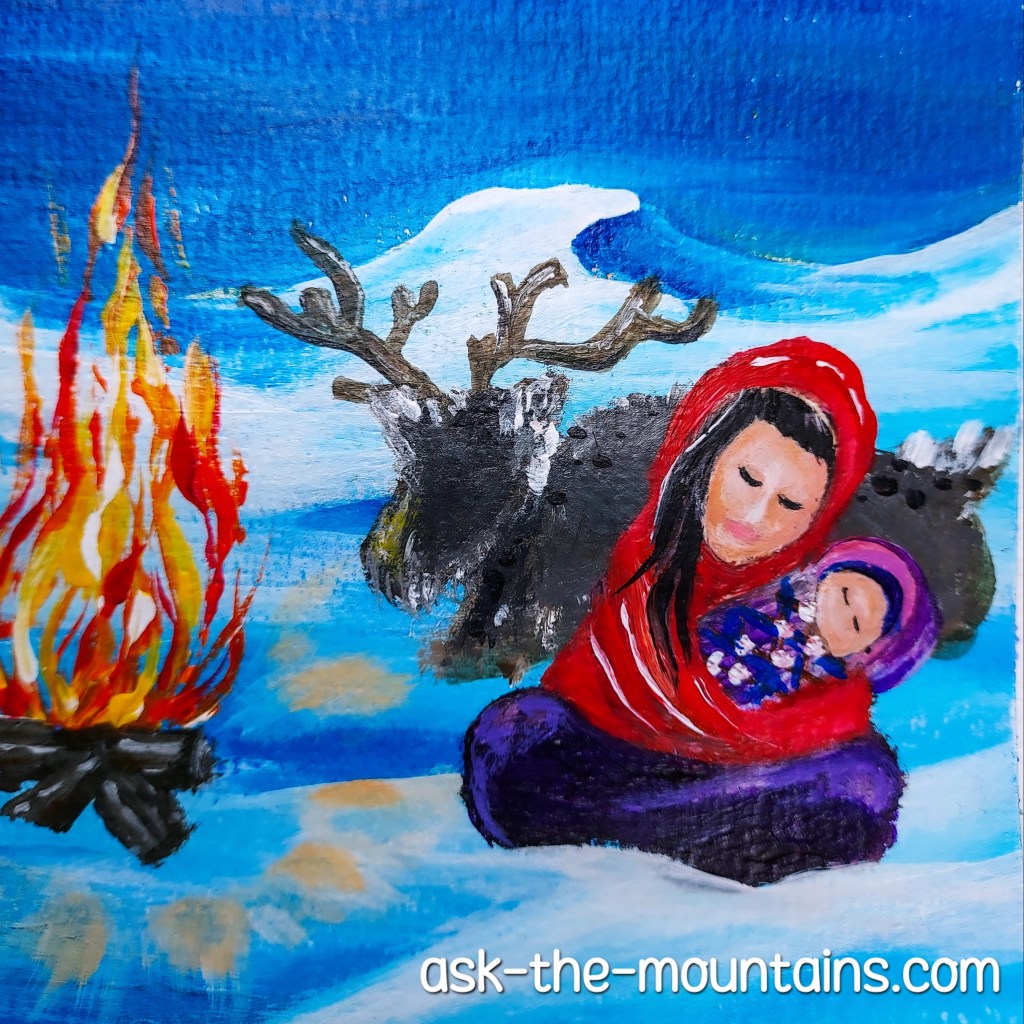
Art card with envolope ✉️ 17 x 12 cm including white edges. 75 NOK (norwegian kroner) Can be shipped anywhere 🤍🌍

The prints are made from a painting I did back in 2021 when I first became a mother. Afterwards, I slightly edited it digitally, and thought it looked wonderful as printed art cards 😊 I have 3 cards available currently.

Adventure, Arctic, Art, Awareness, Beauty, Culture, Dharma, Everyday life, Finnmark, Hair, Indigenous, Landscape, Mental health, Motherhood, Nordic, Outfit, People, Photography, Saami, Sámi, Sápmi, Self portrait, Siberian, Spirituality, Tantric, Uncategorized, Uralic, Vajrayana, Yoga

The shortest way

“Maintain the state of undistractedness, and distractions will fly away. Dwell alone, and you shall find the Friend. Take the lowest place, and you shall reach the highest. Hasten slowly, and you shall soon arrive. Renounce all worldly goals, and you shall reach the highest Goal. If you follow this unfrequented path, you will find the shortest way.” -Milarepa

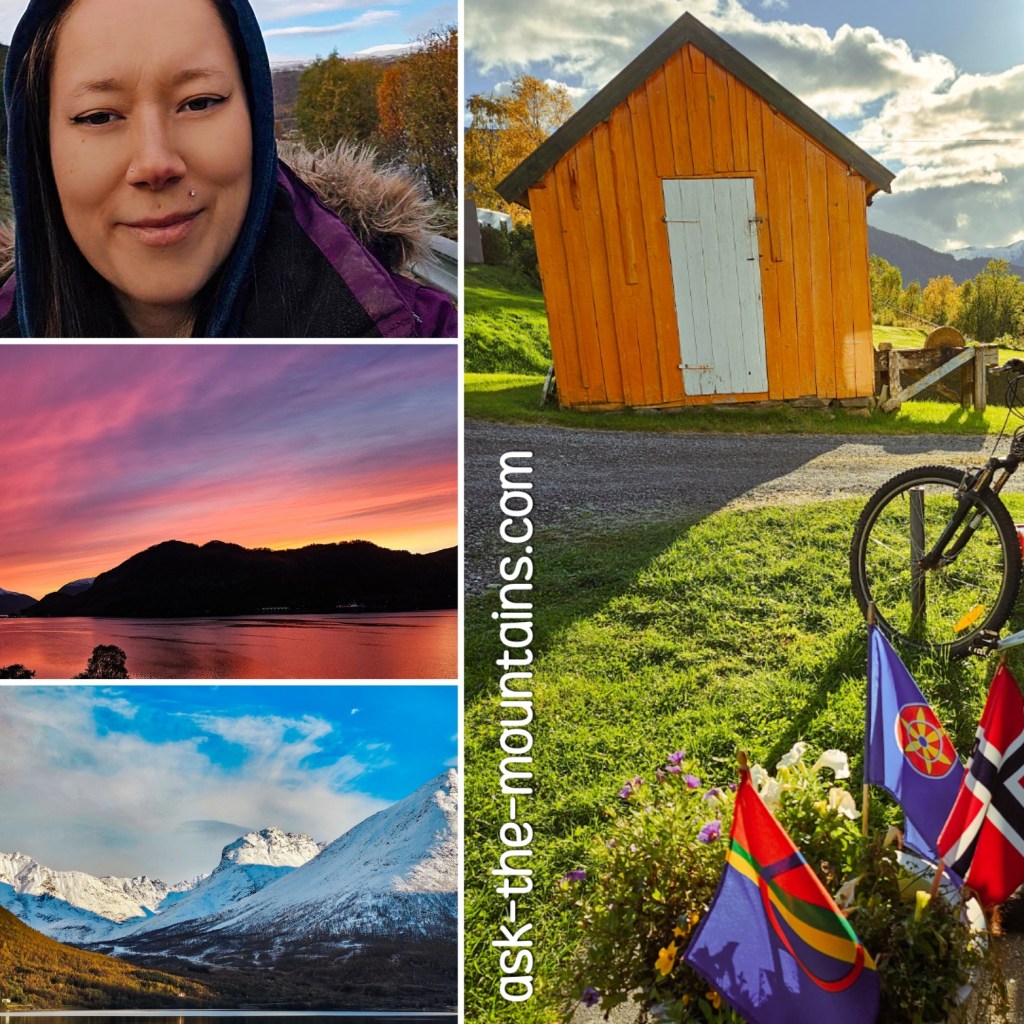
October photos. Colourful sky, sunny days and snowy days.. It’s always shifting very fast here, you could almost say there is four seasons within one season 🌅🌦❄️
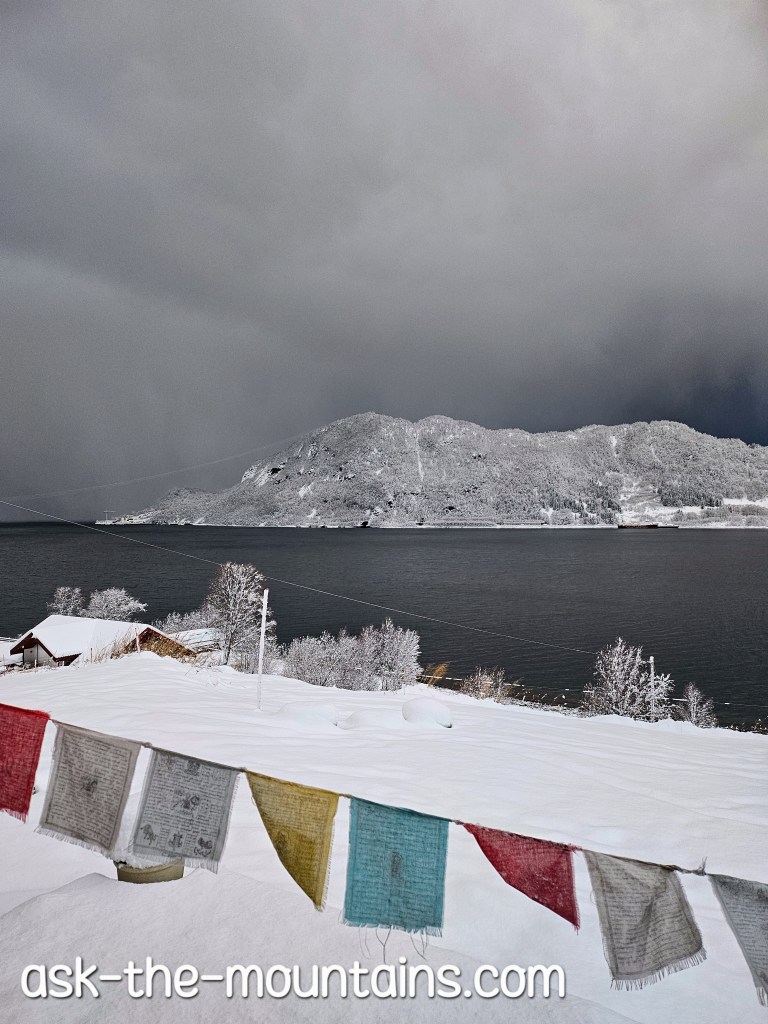
Prayer flags in our garden ☃️ The weather was interesting that day; grey sky and sea, white landscape and a heavy kind of silence.
Acrylic painting, Animals, Arctic, Art, Awareness, Beauty, Culture, Everyday life, Family, Finnmark, Indigenous, Landscape, Mental health, Motherhood, Nordic, People, Pregnancy, Relationship, Sámi, Sápmi, Self portrait, Siberian, Spirituality, Tromsø, Uralic, Womanhood

To all the lonely Mothers out there

Humans are herd animals, we’re mammals. We are literally made to raise children in the company and with the support of other women.

This is something we have lost as a modern society.

I would go as far as to say that we have a pandemic of lonely Mothers. Home alone most of the time with their babies, doing their best, often without much mental, emotional or physical support or stimuli from other mums. It’s not natural. And it’s not healthy for the baby; having their start in life defined by this kind of isolation.

It’s not long ago in our human history that women and mums were much closer, and could rely on each other more. I often wish I could turn back time, and experience that closeness, that kind of Motherhood.

In rare small (indigenous) communities around the world, this is still the case, and used to be like that here too (in Troms and Finnmark).

Loneliness sucks a lot of the joy out of Motherhood. It sits like a gray veil over us and makes us even more isolated. Not to mention the shame and guilt many mums feel for even feeling lonely, bacause we have our babies, so we should feel more than content.

But the truth is that women need women. Mums need mums. Only other mums can truly understand the ordeal of birthing and raising children.

So, if you feel lonely in Motherhood, like me, please do not blame yourself, the fault is not with you. It is that we as a modern society have separated ourself too much and we don’t see the importance and value of a supported mum. It’s kind of obvious though; a healthy happy mum = healthy happy start of life for baby, and thus for the all humans and society at large. It all starts with mum.

A painting I did some years ago. “I will keep you safe and warm”.
Art, Awareness, Beauty, Culture, DIY, Everyday life, Family, Finnmark, Heritage, Indigenous, Motherhood, People, Photography, Relationship, Saami, Uralic

So simple

Being a parent means receiving a unique invitation back to the present moment by these small individuals who only asks for you to be yourself around them, to be fully in the moment and to see them for who they are. It’s so simple that even a child can understand it.

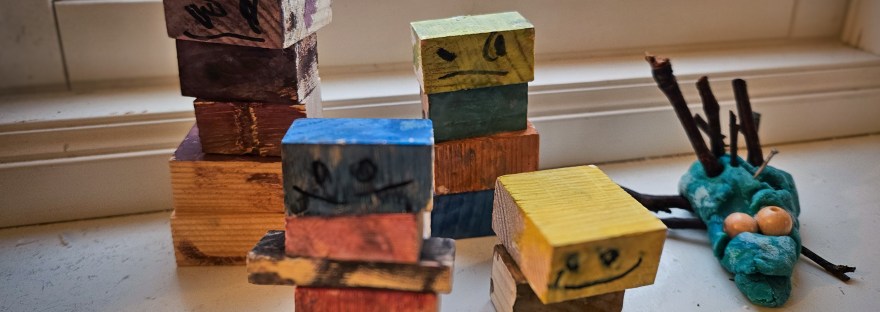
Our oldest son, who is almost 4, made these funny little “dolls” representing our little family 😅 Apparently, I am the grumpy one 😂
A hedgehog he also made from blue dough and a stick from the forest.
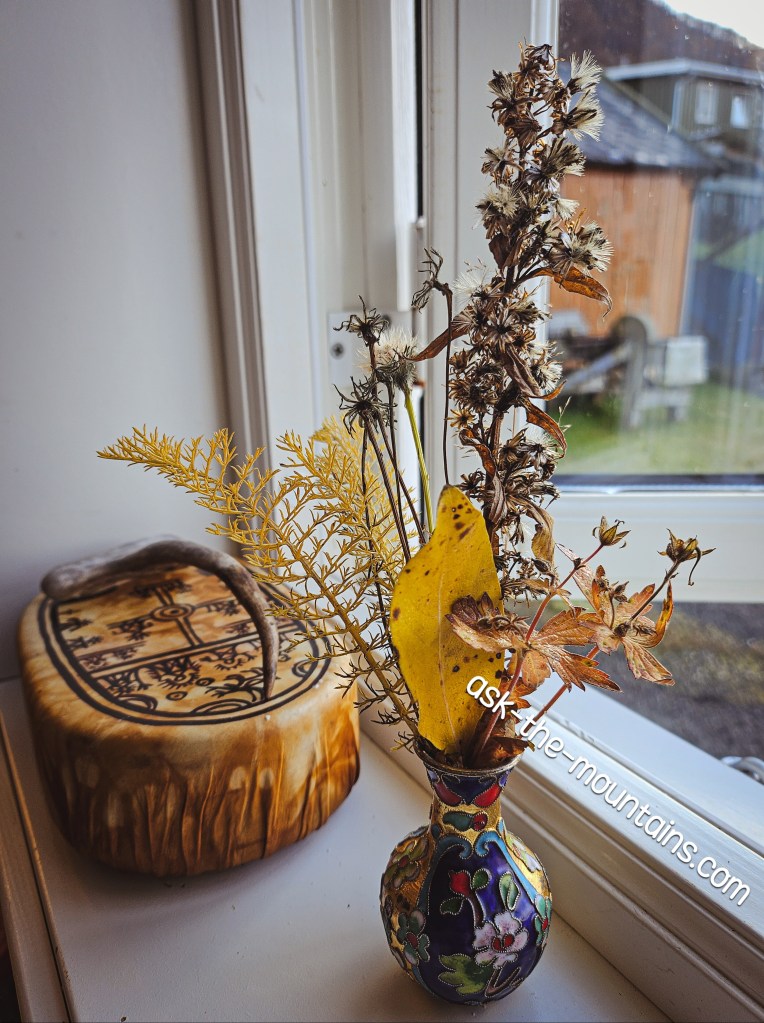
An autumn bouquet I picked on that same trip into the forest 🍂 Next to it is a small Sámi shamanic drum that our son received for his 3rd birthday.
I drew this little boy recently 🩵
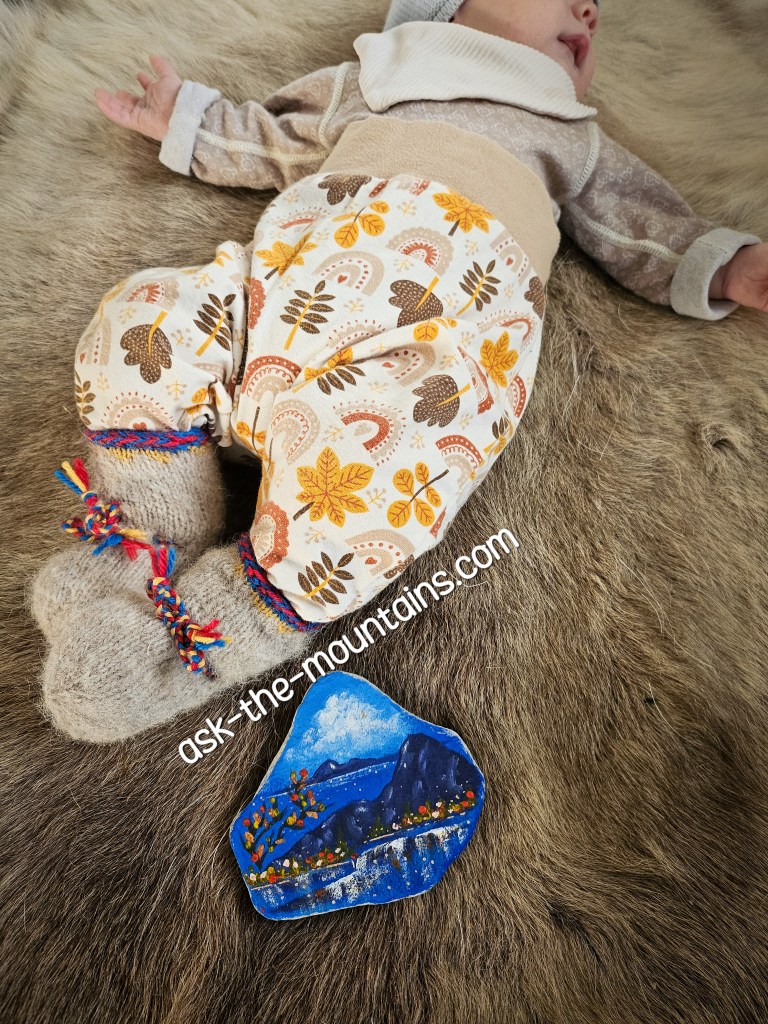
And gave birth to this little boy in August 😄🩵 Healthy and beautiful, 3250 g, ten fingers and ten toes. The birth went so well and quite fast, all due to how much I had prepared my mind and body for it. Days are a bit monotone at the moment, like postpartum days usually are; diapers and carrying baby around, but felt much more up for the task this time than when we had our first son back in 2021 when everything was new to us. I have to admit though it is a bit lonely sometimes due to not having any mum-friends nearby, and not much time for painting either, but found this flat rock one day me and him were out walking with the baby shawl, and so made this quick little autumn painting 🍁

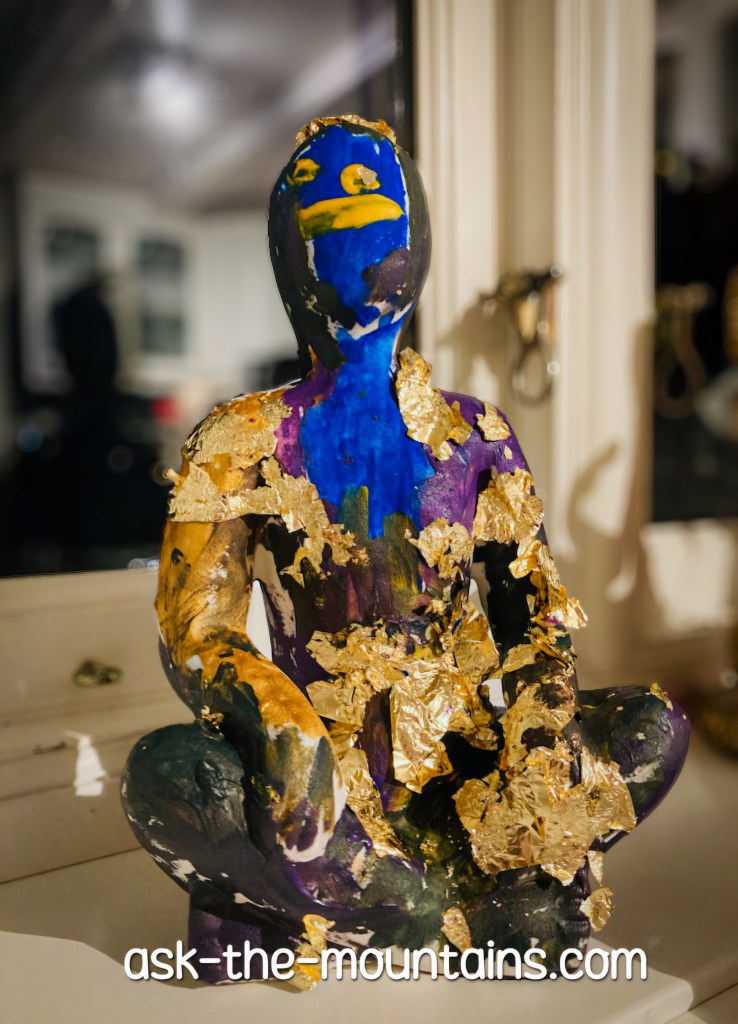
Oh, and I just have to show this gift our oldest made for his dad/my husband for his 35th birthday in October. It was a white statue that I bought, and then he decorated it with paint and gold flakes ✨️🎁

Arctic, Art, Awareness, Beauty, Culture, Everyday life, Finnmark, Hair, History, Hypnobirthing, Indigenous, Keto, Landscape, Make-Up, Motherhood, Nordic, Outfit, People, Photography, Photoshoot, Pregnancy, Quotes, Saami, Sápmi, Self portrait, Womanhood

Surrendering to an unseen force

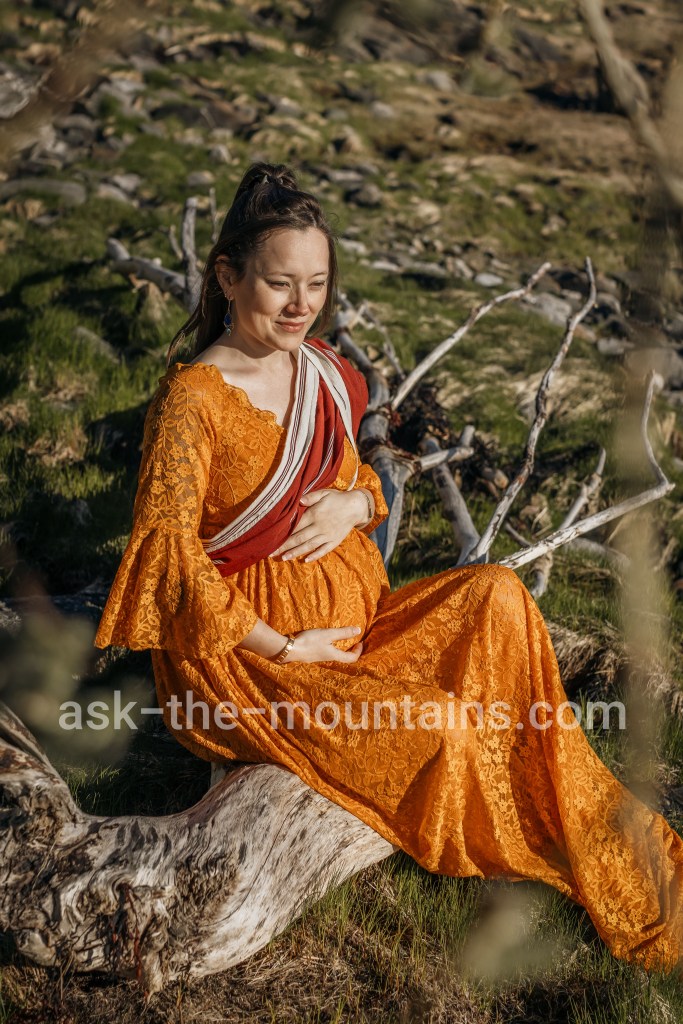
“Pregnancy is a process that invites you to surrender to the unseen force behind all life.” 💚🧡🤍🩵 Photos taken by Gunhild Berg Johansen, I was ca 6 months pregnant here.

I highly recommend this very helpful and insightful podcast episode on breaking the fear-tension-pain cycle that most women go into when in labour, myself included. I am very close to giving birth to our second child, and feeling all the emotions that comes naturally leading up to that. This podcast episode really helped me, along with a hypnobirthing course I’ve been doing lately.

– Monica Amrita Mani